Area of Liver, Digestive and Inflammatory Diseases, Institute of Biomedicine of Seville (IBiS), Virgen del Rocio University Hospital (HUVR), Spanish National Research Council (CSIC), University of Seville (US), Seville, Spain.
Pneumology Unit, Institute of Biomedicine of Seville (IBiS), Virgen Macarena University Hospital (HUVM), Spanish National Research Council (CSIC), University of Seville (US), Seville, Spain.
EBioMedicine. 2024 May;103:105132. doi: 10.1016/j.ebiom.2024.105132. Epub 2024 Apr 26.
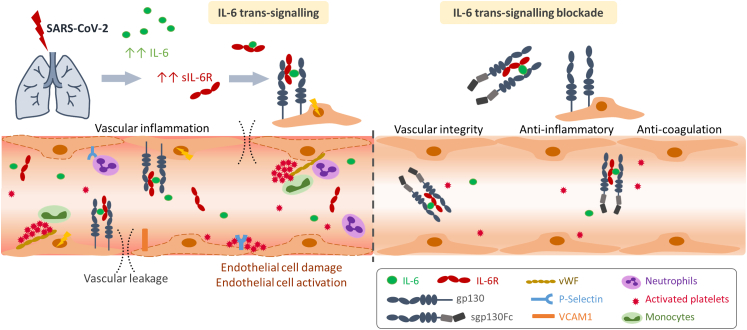
SARS-CoV-2 infection is considered as a relapsing inflammatory process with a dysregulation of IL-6 signalling. Classic IL-6 signalling is thought to represent a defence mechanism against pathogens. In contrast, IL-6 trans-signalling has pro-inflammatory effects. In severe COVID-19, therapeutic strategies have focused on global inhibition of IL-6, with controversial results. We hypothesized that specific blockade of IL-6 trans-signalling could inhibit inflammatory response preserving the host defence activity inherent to IL-6 classic signalling.
To test the role of the specific IL-6 trans-signalling inhibition by sgp130Fc in short- and long-term consequences of COVID-19, we used the established K18-hACE2 transgenic mouse model. Histological as well as immunohistochemical analysis, and pro-inflammatory marker profiling were performed. To investigate IL-6 trans-signalling in human cells we used primary lung microvascular endothelial cells and fibroblasts in the presence/absence of sgp130Fc.
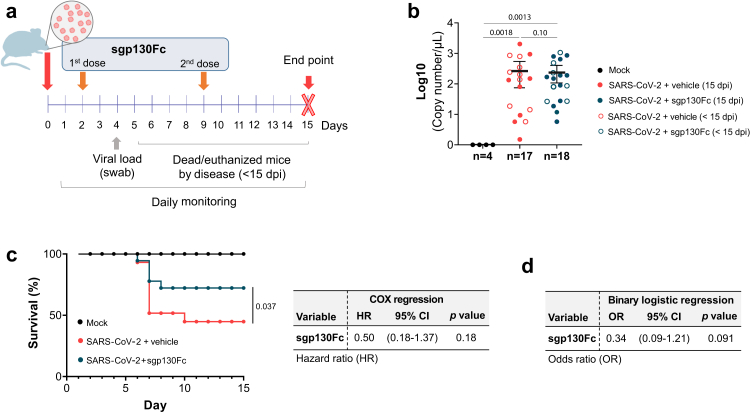
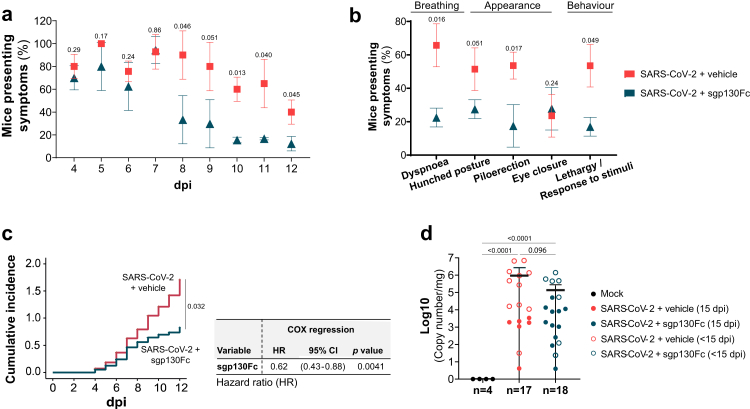
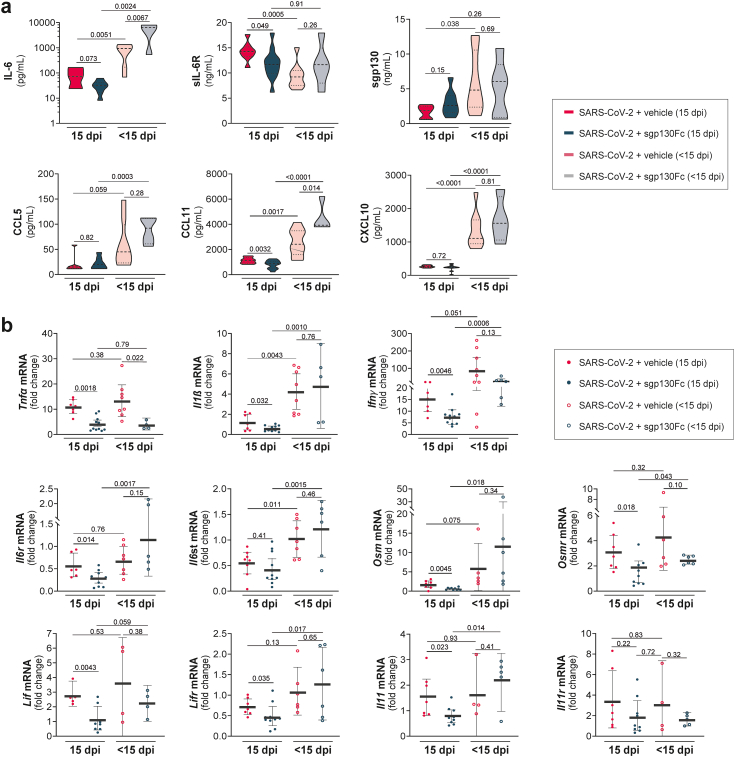
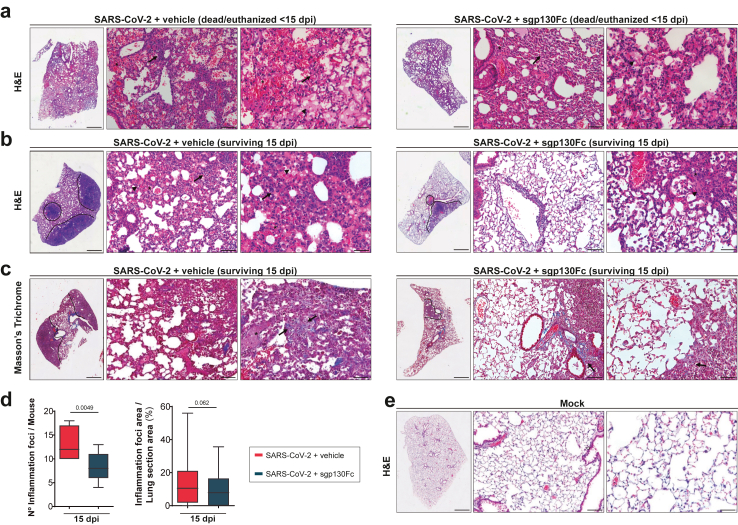
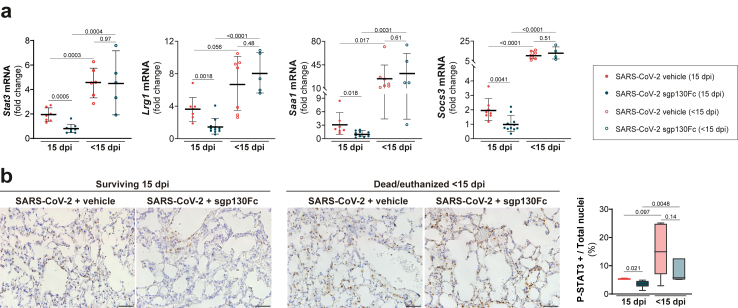
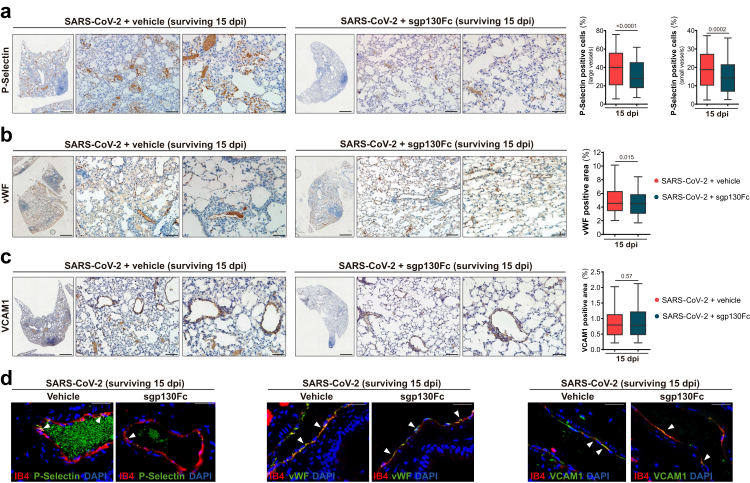
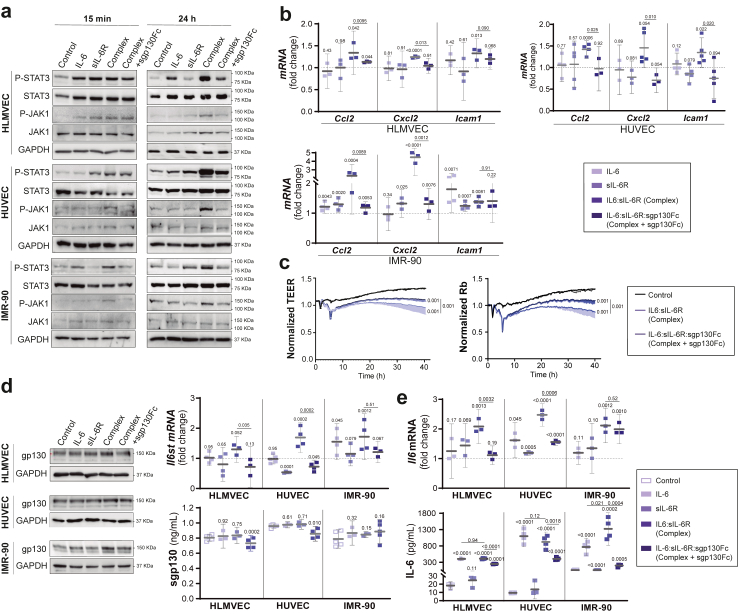
We report that targeting IL-6 trans-signalling by sgp130Fc attenuated SARS-CoV-2-related clinical symptoms and mortality. In surviving mice, the treatment caused a significant decrease in lung damage. In vitro, IL-6 trans-signalling induced strong and persisting JAK1/STAT3 activation in endothelial cells and lung fibroblasts with proinflammatory effects, which were attenuated by sgp130Fc. Our data also suggest that in those cells with scant amounts of IL-6R, the induction of gp130 and IL-6 by IL-6:sIL-6R complex sustains IL-6 trans-signalling.
IL-6 trans-signalling fosters progression of COVID-19, and suggests that specific blockade of this signalling mode could offer a promising alternative to mitigate both short- and long-term consequences without affecting the beneficial effects of IL-6 classic signalling. These results have implications for the development of new therapies of lung injury and endotheliopathy in COVID-19.
The project was supported by ISCIII, Spain (COV-20/00792 to MB, PI23/01351 to MARH) and the European Commission-Next generation EU (European Union) (Regulation EU 2020/2094), through CSIC's Global Health Platform (PTI Salud Global, SGL2103029 to MB). PID2019-110587RB-I00 (MB) supported by MICIN/AEI/10.13039/501100011033/and PID2022-143034OB-I00 (MB) by MICIN/AEI/10.13039/501100011033/FEDER. MAR-H acknowledges support from ISCIII, Spain and the European Commission-Next generation EU (European Union), through CSIC's Global Health PTI.
SARS-CoV-2 感染被认为是一种具有 IL-6 信号失调的复发性炎症过程。经典的 IL-6 信号被认为是对抗病原体的防御机制。相比之下,IL-6 转信号具有促炎作用。在严重的 COVID-19 中,治疗策略集中在全球抑制 IL-6 上,但结果存在争议。我们假设特异性阻断 IL-6 转信号可以抑制炎症反应,同时保留 IL-6 经典信号固有的宿主防御活性。
为了测试 sgp130Fc 对 COVID-19 短期和长期后果的特异性 IL-6 转信号抑制作用,我们使用了已建立的 K18-hACE2 转基因小鼠模型。进行了组织学和免疫组织化学分析以及促炎标志物分析。为了研究人细胞中的 IL-6 转信号,我们使用了原代肺微血管内皮细胞和成纤维细胞,并在存在/不存在 sgp130Fc 的情况下进行了研究。
我们报告说,sgp130Fc 靶向 IL-6 转信号可减轻 SARS-CoV-2 相关的临床症状和死亡率。在幸存的小鼠中,该治疗导致肺部损伤明显减少。在体外,IL-6 转信号在肺内皮细胞和成纤维细胞中诱导强烈且持续的 JAK1/STAT3 激活,具有促炎作用,而 sgp130Fc 可减弱其作用。我们的数据还表明,在那些 IL-6R 数量较少的细胞中,IL-6:sIL-6R 复合物诱导的 gp130 和 IL-6 维持 IL-6 转信号。
IL-6 转信号促进了 COVID-19 的进展,并表明特异性阻断这种信号模式可能是一种有前途的替代方法,可以减轻短期和长期的后果,而不会影响 IL-6 经典信号的有益作用。这些结果对 COVID-19 中肺损伤和血管内皮病变的新疗法的发展具有重要意义。
该项目由西班牙 ISCIII(MB 的 COV-20/00792 和 MARH 的 PI23/01351)和欧盟委员会下一代欧盟(欧洲联盟)(欧盟法规 2020/2094)通过 CSIC 的全球健康平台(PTI Salud Global,MB 的 SGL2103029)共同资助。PID2019-110587RB-I00(MB)由 MICIN/AEI/10.13039/501100011033/和 PID2022-143034OB-I00(MB)由 MICIN/AEI/10.13039/501100011033/FEDER 支持。MAR-H 得到 ISCIII、西班牙和欧盟委员会下一代欧盟(欧洲联盟)的支持,通过 CSIC 的全球健康 PTI。