Department of Biochemistry, King George's Medical University, Lucknow, U.P., India.
Department of Pathology, King George's Medical University, Lucknow, U.P., India.
Asian Pac J Cancer Prev. 2024 Apr 1;25(4):1121-1134. doi: 10.31557/APJCP.2024.25.4.1121.
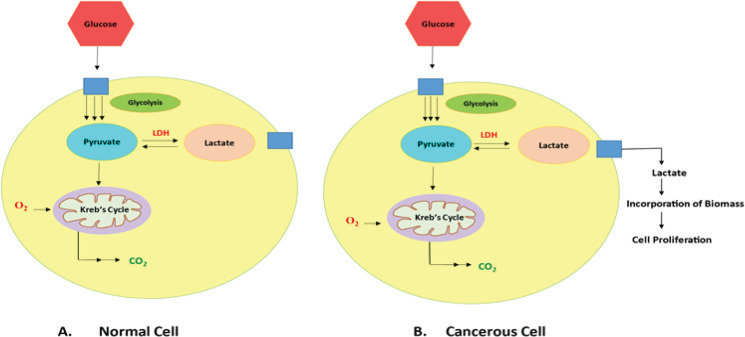
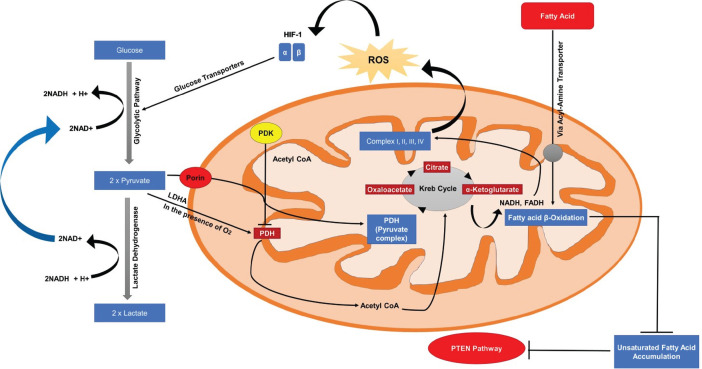
Metabolic reprogramming occurs to meet cancer cells' high energy demand. Its function is essential to the survival of malignancies. Comparing cancer cells to non-malignant cells has revealed that cancer cells have altered metabolism. Several pathways, particularly mTOR, Akt, PI3K, and HIF-1 (hypoxia-inducible factor-1) modulate the metabolism of cancer. Among other aspects of cancer biology, gene expression in metabolism, survival, invasion, proliferation, and angiogenesis of cells are controlled by HIF-1, a vital controller of cellular responsiveness to hypoxia. This article examines various cancer cell metabolisms, metabolic alterations that can take place in cancer cells, metabolic pathways, and molecular aspects of metabolic alteration in cancer cells placing special attention on the consequences of hypoxia-inducible factor and summarising some of their novel targets in the treatment of cancer including leukemia. A brief description of HIF-1α's role and target in a few common types of hematological malignancies (leukemia) is also elucidated in the present article.
代谢重编程发生以满足癌细胞的高能量需求。它的功能对恶性肿瘤的生存至关重要。将癌细胞与非恶性细胞进行比较,揭示了癌细胞的代谢发生了改变。几种途径,特别是 mTOR、Akt、PI3K 和 HIF-1(缺氧诱导因子-1),调节着癌细胞的代谢。在癌症生物学的其他方面,细胞的代谢、生存、侵袭、增殖和血管生成的基因表达受到 HIF-1 的控制,HIF-1 是细胞对缺氧反应的重要控制器。本文研究了各种癌细胞代谢、癌细胞可能发生的代谢改变、代谢途径以及癌细胞代谢改变的分子方面,特别关注缺氧诱导因子的后果,并总结了其在癌症治疗中的一些新靶点,包括白血病。本文还简要说明了 HIF-1α 在几种常见类型的血液恶性肿瘤(白血病)中的作用和靶点。