Yang Xia, Wang Huiying, Ding Dongqin, Fang Huan, Dong Huina, Zhang Dawei
College of Biological and Pharmaceutical Sciences, China Three Gorges University, Yichang, Hubei, 443002, China.
Tianjin Institute of Industrial Biotechnology, Chinese Academy of Sciences, Tianjin,300308, China.
Synth Syst Biotechnol. 2024 Apr 13;9(3):513-521. doi: 10.1016/j.synbio.2024.04.008. eCollection 2024 Sep.
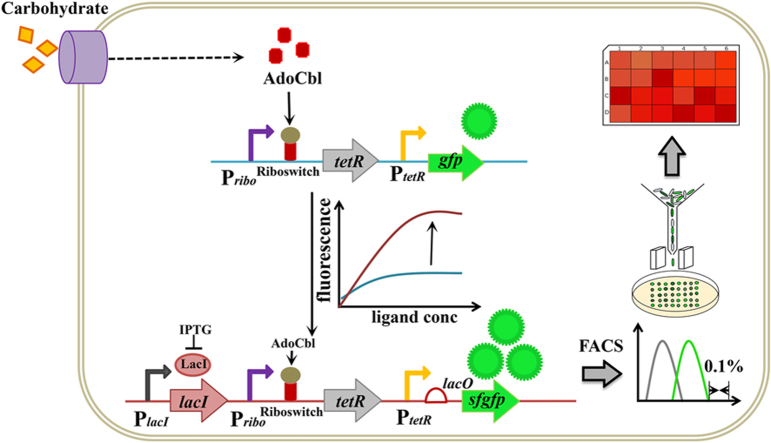
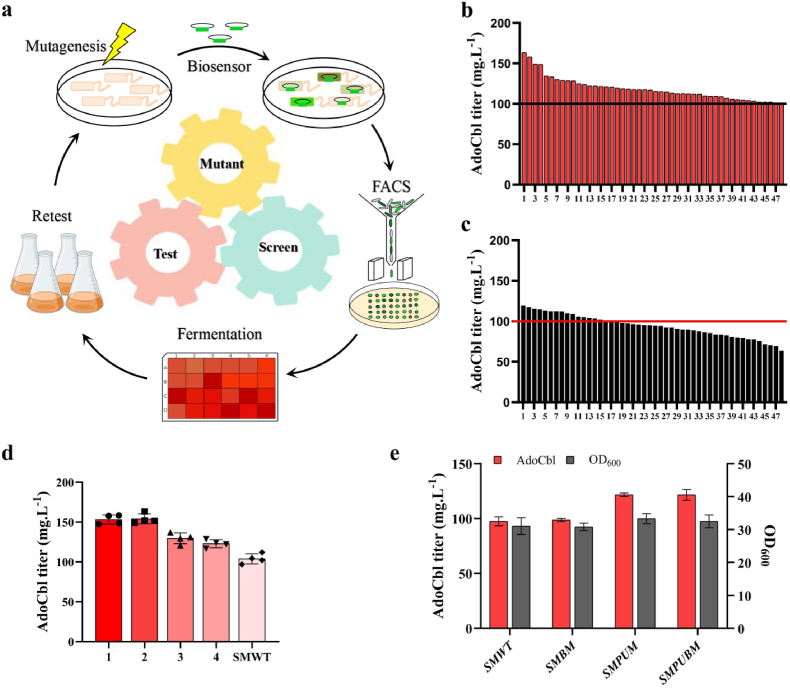
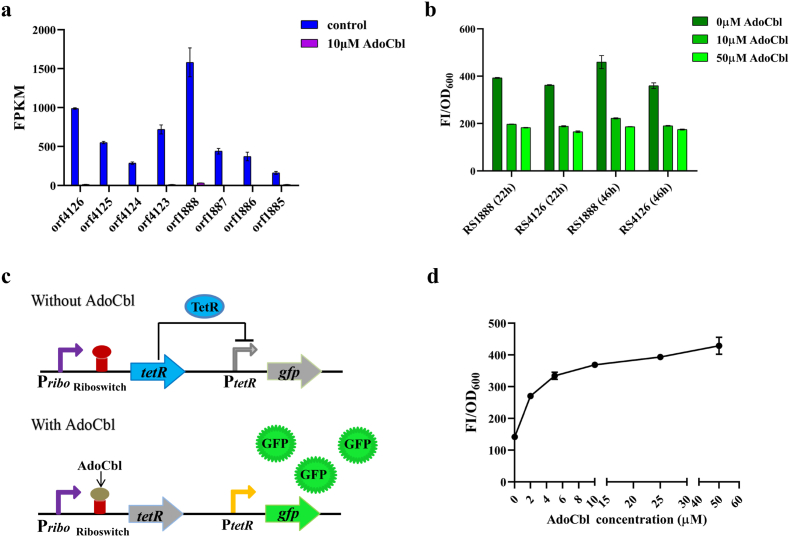
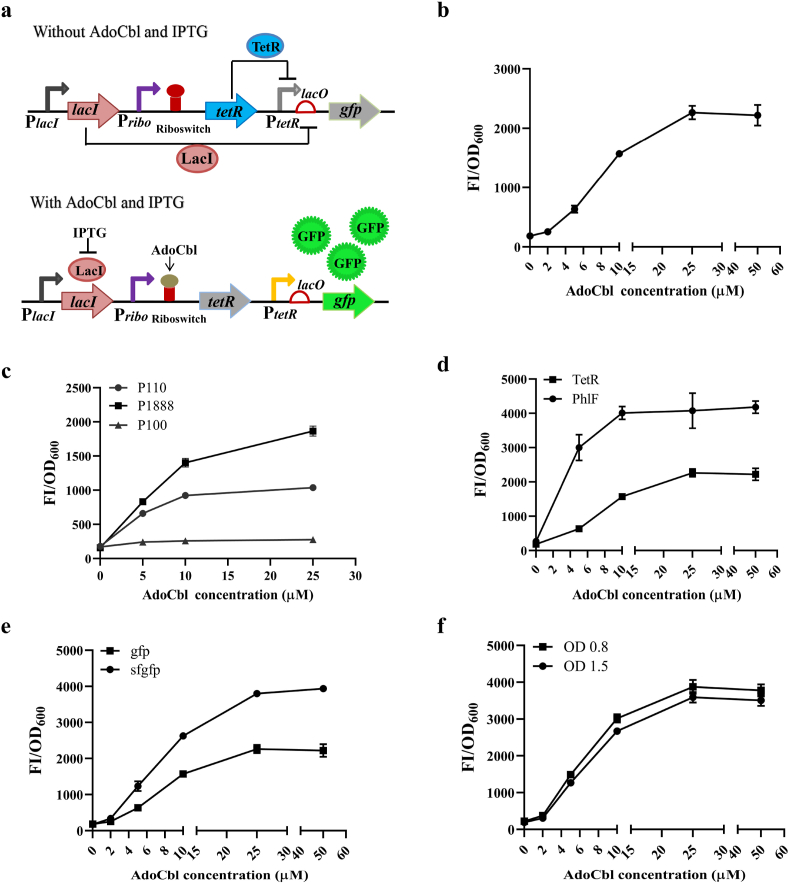
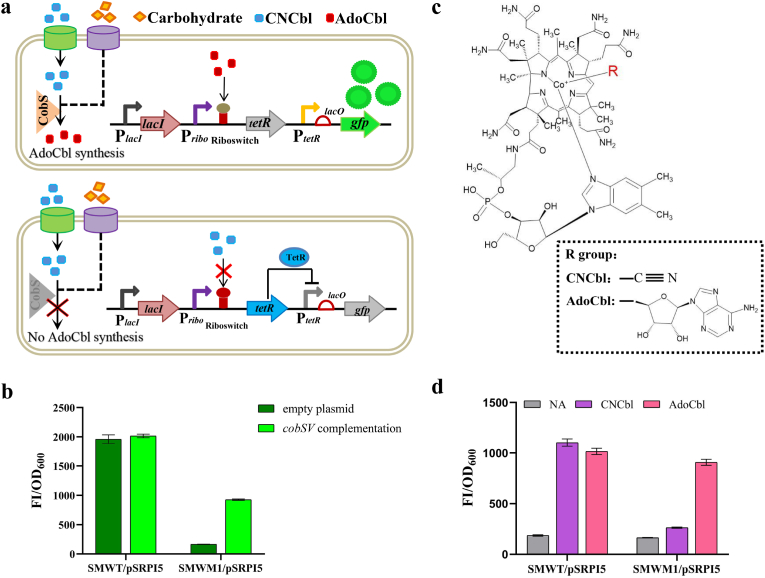
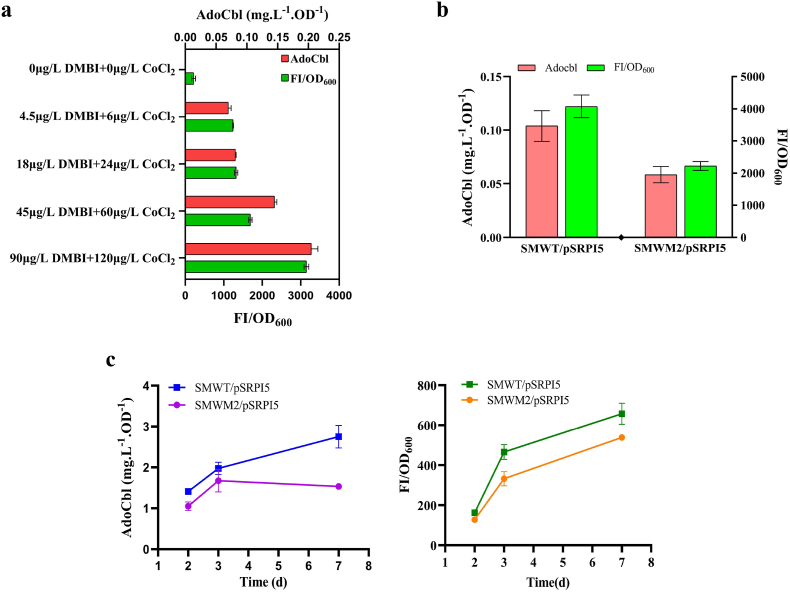
Genetically encoded circuits have been successfully utilized to assess and characterize target variants with desirable traits from large mutant libraries. Adenosylcobalamin is an essential coenzyme that is required in many intracellular physiological reactions and is widely used in the pharmaceutical and food industries. High-throughput screening techniques capable of detecting adenosylcobalamin productivity and selecting superior adenosylcobalamin biosynthesis strains are critical for the creation of an effective microbial cell factory for the production of adenosylcobalamin at an industrial level. In this study, we developed an RNA-protein hybrid biosensor whose input part was an endogenous RNA riboswitch to specifically respond to adenosylcobalamin, the inverter part was an orthogonal transcriptional repressor to obtain signal inversion, and the output part was a fluorescent protein to be easily detected. The hybrid biosensor could specifically and positively correlate adenosylcobalamin concentrations to green fluorescent protein expression levels in vivo. This study also improved the operating concentration and dynamic range of the hybrid biosensor by systematic optimization. An individual cell harboring the hybrid biosensor presented over 20-fold higher fluorescence intensity than the negative control. Then, using such a biosensor combined with fluorescence-activated cell sorting, we established a high-throughput screening platform for screening adenosylcobalamin overproducers. This study demonstrates that this platform has significant potential to quickly isolate high-productive strains to meet industrial demand and that the framework is acceptable for various metabolites.
基因编码电路已成功用于从大型突变体文库中评估和鉴定具有理想性状的目标变体。腺苷钴胺素是许多细胞内生理反应所必需的一种辅酶,在制药和食品工业中广泛应用。能够检测腺苷钴胺素产量并筛选出优质腺苷钴胺素生物合成菌株的高通量筛选技术,对于创建一个能够在工业水平上生产腺苷钴胺素的高效微生物细胞工厂至关重要。在本研究中,我们开发了一种RNA-蛋白质杂交生物传感器,其输入部分是一个内源性RNA核糖开关,可特异性响应腺苷钴胺素;反向器部分是一个正交转录阻遏物,用于实现信号反转;输出部分是一个易于检测的荧光蛋白。该杂交生物传感器能够在体内将腺苷钴胺素浓度与绿色荧光蛋白表达水平进行特异性正相关关联。本研究还通过系统优化提高了杂交生物传感器的工作浓度和动态范围。携带该杂交生物传感器的单个细胞的荧光强度比阴性对照高出20倍以上。然后,利用这种生物传感器结合荧光激活细胞分选技术,我们建立了一个用于筛选腺苷钴胺素高产菌株的高通量筛选平台。本研究表明,该平台具有快速分离高产菌株以满足工业需求的巨大潜力,并且该框架适用于各种代谢物。