
增加树木覆盖和高反照率表面可以减少加利福尼亚州洛杉矶与热有关的急诊就诊次数。
Increasing tree cover and high-albedo surfaces reduces heat-related ER visits in Los Angeles, CA.
机构信息
Kent State University, Kent, OH, USA.
Division of Agriculture & Natural Resources and UCLA Luskin Center for Innovation, University of California, Los Angeles, CA, USA.
出版信息
Int J Biometeorol. 2024 Aug;68(8):1603-1614. doi: 10.1007/s00484-024-02688-4. Epub 2024 Apr 29.
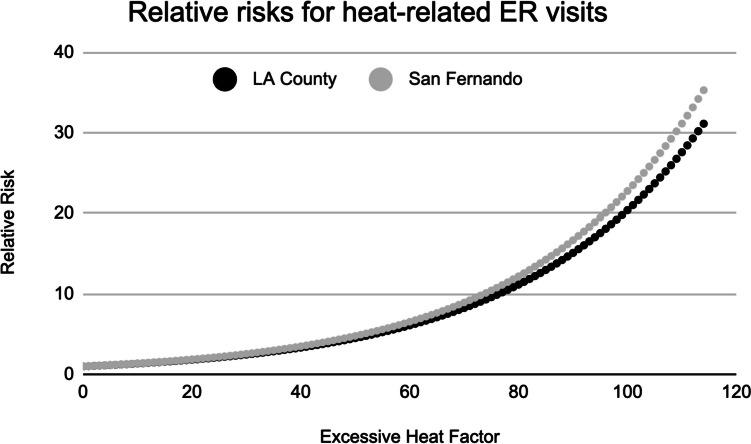
There is an urgent need for strategies to reduce the negative impacts of a warming climate on human health. Cooling urban neighborhoods by planting trees and vegetation and increasing albedo of roofs, pavements, and walls can mitigate urban heat. We used synoptic climatology to examine how different tree cover and albedo scenarios would affect heat-related morbidity in Los Angeles, CA, USA, as measured by emergency room (ER) visits. We classified daily meteorological data for historical summer heat events into discrete air mass types. We analyzed those classifications against historical ER visit data to determine both heat-related and excess morbidity. We used the Weather Research and Forecasting model to examine the impacts of varied tree cover and albedo scenarios on meteorological outcomes and used these results with standardized morbidity data algorithms to estimate potential reductions in ER visits. We tested three urban modification scenarios of low, medium, and high increases of tree cover and albedo and compared these against baseline conditions. We found that avoiding 25% to 50% of ER visits during heat events would be a common outcome if the urban environment had more tree cover and higher albedo, with the greatest benefits occurring under heat events that are moderate and those that are particularly hot and dry. We conducted these analyses at the county level and compared results to a heat-vulnerable, working-class Los Angeles community with a high concentration of people of color, and found that reductions in the rate of ER visits would be even greater at the community level compared to the county.
目前迫切需要采取策略来减少气候变暖对人类健康的负面影响。通过植树和植被来冷却城市街区,并增加屋顶、人行道和墙壁的反照率,可以缓解城市热岛效应。我们使用天气气候学方法来研究不同的树木覆盖率和反照率情景将如何影响美国加利福尼亚州洛杉矶的与热相关的发病率,其通过急诊室(ER)就诊次数来衡量。我们将每日气象数据分类为不同的气团类型,这些分类与历史 ER 就诊数据相对比,以确定与热相关的和超额发病率。我们使用天气研究和预报模型来研究不同树木覆盖率和反照率情景对气象结果的影响,并使用这些结果和标准化发病率数据算法来估计 ER 就诊次数的潜在减少量。我们测试了树木覆盖率和反照率低、中、高三种城市改造情景,并将这些情景与基线条件进行了比较。我们发现,如果城市环境有更多的树木覆盖和更高的反照率,那么在热事件期间避免 25%到 50%的 ER 就诊将是一个常见的结果,而在中等和特别炎热干燥的热事件中,收益最大。我们在县级进行了这些分析,并将结果与一个热脆弱、工人阶级的洛杉矶社区进行了比较,该社区的有色人种居民高度集中,结果发现,与县级相比,社区层面 ER 就诊率的降低幅度会更大。


 Zotero 插件