Nairn John R, Fawcett Robert J B
South Australian Regional Office, Bureau of Meteorology, Adelaide, South Australia 5067, Australia.
Bureau of Meteorology, Melbourne, Victoria 3008, Australia.
Int J Environ Res Public Health. 2014 Dec 23;12(1):227-53. doi: 10.3390/ijerph120100227.
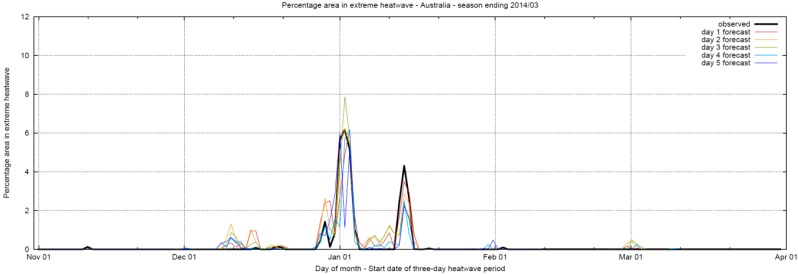
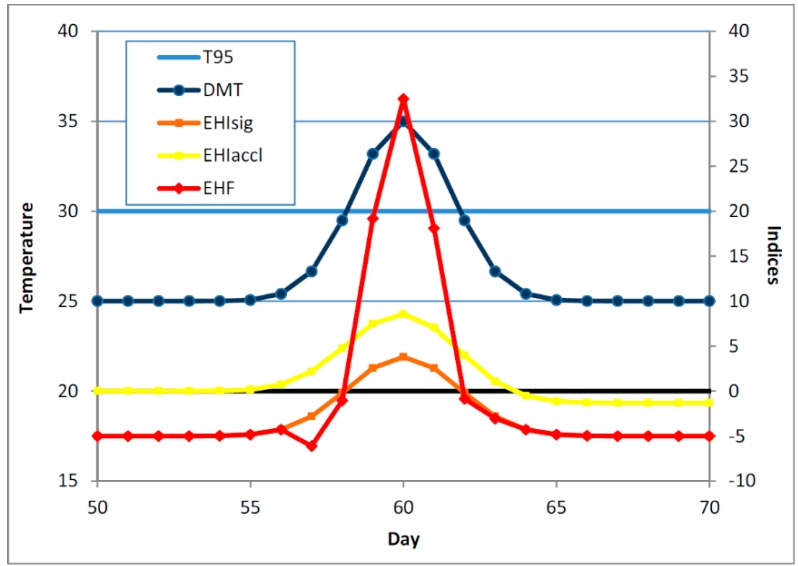
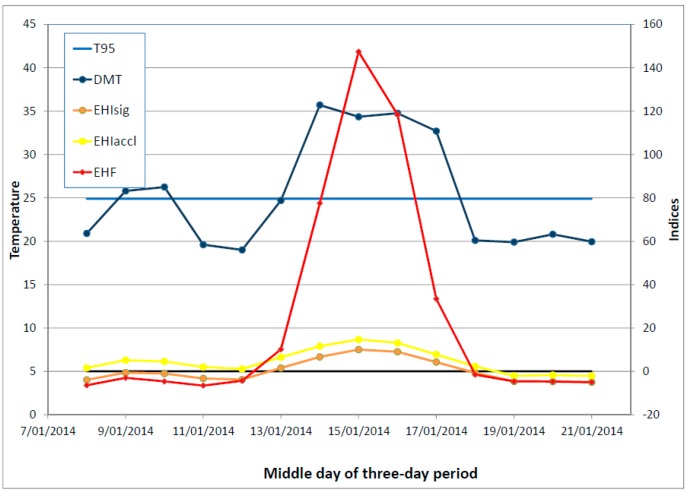
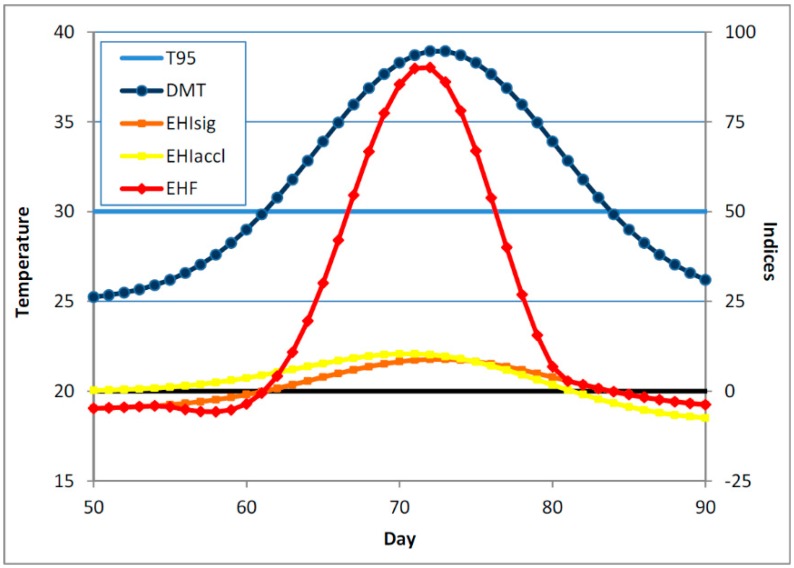
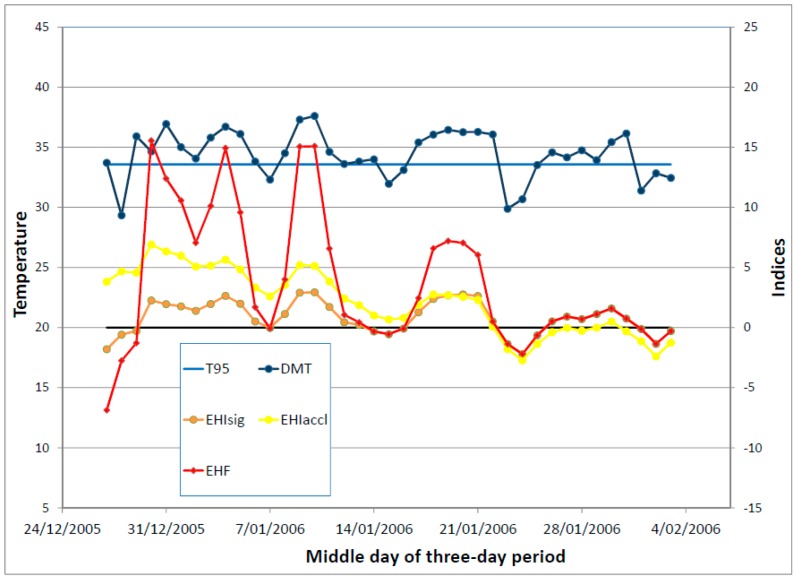
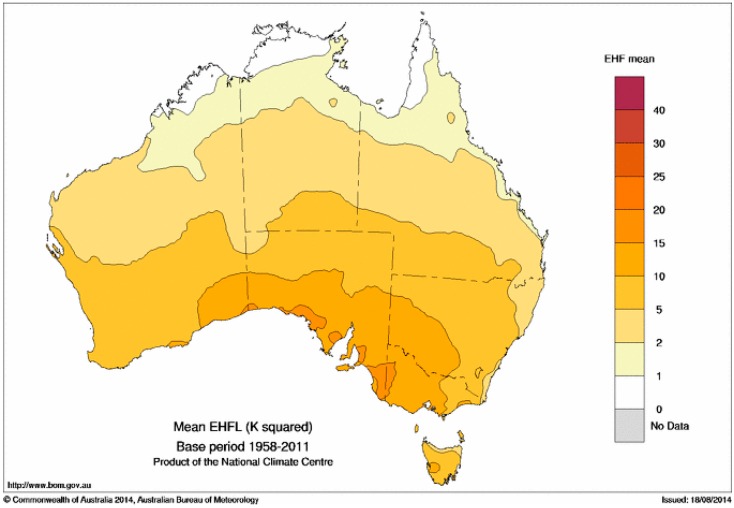
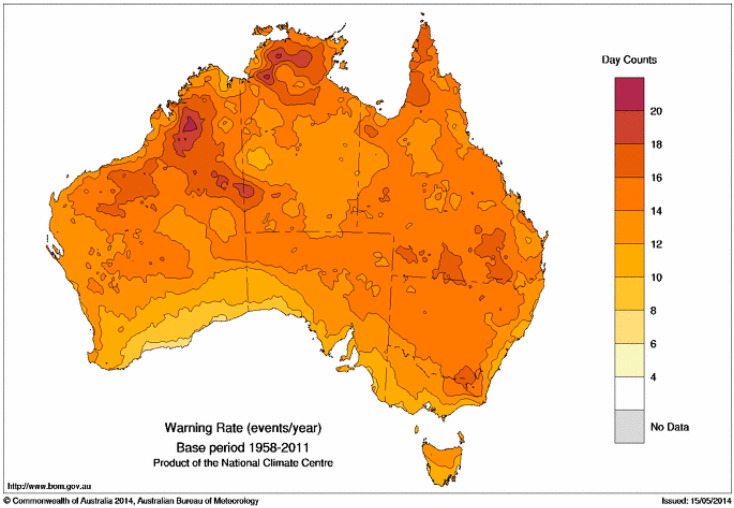
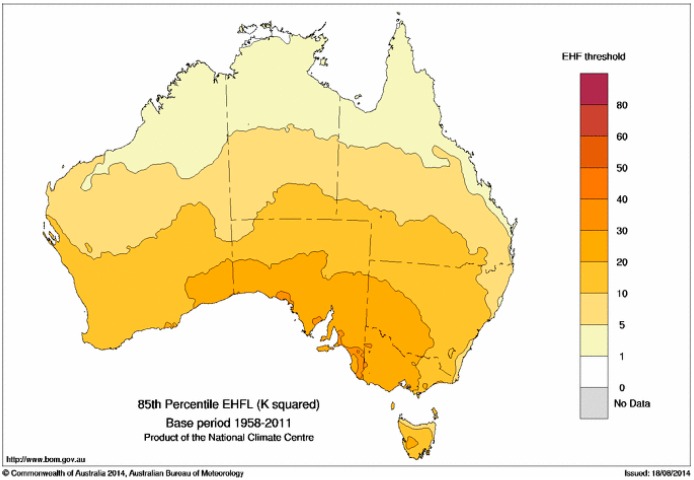
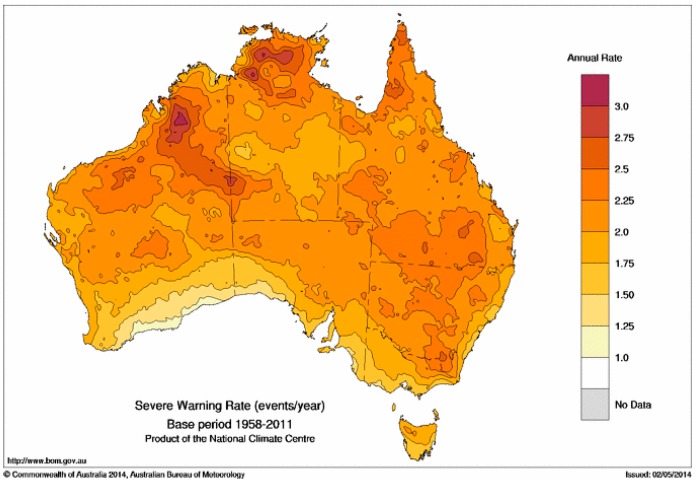
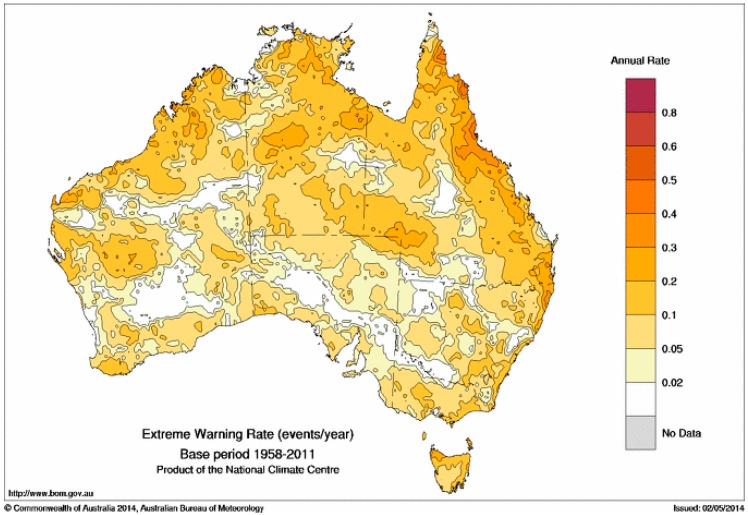
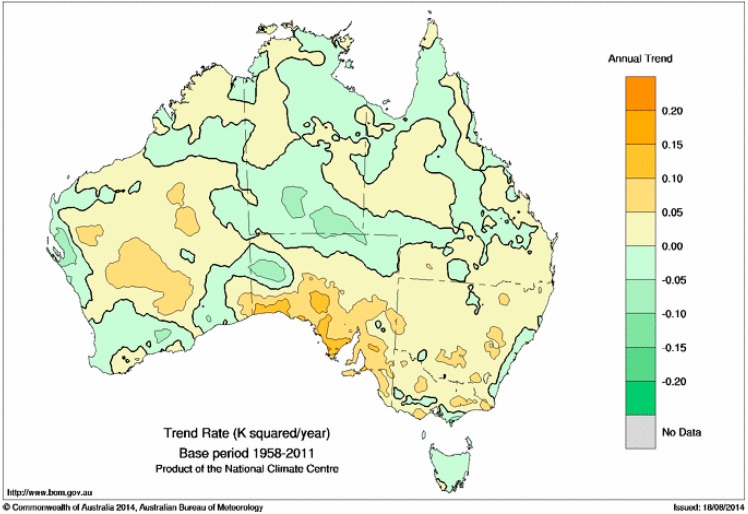
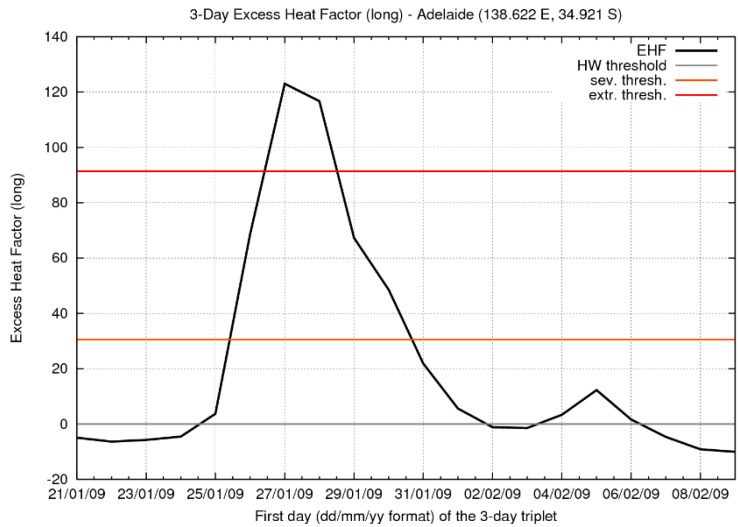
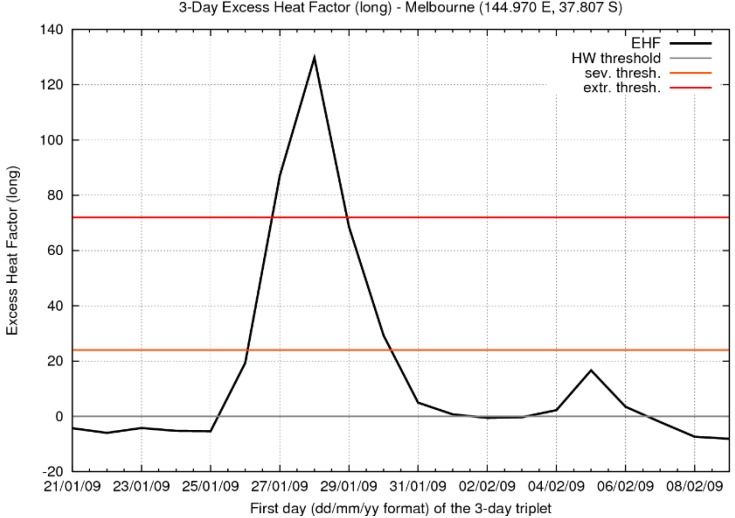
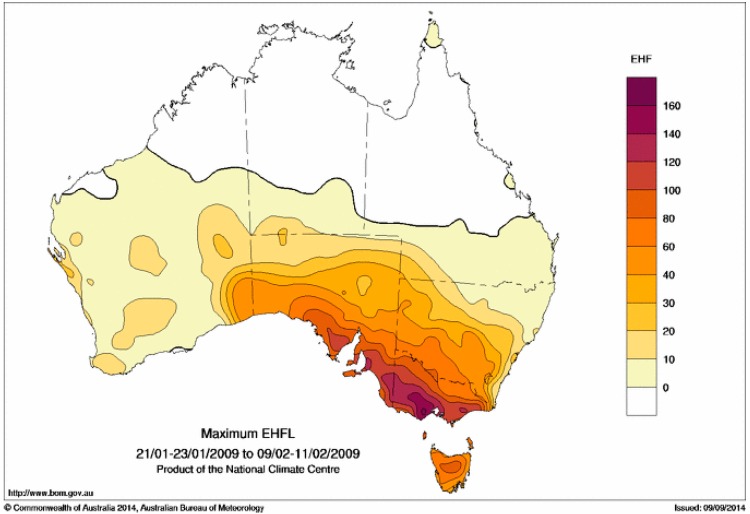
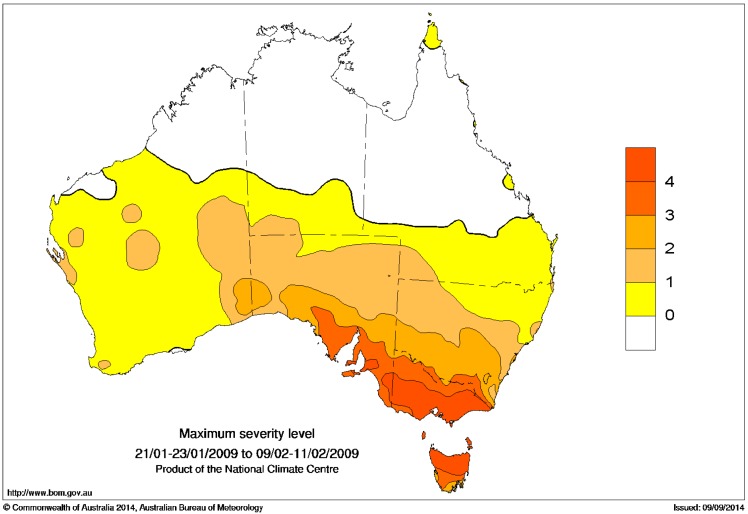
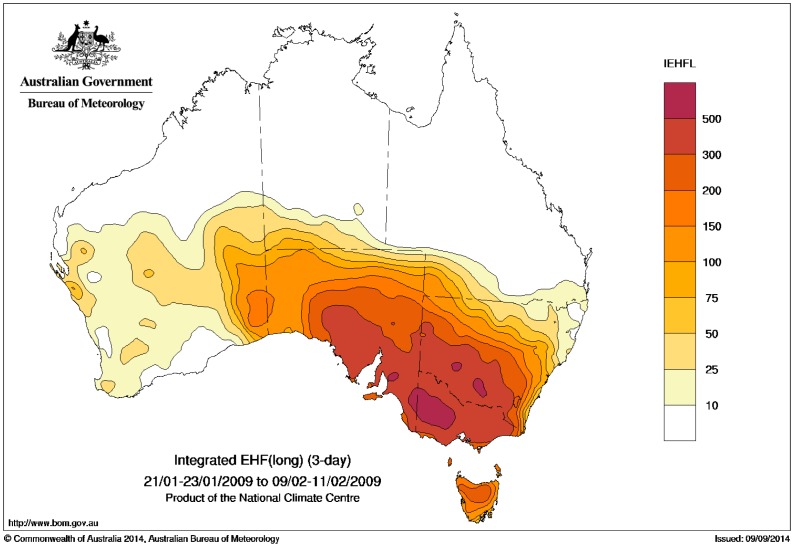
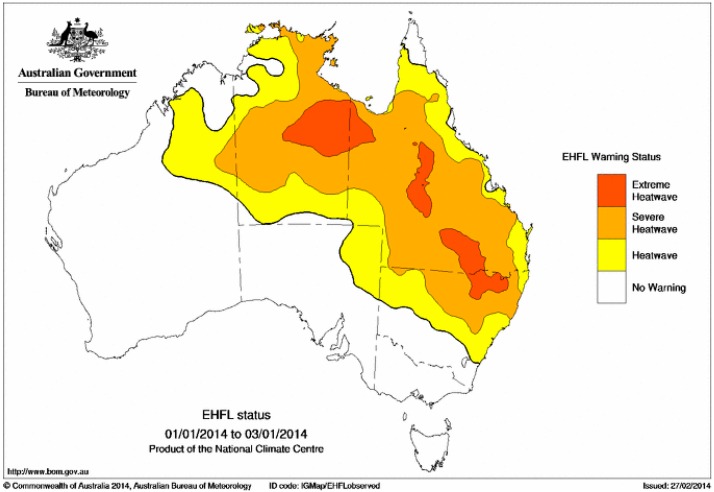
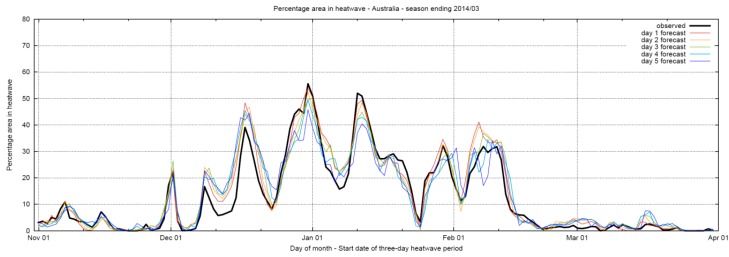
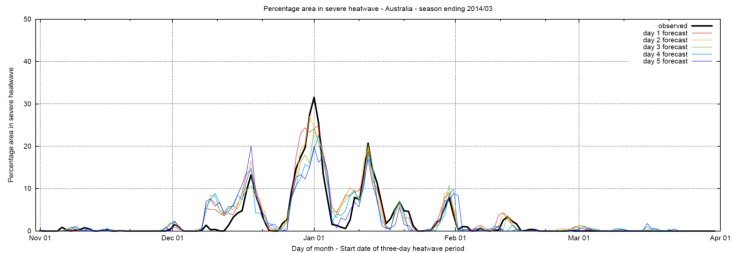
Heatwaves represent a significant natural hazard in Australia, arguably more hazardous to human life than bushfires, tropical cyclones and floods. In the 2008/2009 summer, for example, many more lives were lost to heatwaves than to that summer's bushfires which were among the worst in the history of the Australian nation. For many years, these other forms of natural disaster have received much greater public attention than heatwaves, although there are some signs of change. We propose a new index, called the excess heat factor (EHF) for use in Australian heatwave monitoring and forecasting. The index is based on a three-day-averaged daily mean temperature (DMT), and is intended to capture heatwave intensity as it applies to human health outcomes, although its usefulness is likely to be much broader and with potential for international applicability. The index is described and placed in a climatological context in order to derive heatwave severity. Heatwave severity, as characterised by the climatological distribution of heatwave intensity, has been used to normalise the climatological variation in heatwave intensity range across Australia. This methodology was used to introduce a pilot national heatwave forecasting service for Australia during the 2013/2014 summer. Some results on the performance of the service are presented.
热浪是澳大利亚一种重大的自然灾害,对人类生命而言,其危险性可以说超过丛林火灾、热带气旋和洪水。例如,在2008/2009年夏季,死于热浪的人数比死于该夏季丛林火灾的人数更多,而那次丛林火灾是澳大利亚历史上最严重的火灾之一。多年来,这些其他形式的自然灾害比热浪受到公众更多的关注,不过也有一些变化的迹象。我们提出一种新的指数,称为过热因子(EHF),用于澳大利亚的热浪监测和预报。该指数基于三日平均日平均温度(DMT),旨在反映适用于人类健康结果的热浪强度,尽管其用途可能更为广泛,且有在国际上应用的潜力。对该指数进行了描述,并将其置于气候背景下以得出热浪的严重程度。以热浪强度的气候分布为特征的热浪严重程度,已被用于对澳大利亚各地热浪强度范围的气候变异进行归一化处理。该方法在2013/2014年夏季被用于为澳大利亚引入一项全国性热浪预报试点服务。文中给出了该服务性能的一些结果。