Department of Immunology, Graduate Program in Immunology, Faculty of Medicine Siriraj Hospital, Mahidol University, Bangkok 10700, Thailand; Department of Research and Development, Division of Dengue Hemorrhagic Fever Research, Faculty of Medicine Siriraj Hospital, Mahidol University, Bangkok-Noi, Bangkok 10700, Thailand.
Department of Medicine, Faculty of Medicine, Imperial College, Hammersmith Campus, London W12 0NN, UK.
Virus Res. 2024 Jul;345:199382. doi: 10.1016/j.virusres.2024.199382. Epub 2024 May 8.
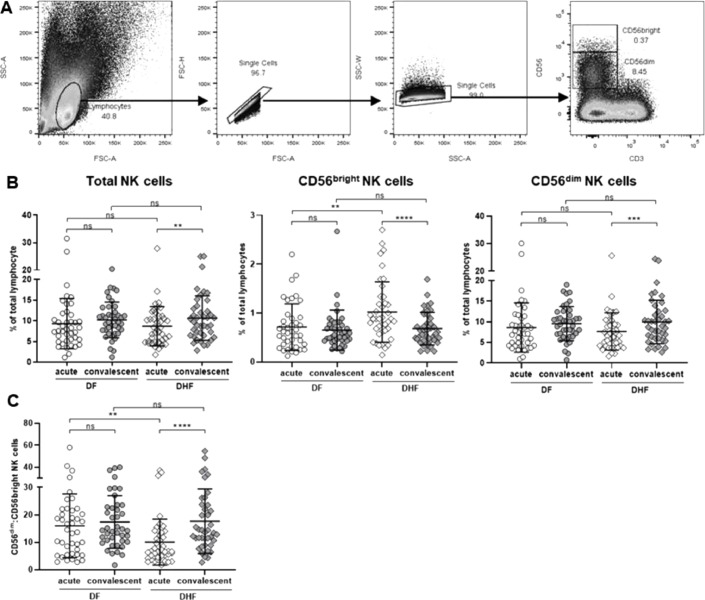
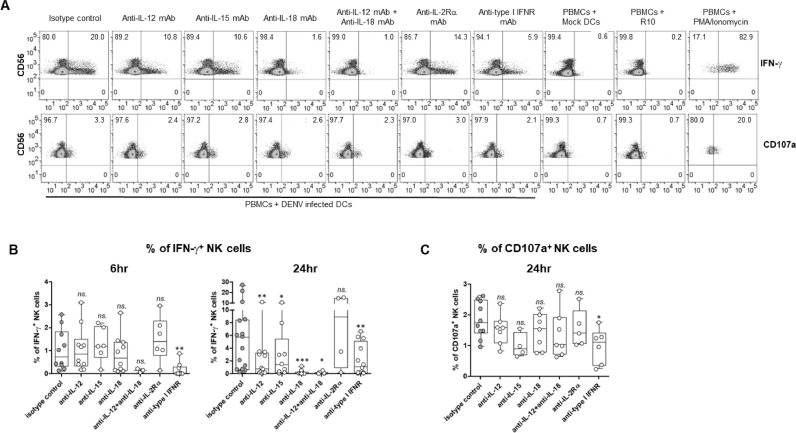
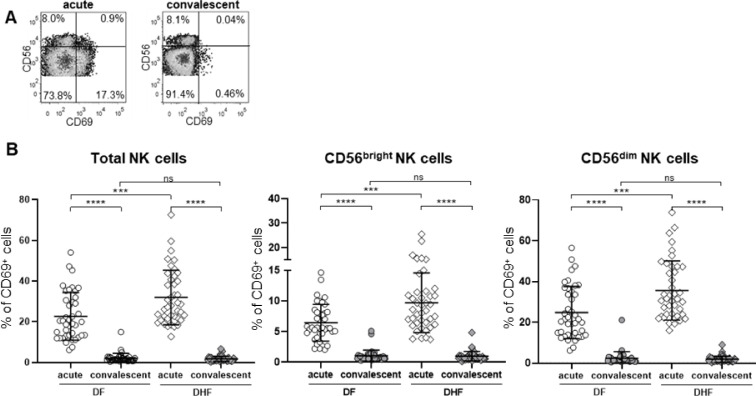
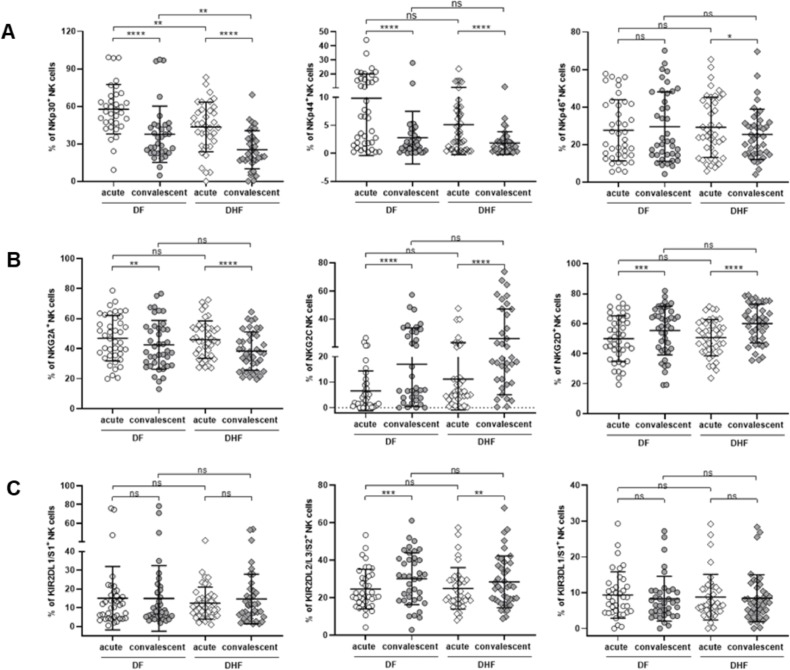
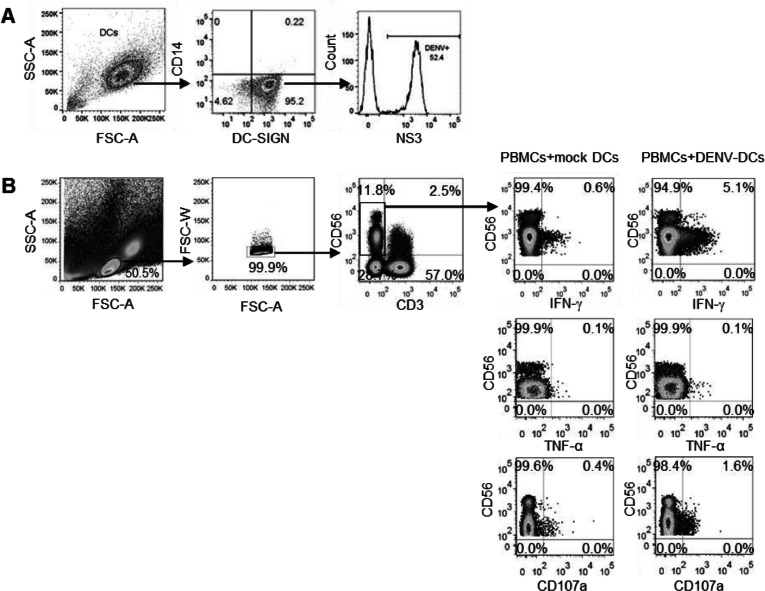
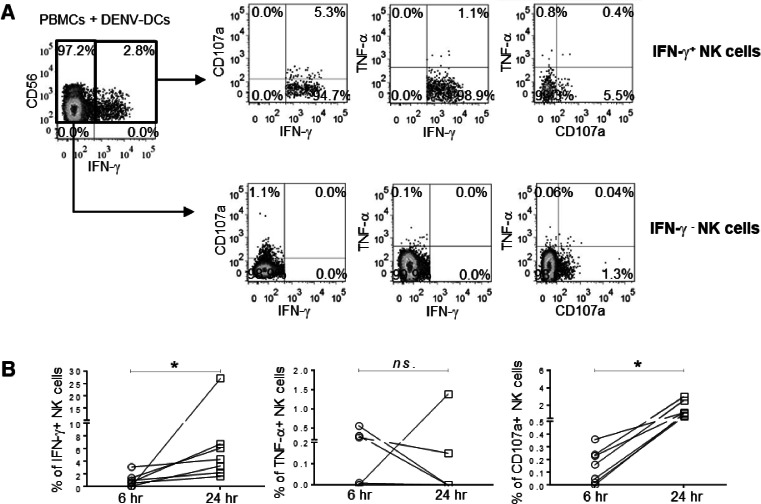
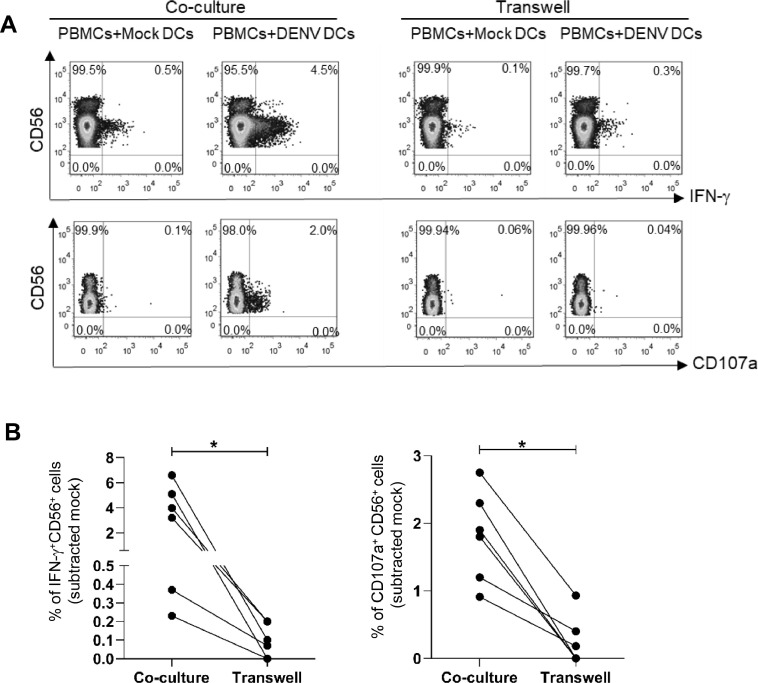
Natural killer cells (NK cells) are the front line of immune cells to combat pathogens and able to influence the subsequent adaptive immune responses. One of the factors contributing to pathogenesis in dengue hemorrhagic fever (DHF) disease is aberrant immune activation during early phase of infection. This study explored the profile of NK cells in dengue infected pediatric patients with different degrees of disease severity. DHF patients contained higher frequency of activated NK cells but lower ratio of CD56:CD56 NK subsets. Activated NK cells exhibited alterations in several NK receptors. Interestingly, the frequencies of NKp30 expressing activated NK cells were more pronounced in dengue fever (DF) than in DHF pediatric patients. In vitro functional analysis indicated that degranulation of NK cells in responding to dengue infected dendritic cells (DCs) required cell-cell contact and type I IFNs. Meanwhile, Interferon gamma (IFN-γ) production initially required cell-cell contact and type I IFNs followed by Interleukin-12 (IL-12), Interleukin-15 (IL-15) and Interleukin-18 (IL-18) resulting in the amplification of IFN-γ producing NK cells over time. This study highlighted the complexity and the factors influencing NK cells responses to dengue virus. Degree of activation, phenotypes of activated cells and the crosstalk between NK cells and other immune cells, could modulate the outcome of NK cells function in the dengue disease.
自然杀伤细胞(NK 细胞)是抵御病原体的免疫细胞的第一道防线,能够影响随后的适应性免疫反应。登革出血热(DHF)疾病发病机制的一个因素是感染早期异常的免疫激活。本研究探讨了不同疾病严重程度的登革热感染儿科患者 NK 细胞的特征。DHF 患者中激活的 NK 细胞频率更高,但 CD56:CD56 NK 亚群的比例较低。激活的 NK 细胞在几种 NK 受体上表现出改变。有趣的是,在登革热(DF)患者中,表达 NKp30 的激活 NK 细胞的频率比 DHF 儿科患者更高。体外功能分析表明,NK 细胞对登革热感染树突状细胞(DCs)的脱颗粒作用需要细胞-细胞接触和 I 型 IFNs。同时,干扰素 γ(IFN-γ)的产生最初需要细胞-细胞接触和 I 型 IFNs,随后需要白细胞介素 12(IL-12)、白细胞介素 15(IL-15)和白细胞介素 18(IL-18),从而导致 IFN-γ产生 NK 细胞随着时间的推移而扩增。本研究强调了 NK 细胞对登革病毒反应的复杂性和影响因素。激活程度、激活细胞的表型以及 NK 细胞与其他免疫细胞之间的串扰,可能调节 NK 细胞在登革病中的功能结果。