Sentient Research, 231 North Walnuthaven Drive, West Covina, CA, 91790, USA.
Keck School of Medicine, University of Southern California, 1975 Zonal Avenue, Los Angeles, CA, 90033, USA.
BMC Public Health. 2024 May 7;24(1):1247. doi: 10.1186/s12889-024-18652-1.
Young Black gay and bisexual men (YBGBM) in the United States face significant disparities in HIV care outcomes. Mobile health (mHealth) interventions have shown promise with improving outcomes for YBGBM across the HIV care continuum.
We developed an mHealth application using human-centered design (HCD) from 2019-2021 in collaboration with YBGBM living with HIV and with HIV service providers. Our HCD process began with six focus groups with 50 YBGBM and interviews with 12 providers. These insights were used to inform rapid prototyping, which involved iterative testing and refining of program features and content, with 31 YBGBM and 12 providers. We then collected user feedback via an online survey with 200 YBGBM nationwide and usability testing of a functional prototype with 21 YBGBM.
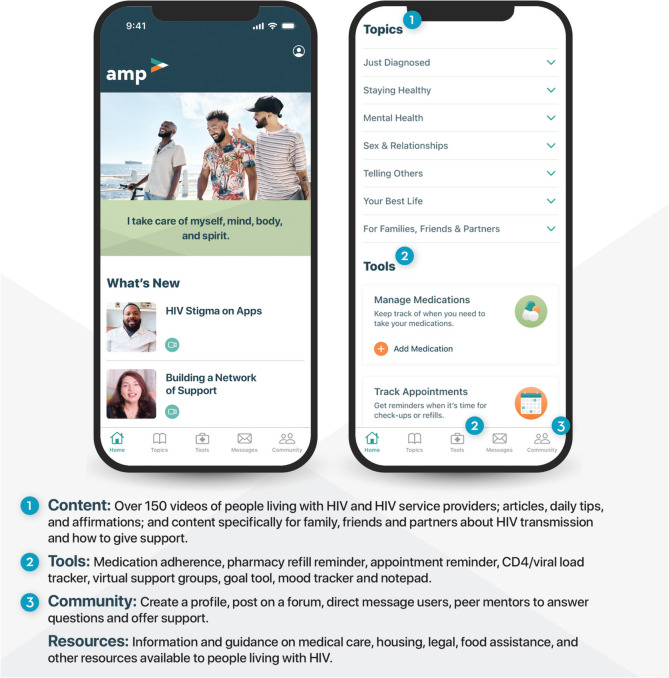
Focus groups and interviews illuminated challenges faced by YBGBM living with HIV, including coping with an HIV diagnosis, stigma, need for social support, and a dearth of suitable information sources. YBGBM desired a holistic approach that could meet the needs of those newly diagnosed as well as those who have been living with HIV for many years. Program preferences included video-based content where users could learn from peers and experts, a range of topics, a community of people living with HIV, and tools to support their health and well-being. Providers expressed enthusiasm for an mHealth program to improve HIV care outcomes and help them serve clients. Rapid prototyping resulted in a list of content topics, resources, video characteristics, community features, and mHealth tools to support adherence, retention, goal setting, and laboratory results tracking, as well as tools to help organization staff to support clients. Online survey and usability testing confirmed the feasibility, acceptability, and usability of the content, tools, and features.
This study demonstrates the potential of a video-based mHealth program to address the unique needs of YBGBM living with HIV, offering support and comprehensive information through a user-friendly interface and videos of peers living with HIV and of experts. The HCD approach allowed for continuous improvements to the concept to maximize cultural appropriateness, utility, and potential effectiveness for both YBGBM and HIV service organizations.
美国的年轻黑人男同性恋和双性恋者(YBGBM)在艾滋病毒护理方面存在显著差异。移动健康(mHealth)干预措施已经显示出改善 YBGBM 在整个艾滋病毒护理连续体中的结果的潜力。
我们在 2019-2021 年期间与感染艾滋病毒的 YBGBM 和艾滋病毒服务提供者合作,使用以人为本的设计(HCD)开发了一款 mHealth 应用程序。我们的 HCD 过程始于六组焦点小组,共有 50 名 YBGBM 参加,以及对 12 名提供者的采访。这些见解用于告知快速原型设计,其中包括使用迭代测试和改进程序功能和内容,涉及 31 名 YBGBM 和 12 名提供者。然后,我们通过全国范围内的 200 名 YBGBM 的在线调查和 21 名 YBGBM 的功能原型可用性测试收集用户反馈。
焦点小组和访谈揭示了感染艾滋病毒的 YBGBM 面临的挑战,包括应对艾滋病毒诊断、耻辱感、社会支持需求以及缺乏合适的信息来源。YBGBM 希望有一种能够满足新诊断者和感染艾滋病毒多年者需求的整体方法。方案偏好包括视频内容,用户可以在其中向同龄人学习并向专家学习,包括各种主题、一个艾滋病毒感染者社区,以及支持他们健康和福祉的工具。提供者对改善艾滋病毒护理结果并帮助他们为客户服务的 mHealth 计划表示热情。快速原型设计产生了一系列内容主题、资源、视频特征、社区功能和支持依从性、保留率、目标设定和实验室结果跟踪的移动健康工具,以及帮助组织工作人员支持客户的工具。在线调查和可用性测试证实了内容、工具和功能的可行性、可接受性和可用性。
本研究表明,基于视频的 mHealth 计划有可能满足感染艾滋病毒的 YBGBM 的独特需求,通过用户友好的界面和感染艾滋病毒的同伴和专家的视频提供支持和全面信息。HCD 方法允许不断改进概念,以最大限度地提高文化适宜性、实用性和对 YBGBM 和艾滋病毒服务组织的潜在有效性。