Department of Clinical Oncology, Xijing Hospital, Fourth Military Medical University, Xi'an, Shaanxi, China.
Xijing 986 Hospital Department, Fourth Military Medical University, Xi'an, Shaanxi, China.
Front Immunol. 2024 Apr 24;15:1372692. doi: 10.3389/fimmu.2024.1372692. eCollection 2024.
The tertiary lymphatic structure (TLS) is an important component of the tumor immune microenvironment and has important significance in patient prognosis and response to immune therapy. However, the underlying mechanism of TLS in soft tissue sarcoma remains unclear.
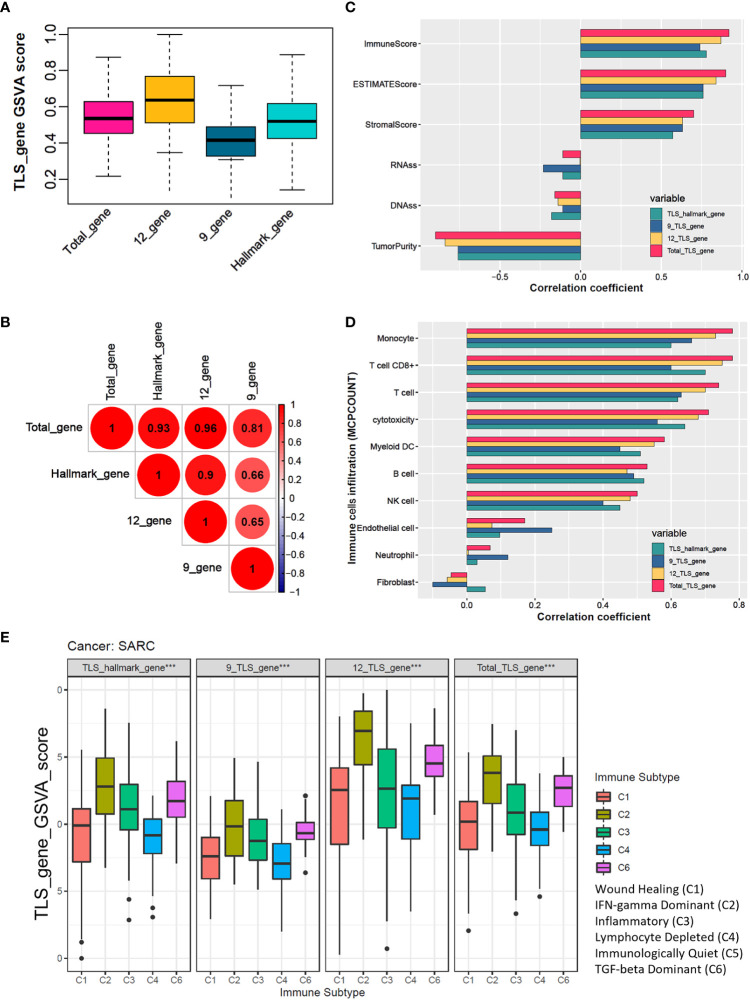
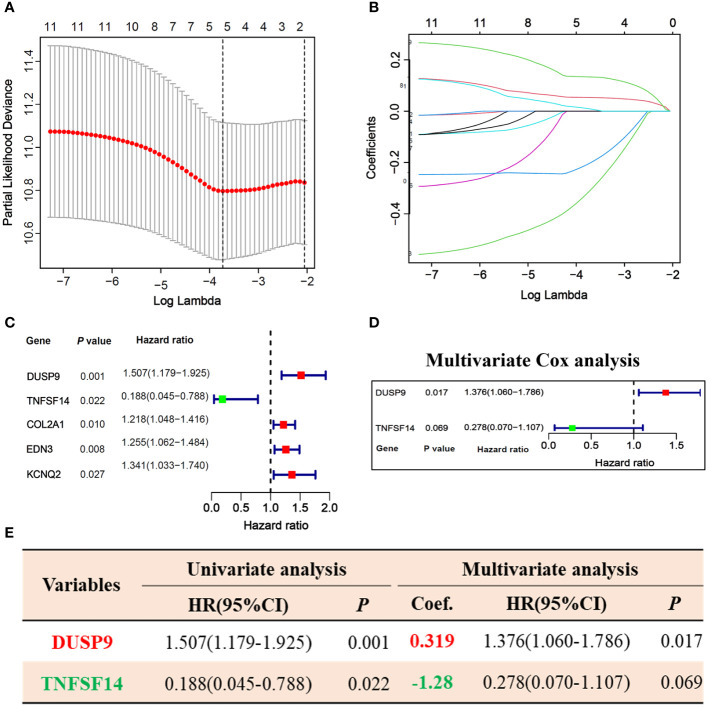
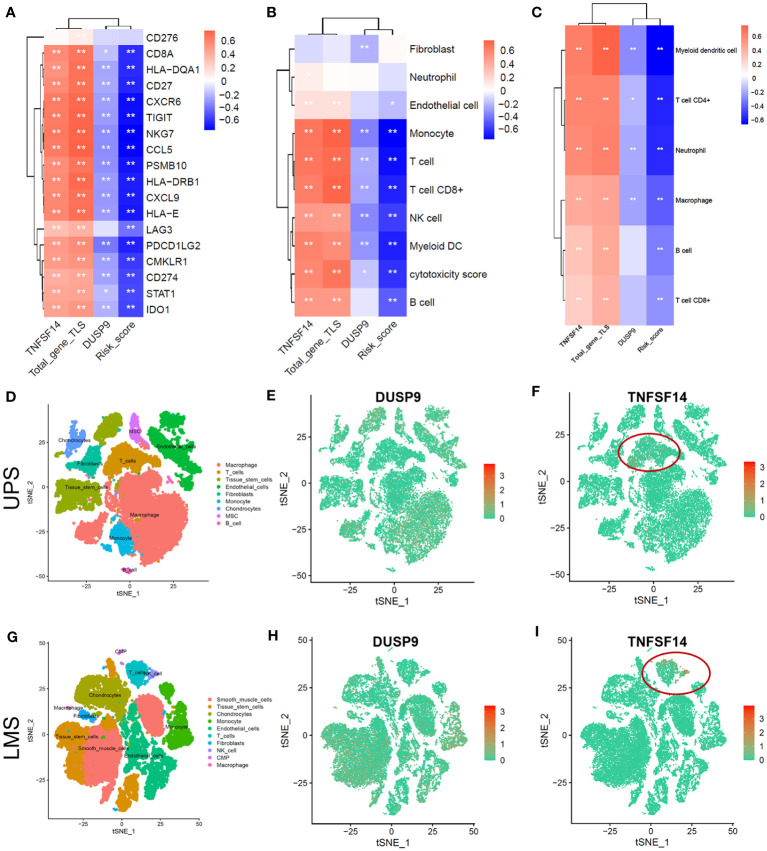
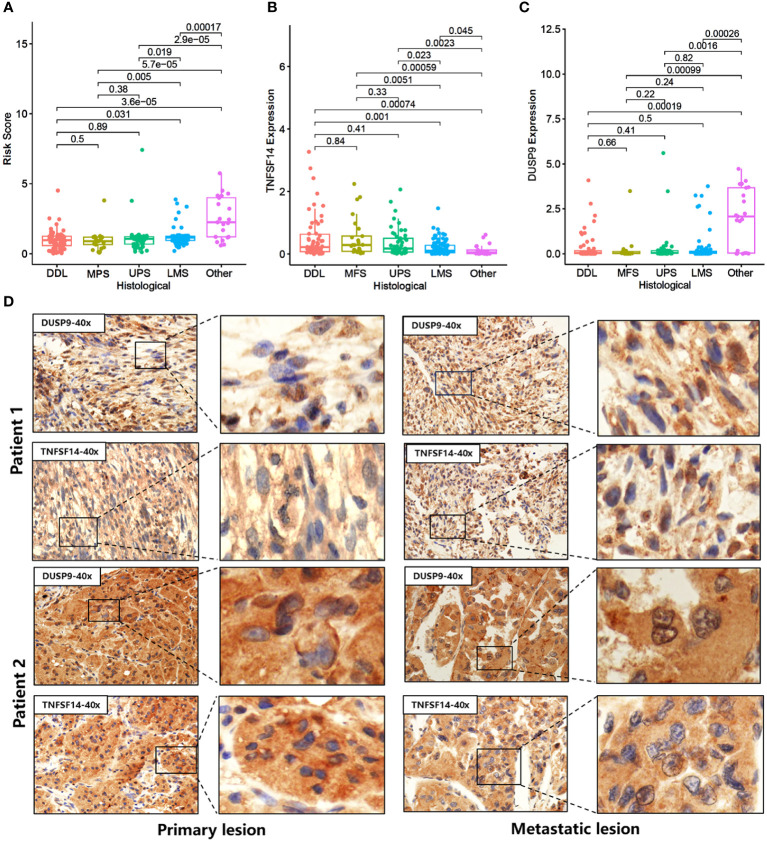
A total of 256 RNAseq and 7 single-cell sequencing samples were collected from TCGA-SARC and GSE212527 cohorts. Based on published TLS-related gene sets, four TLS scores were established by GSVA algorithm. The immune cell infiltration was calculated via TIMER2.0 and "MCPcounter" algorithms. In addition, the univariate, LASSO, and multivariate-Cox analyses were used to select TLS-related and prognosis-significant hub genes. Single-cell sequencing dataset, clinical immunohistochemical, and cell experiments were utilized to validate the hub genes.
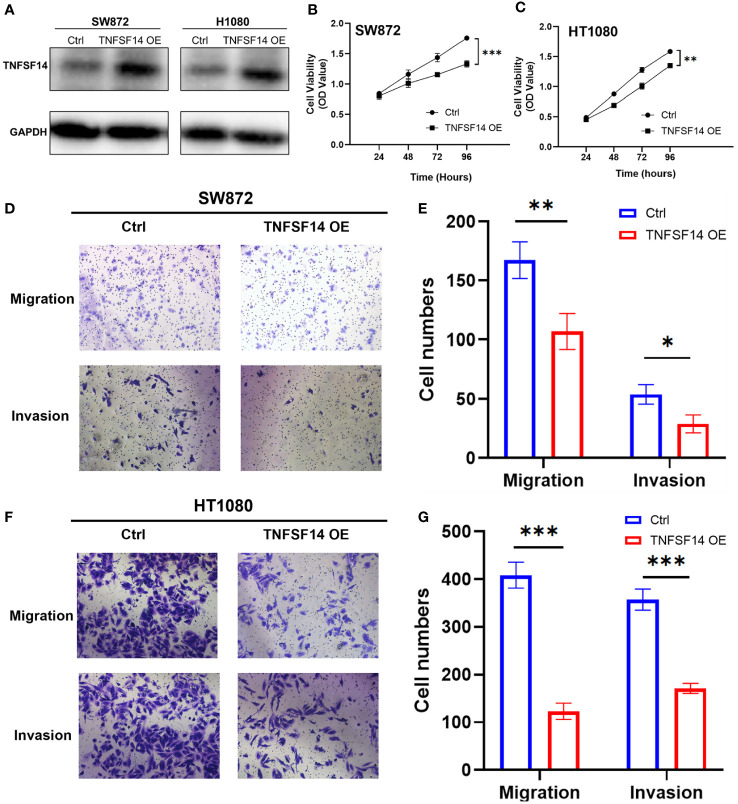
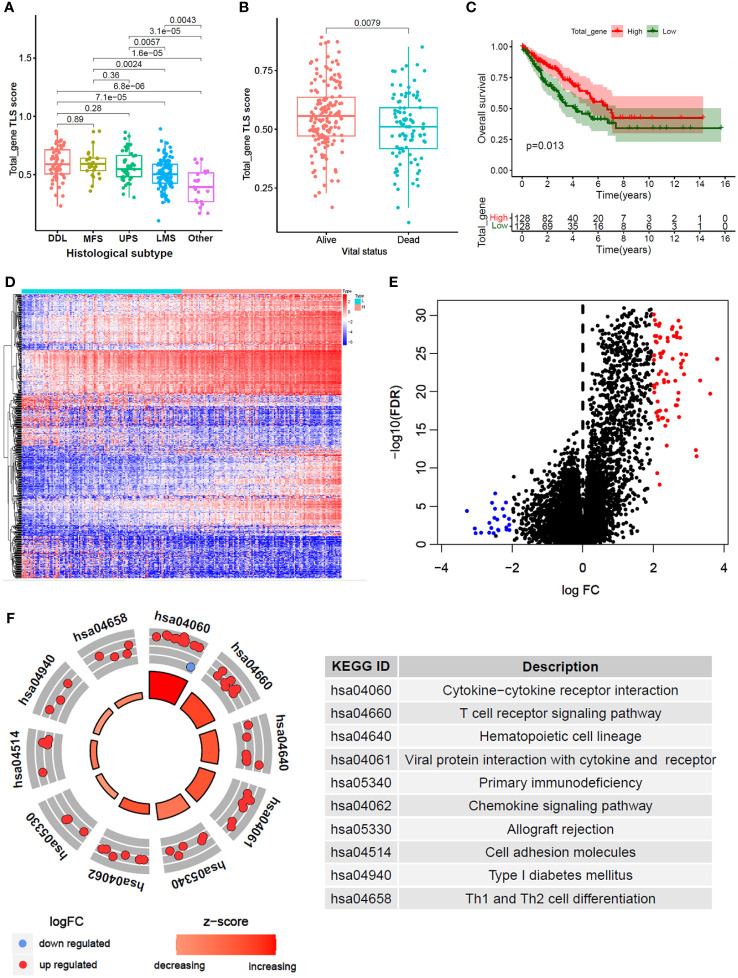
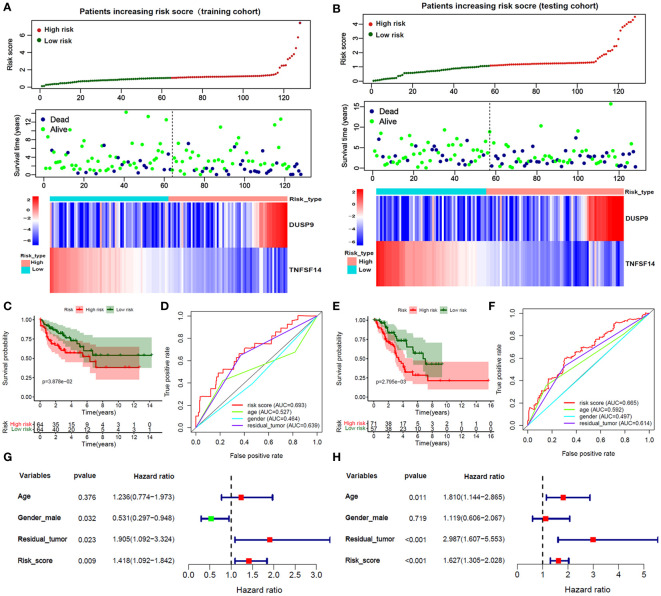
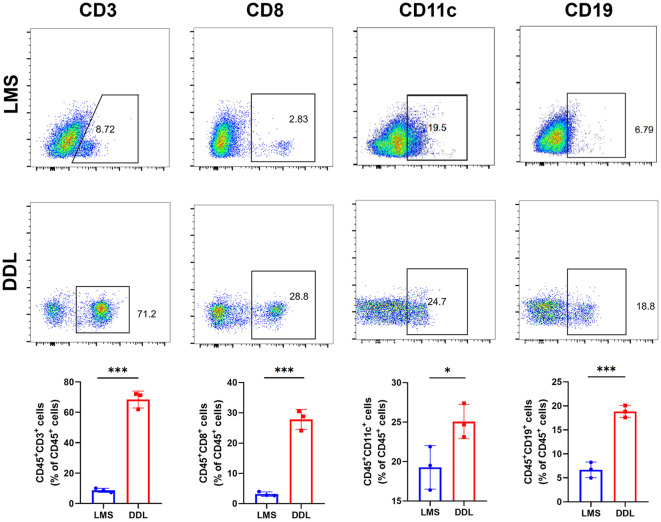
In this study, four TLS-related scores were identified, and the total-gene TLS score more accurately reflected the infiltration level of TLS in STS. We further established two hub genes (DUSP9 and TNFSF14) prognosis markers and risk scores associated with soft tissue sarcoma prognosis and immune therapy response. Flow cytometry analysis showed that the amount of CD3, CD8, CD19, and CD11c positive immune cell infiltration in the tumor tissue dedifferentiated liposarcoma patients was significantly higher than that of liposarcoma patients. Cytological experiments showed that soft tissue sarcoma cell lines overexpressing TNFSF14 could inhibit the proliferation and migration of sarcoma cells.
This study systematically explored the TLS and related genes from the perspectives of bioinformatics, clinical features and cytology experiments. The total-gene TLS score, risk score and TNFSF14 hub gene may be useful biomarkers for predicting the prognosis and immunotherapy efficacy of soft tissue sarcoma.
三级淋巴结构(TLS)是肿瘤免疫微环境的重要组成部分,对患者预后和免疫治疗反应具有重要意义。然而,TLS 在软组织肉瘤中的潜在机制尚不清楚。
本研究共收集了来自 TCGA-SARC 和 GSE212527 队列的 256 个 RNAseq 和 7 个单细胞测序样本。基于已发表的 TLS 相关基因集,通过 GSVA 算法建立了 4 个 TLS 评分。通过 TIMER2.0 和"MCPcounter"算法计算免疫细胞浸润。此外,还进行了单变量、LASSO 和多变量 Cox 分析,以筛选与 TLS 相关且与预后相关的关键基因。利用单细胞测序数据集、临床免疫组织化学和细胞实验对关键基因进行验证。
本研究确定了 4 个与 TLS 相关的评分,其中总基因 TLS 评分更能准确反映 STS 中 TLS 的浸润水平。我们进一步建立了两个与预后相关的关键基因(DUSP9 和 TNFSF14)标志物和风险评分,与软组织肉瘤的预后和免疫治疗反应相关。流式细胞术分析显示,去分化脂肪肉瘤患者肿瘤组织中 CD3、CD8、CD19 和 CD11c 阳性免疫细胞浸润的数量明显高于脂肪肉瘤患者。细胞学实验表明,过表达 TNFSF14 的软组织肉瘤细胞系可抑制肉瘤细胞的增殖和迁移。
本研究从生物信息学、临床特征和细胞学实验的角度系统地探讨了 TLS 及其相关基因。总基因 TLS 评分、风险评分和 TNFSF14 关键基因可能是预测软组织肉瘤预后和免疫治疗效果的有用生物标志物。