Faculty of Nursing and Midwifery, Tabriz University of Medical Sciences Tabriz, Tabriz, East Azerbaijan, Iran.
School of Nursing & Midwifery, Tabriz University of Medical Sciences, Tabriz, Iran.
BMC Cardiovasc Disord. 2024 May 9;24(1):244. doi: 10.1186/s12872-024-03884-1.
Heart failure (HF) is a major public health issue worldwide, affecting approximately 64.3 million people in 2017. Non-adherence to medication is a common and serious issue in the management of HF. However, new reminder systems utilizing mobile technology, such as text messaging, have shown promise in improving medication adherence. The purpose of this study was to compare the impact of tailored text messaging (TTM) and pillbox organizers on medication adherence in individuals with HF.
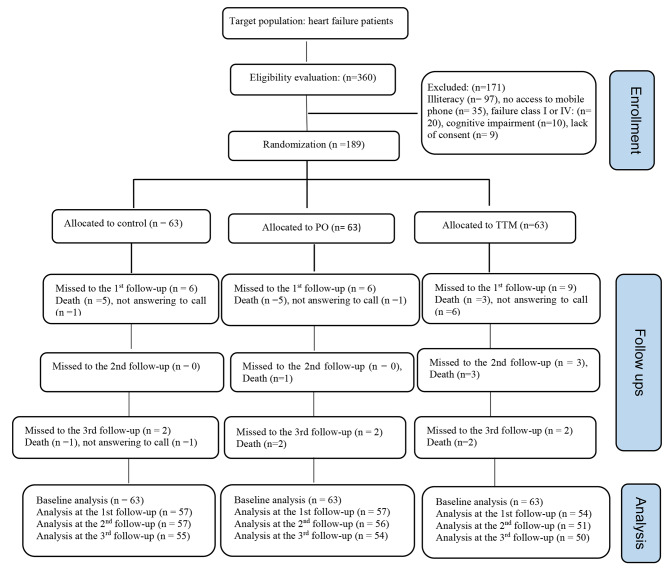
A randomized controlled trial was conducted, involving 189 eligible patients with HF who were randomly assigned to either the TTM, pillbox organizer, or control group. Medication adherence was evaluated using pill counting and the Medication Adherence Rating Scale (MARS) over a period of three months and compared across the groups. The data were analyzed using Kruskal-Wallis, Analysis of Variance (ANOVA), and Repeated Measures ANOVA tests.
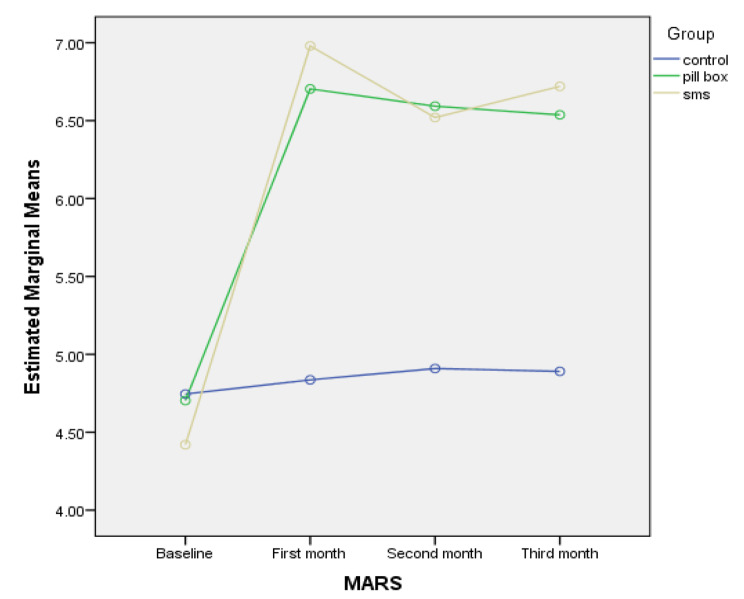
The results indicate that both the TTM and pillbox organizers groups had significantly higher medication adherence compared to the control group, as measured by pill counting (MD = 0.05, 95%CI = 0.03-0.06; p < 0.001 for TTM group, MD = 0.04, 95%CI = 0.03-0.06; p < 0.001 for pillbox organizers group) and the MARS (MD = 1.32, 95%CI = 0.93 to 1.72; p < 0.001 for TTM group, MD = 1.33, 95%CI = 0.95 to 1.72; p < 0.001 for pillbox organizers group). However, there was no statistically significant difference in medication adherence between the two intervention groups using either measurement method. The TTM group exhibited a lower hospitalization rate than the other groups in the first follow up (p = 0.016).
Both the TTM and pillbox organizers were shown to be effective in enhancing medication adherence among patients with HF. Therefore, healthcare providers should take into account the patient's condition and preferences when selecting one of these methods to promote medication adherence. Future research should aim to address the limitations of this study, such as controlling for confounding variables, considering long-term effects, and comparing the effectiveness of different interventions.
心力衰竭(HF)是全球范围内的一个主要公共卫生问题,2017 年影响了大约 6430 万人。不遵医嘱用药是 HF 管理中的一个常见且严重的问题。然而,利用移动技术(如短信)的新提醒系统已显示出改善用药依从性的潜力。本研究旨在比较定制短信(TTM)和药盒对 HF 患者用药依从性的影响。
进行了一项随机对照试验,纳入了 189 名符合条件的 HF 患者,他们被随机分配到 TTM、药盒或对照组。在三个月的时间内,通过药丸计数和用药依从性评定量表(MARS)评估用药依从性,并在组间进行比较。使用 Kruskal-Wallis、方差分析(ANOVA)和重复测量 ANOVA 检验进行数据分析。
结果表明,与对照组相比,TTM 和药盒组的用药依从性均显著提高,通过药丸计数(MD=0.05,95%CI=0.03-0.06;TTM 组 p<0.001,MD=0.04,95%CI=0.03-0.06;药盒组 p<0.001)和 MARS(MD=1.32,95%CI=0.93-1.72;TTM 组 p<0.001,MD=1.33,95%CI=0.95-1.72;药盒组 p<0.001)。然而,两种干预措施在使用任何一种测量方法时,在用药依从性方面均无统计学差异。在第一次随访中,TTM 组的住院率低于其他组(p=0.016)。
TTM 和药盒均能有效提高 HF 患者的用药依从性。因此,医疗保健提供者在选择这些方法之一以促进用药依从性时,应考虑患者的病情和偏好。未来的研究应旨在解决本研究的局限性,例如控制混杂变量、考虑长期效果以及比较不同干预措施的有效性。