School of Life Sciences, Henan University, Kaifeng, Henan Province, China.
Int J Biol Sci. 2024 Apr 22;20(7):2640-2657. doi: 10.7150/ijbs.95595. eCollection 2024.
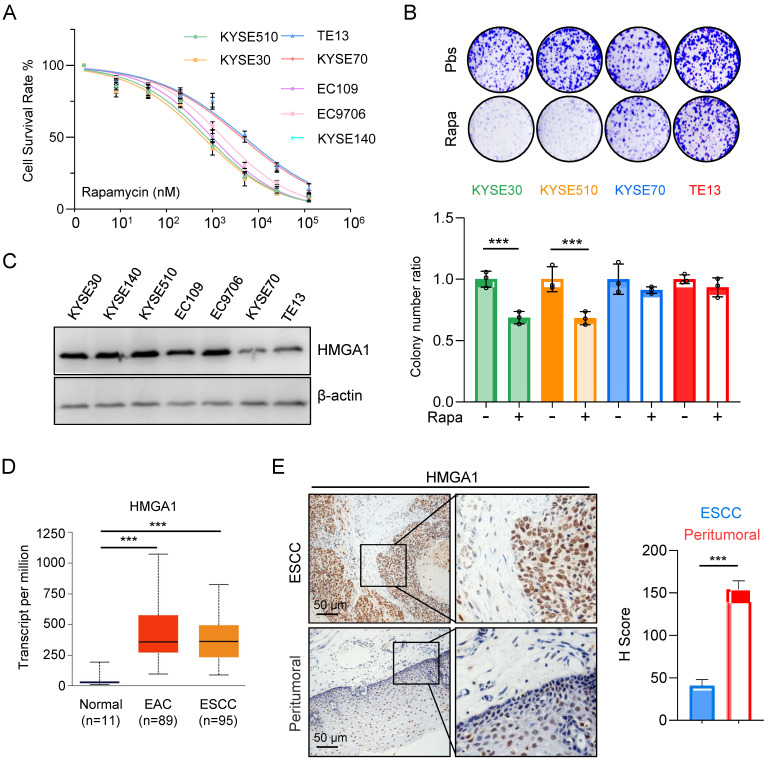
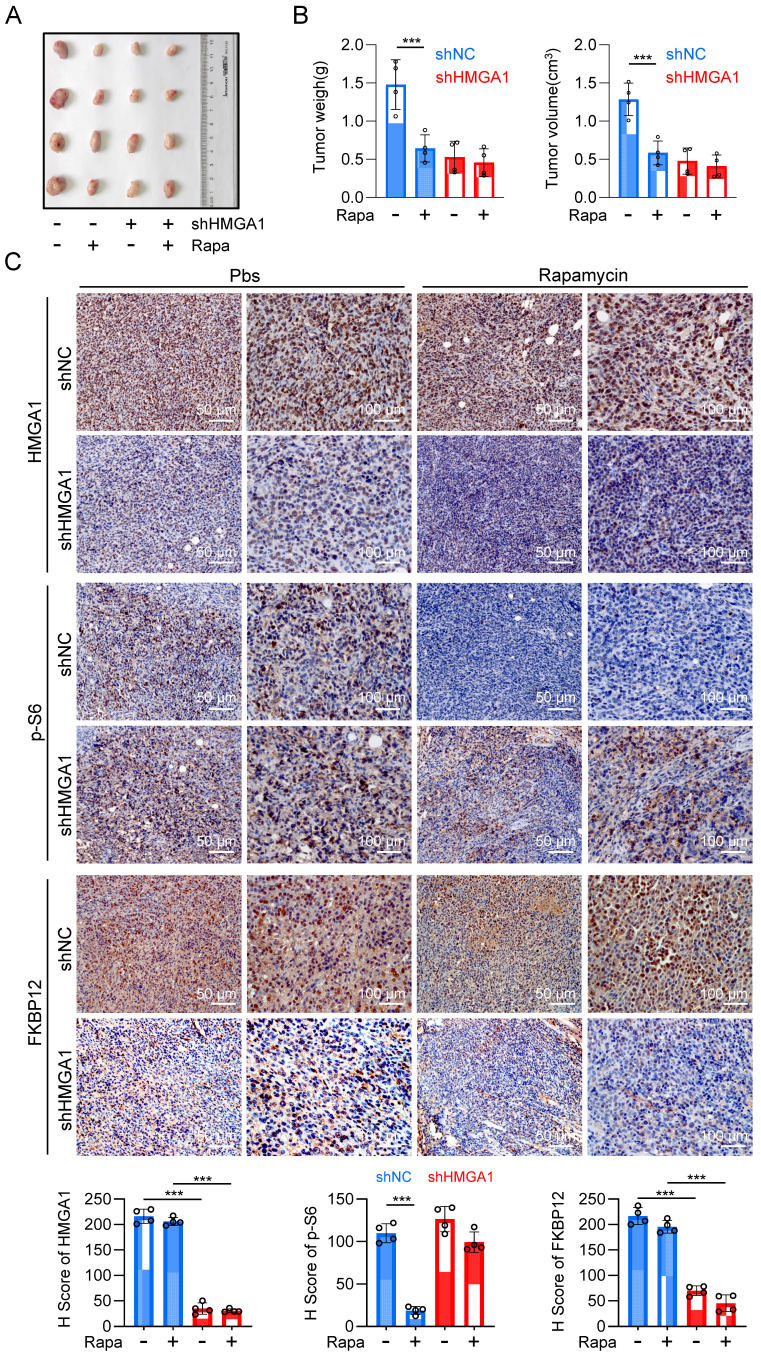
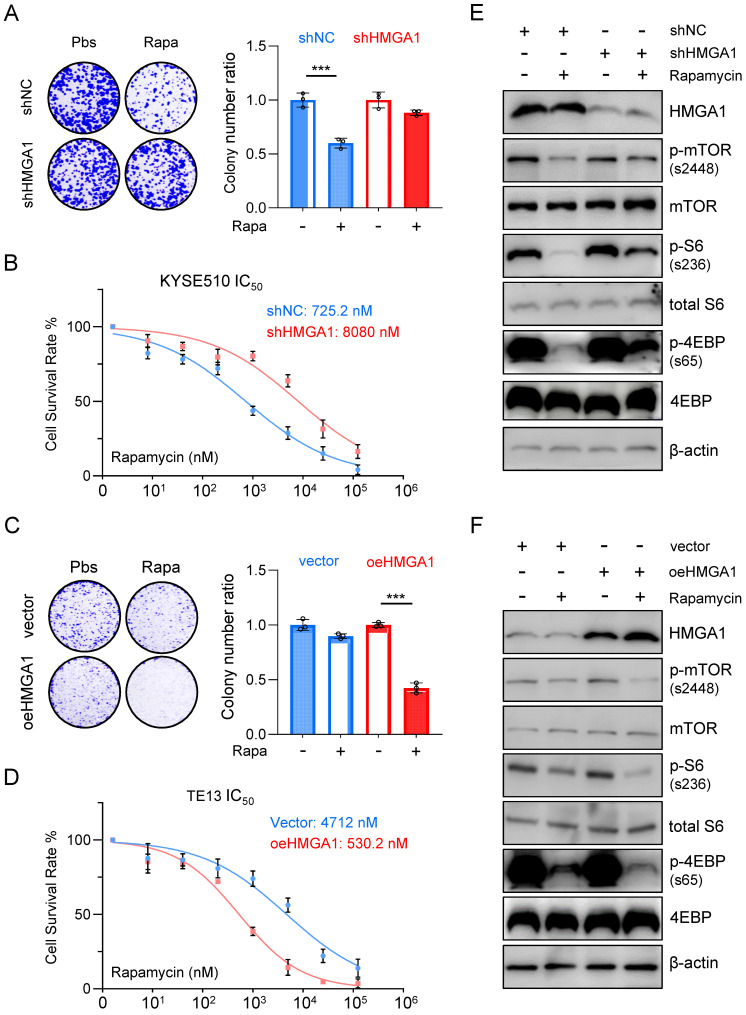
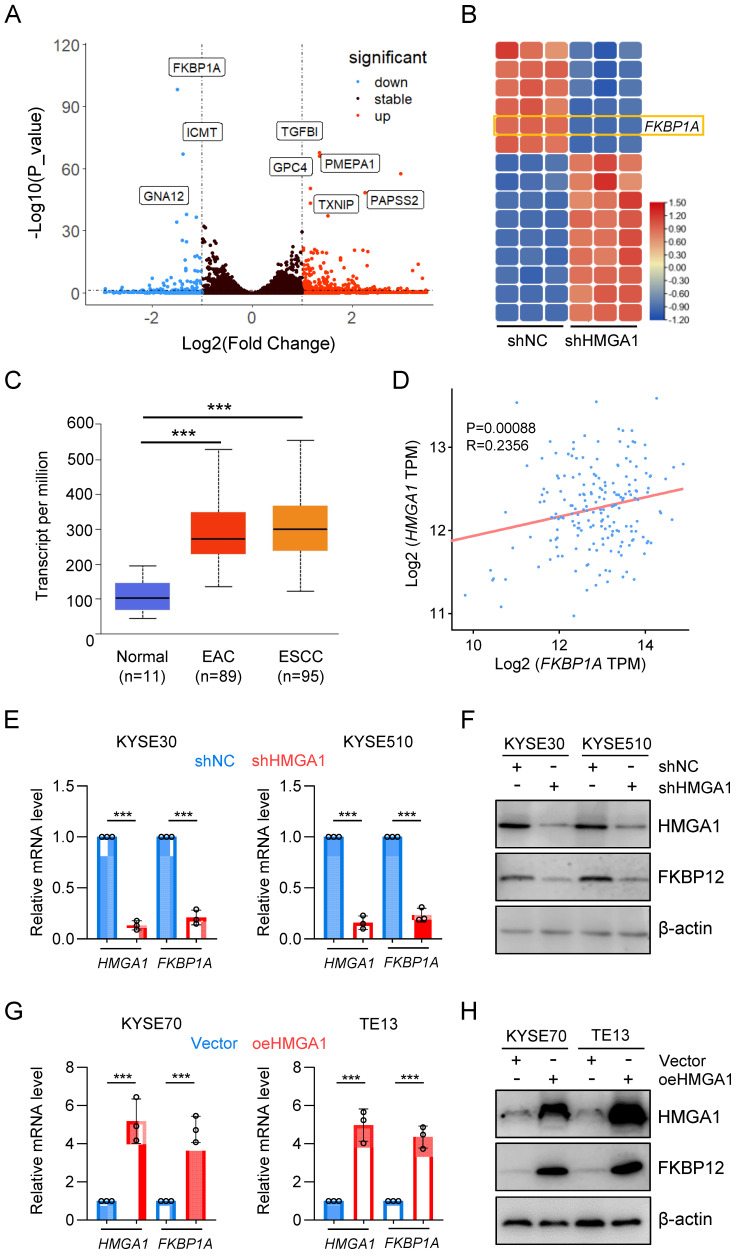
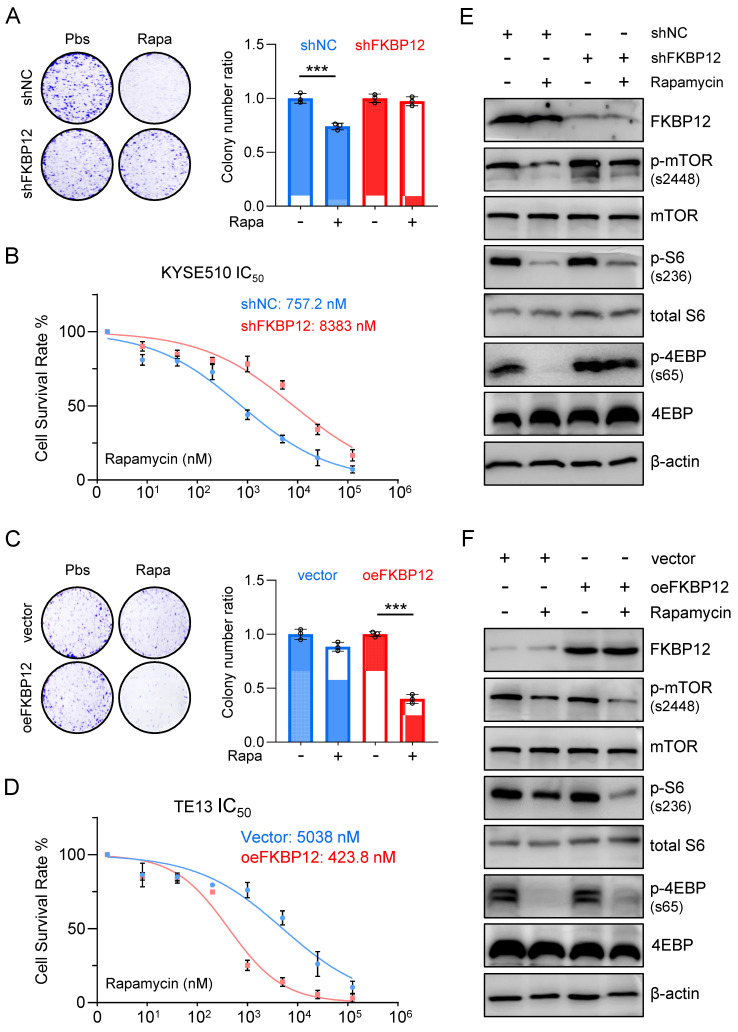
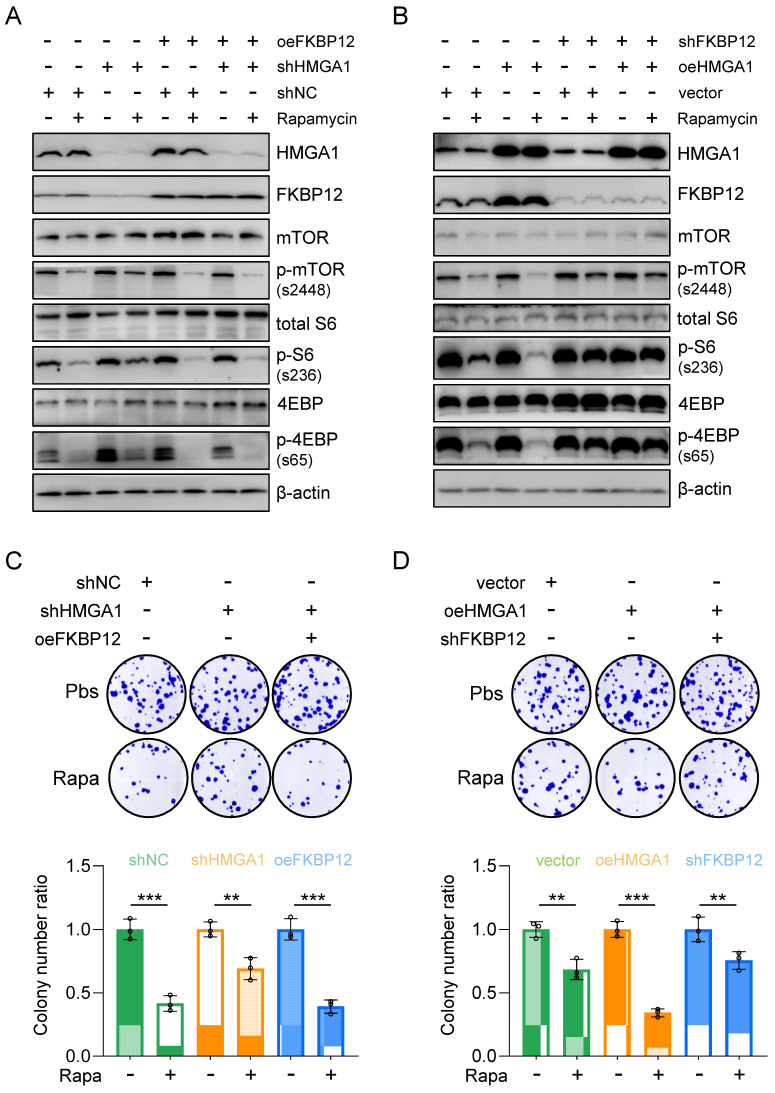
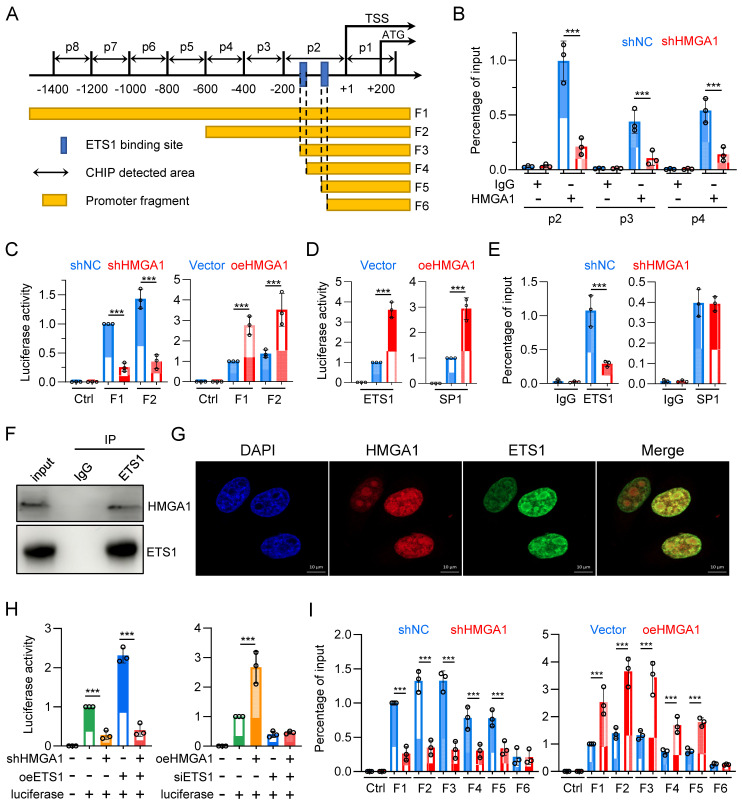
Esophageal carcinoma is amongst the prevalent malignancies worldwide, characterized by unclear molecular classifications and varying clinical outcomes. The PI3K/AKT/mTOR signaling, one of the frequently perturbed dysregulated pathways in human malignancies, has instigated the development of various inhibitory agents targeting this pathway, but many ESCC patients exhibit intrinsic or adaptive resistance to these inhibitors. Here, we aim to explore the reasons for the insensitivity of ESCC patients to mTOR inhibitors. We assessed the sensitivity to rapamycin in various ESCC cell lines by determining their respective IC50 values and found that cells with a low level of HMGA1 were more tolerant to rapamycin. Subsequent experiments have supported this finding. Through a transcriptome sequencing, we identified a crucial downstream effector of HMGA1, FKBP12, and found that FKBP12 was necessary for HMGA1-induced cell sensitivity to rapamycin. HMGA1 interacted with ETS1, and facilitated the transcription of FKBP12. Finally, we validated this regulatory axis in experiments, where HMGA1 deficiency in transplanted tumors rendered them resistance to rapamycin. Therefore, we speculate that mTOR inhibitor therapy for individuals exhibiting a reduced level of HMGA1 or FKBP12 may not work. Conversely, individuals exhibiting an elevated level of HMGA1 or FKBP12 are more suitable candidates for mTOR inhibitor treatment.
食管癌是全球常见的恶性肿瘤之一,其特点是分子分类不明确,临床结局各异。PI3K/AKT/mTOR 信号通路是人类恶性肿瘤中经常失调的途径之一,它促使开发了各种针对该途径的抑制性药物,但许多 ESCC 患者对这些抑制剂表现出内在或适应性耐药。在这里,我们旨在探讨 ESCC 患者对 mTOR 抑制剂不敏感的原因。我们通过测定各自的 IC50 值来评估各种 ESCC 细胞系对雷帕霉素的敏感性,发现 HMGA1 水平低的细胞对雷帕霉素的耐受性更强。随后的实验支持了这一发现。通过转录组测序,我们确定了 HMGA1 的一个关键下游效应物 FKBP12,并发现 FKBP12 是 HMGA1 诱导细胞对雷帕霉素敏感性所必需的。HMGA1 与 ETS1 相互作用,促进 FKBP12 的转录。最后,我们在实验中验证了这个调控轴,其中移植瘤中 HMGA1 的缺失使它们对雷帕霉素产生耐药性。因此,我们推测对于 HMGA1 或 FKBP12 水平降低的个体,mTOR 抑制剂治疗可能无效。相反,HMGA1 或 FKBP12 水平升高的个体更适合接受 mTOR 抑制剂治疗。