Antiviral Pharmacology Laboratory, College of Pharmacy, University of Nebraska Medical Center, 986145 Nebraska Medical Center, Omaha, NE, 68198-6145, USA.
Department of Pediatrics, Division of Infectious Diseases, University of Southern California, Children's Hospital Los Angeles, Los Angeles, CA, USA.
Sci Rep. 2024 May 10;14(1):10709. doi: 10.1038/s41598-024-60935-5.
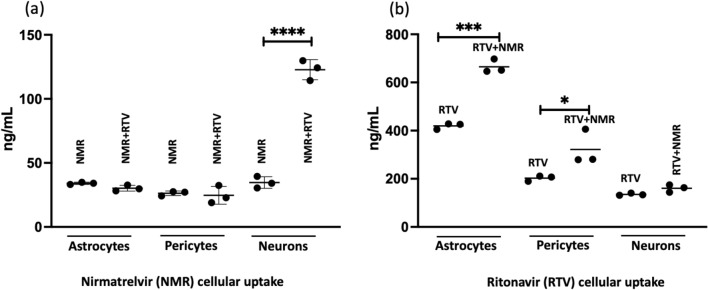
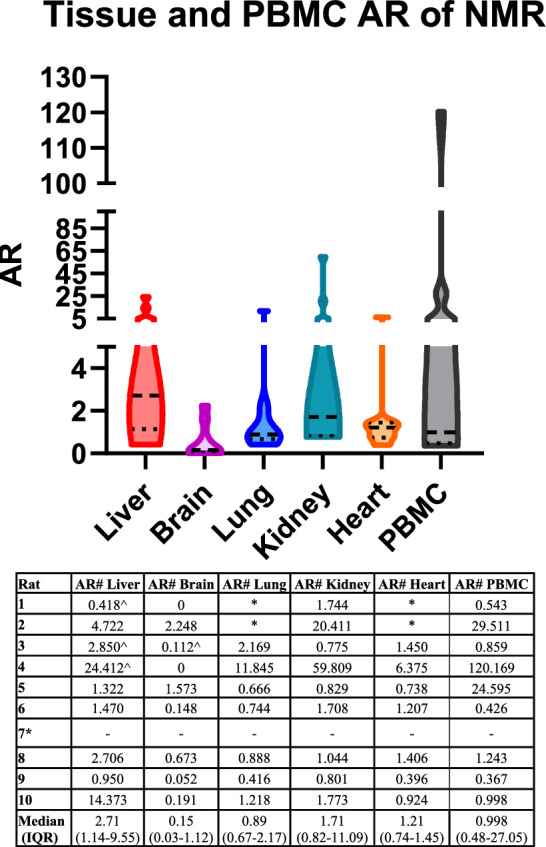
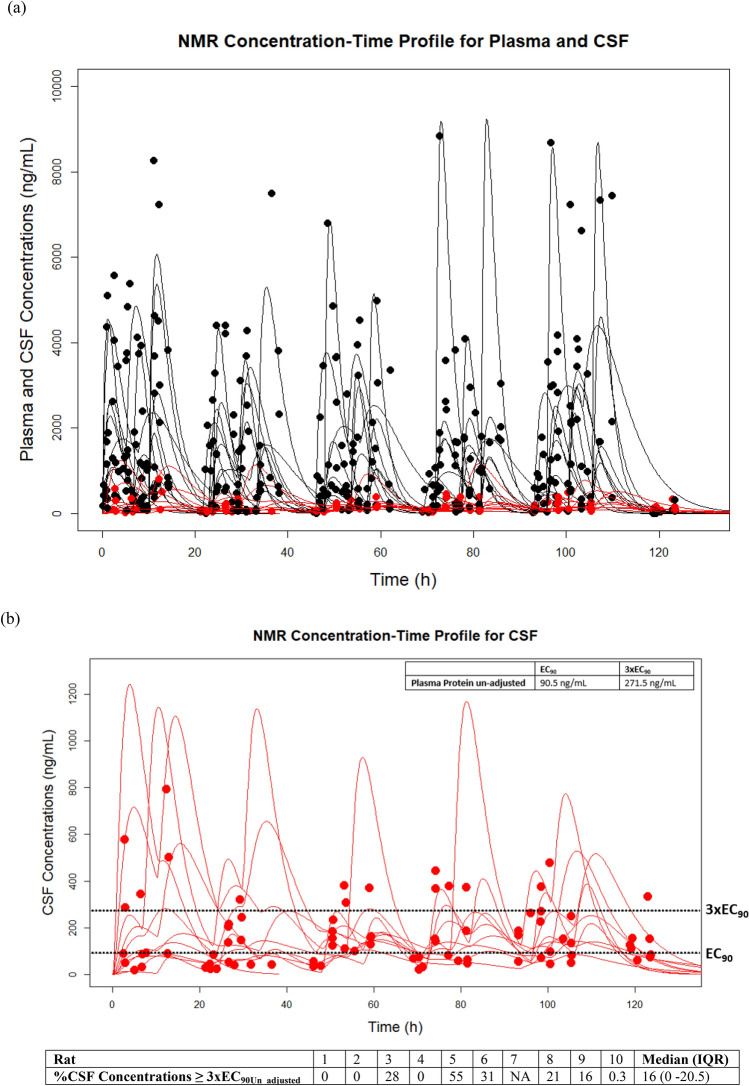
Three years after SARS-CoV-2 emerged as a global infectious threat, the virus has become endemic. The neurological complications such as depression, anxiety, and other CNS complications after COVID-19 disease are increasing. The brain, and CSF have been shown as viral reservoirs for SARS-CoV-2, yielding a potential hypothesis for CNS effects. Thus, we investigated the CNS pharmacology of orally dosed nirmatrelvir/ritonavir (NMR/RTV). Using both an in vitro and an in vivo rodent model, we investigated CNS penetration and potential pharmacodynamic activity of NMR. Through pharmacokinetic modeling, we estimated the median CSF penetration of NMR to be low at 18.11% of plasma with very low accumulation in rodent brain tissue. Based on the multiples of the 90% maximal effective concentration (EC) for SARS-CoV-2, NMR concentrations in the CSF and brain do not achieve an exposure level similar to that of plasma. A median of only 16% of all the predicted CSF concentrations in rats were > 3xEC (unadjusted for protein binding). This may have implications for viral persistence and neurologic post-acute sequelae of COVID-19 if increased NMR penetration in the CNS leads to decreased CNS viral loads and decreased CNS inflammation.
SARS-CoV-2 作为一种全球性传染病威胁出现三年后,该病毒已成为地方性疾病。COVID-19 疾病后出现的抑郁、焦虑和其他中枢神经系统并发症等神经并发症正在增加。大脑和脑脊液已被证明是 SARS-CoV-2 的病毒储存库,为中枢神经系统的影响提供了一个潜在的假设。因此,我们研究了口服尼马曲韦/利托那韦(NMR/RTV)的中枢神经系统药理学。我们使用体外和体内啮齿动物模型研究了 NMR 的中枢神经系统渗透和潜在的药效学活性。通过药代动力学建模,我们估计 NMR 在脑脊液中的中位数渗透率为血浆的 18.11%,在啮齿动物脑组织中的蓄积非常低。基于 SARS-CoV-2 的 90%最大有效浓度(EC)的倍数,NMR 在脑脊液和大脑中的浓度未达到与血浆相似的暴露水平。在大鼠中,只有中位数 16%的所有预测的脑脊液浓度>3xEC(未考虑蛋白结合)。如果中枢神经系统中 NMR 渗透增加导致中枢神经系统病毒载量降低和中枢神经系统炎症减少,这可能对 COVID-19 的病毒持续存在和神经后急性后遗症产生影响。