Moghbeli Meysam
Department of Medical Genetics and Molecular Medicine, School of Medicine, Mashhad University of Medical Sciences, Mashhad, Iran.
Cancer Cell Int. 2024 May 10;24(1):165. doi: 10.1186/s12935-024-03357-7.
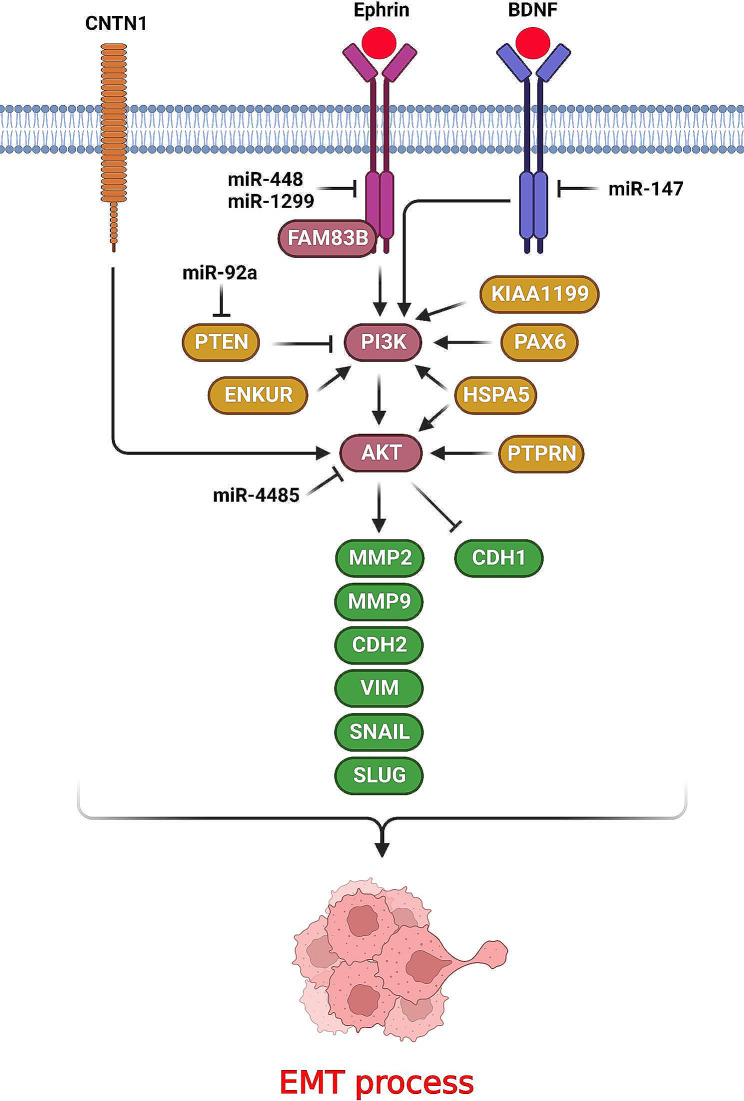
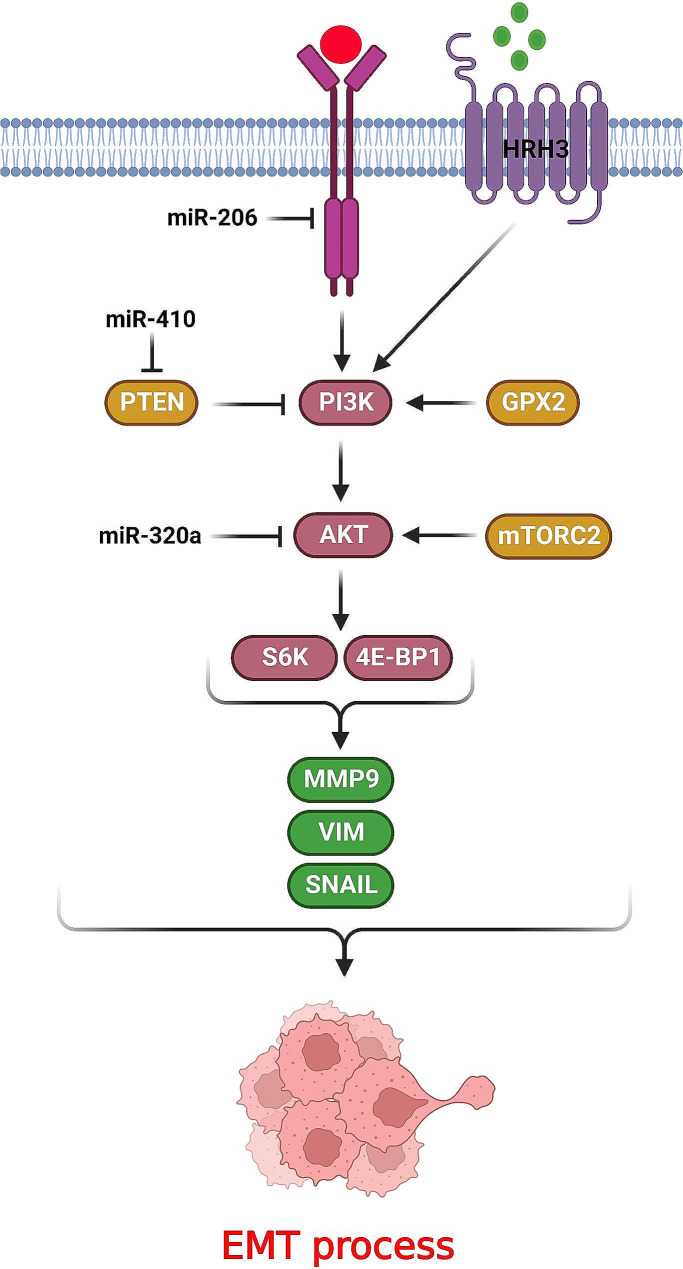
Lung cancer, as the leading cause of cancer related deaths, is one of the main global health challenges. Despite various progresses in diagnostic and therapeutic methods, there is still a high rate of mortality among lung cancer patients, which can be related to the lack of clinical symptoms to differentiate lung cancer from the other chronic respiratory disorders in the early tumor stages. Most lung cancer patients are identified in advanced and metastatic tumor stages, which is associated with a poor prognosis. Therefore, it is necessary to investigate the molecular mechanisms involved in lung tumor progression and metastasis in order to introduce early diagnostic markers as well as therapeutic targets. Epithelial-mesenchymal transition (EMT) is considered as one of the main cellular mechanisms involved in lung tumor metastasis, during which tumor cells gain the metastatic ability by acquiring mesenchymal characteristics. Since, majority of the oncogenic signaling pathways exert their role in tumor cell invasion by inducing the EMT process, in the present review we discussed the role of PI3K/AKT signaling pathway in regulation of EMT process during lung tumor metastasis. It has been reported that the PI3K/AKT acts as an inducer of EMT process through the activation of EMT-specific transcription factors in lung tumor cells. MicroRNAs also exerted their inhibitory effects during EMT process by inhibition of PI3K/AKT pathway. This review can be an effective step towards introducing the PI3K/AKT pathway as a suitable therapeutic target to inhibit the EMT process and tumor metastasis in lung cancer patients.
肺癌作为癌症相关死亡的主要原因,是全球主要的健康挑战之一。尽管在诊断和治疗方法上取得了各种进展,但肺癌患者的死亡率仍然很高,这可能与在肿瘤早期阶段缺乏将肺癌与其他慢性呼吸系统疾病区分开来的临床症状有关。大多数肺癌患者在肿瘤晚期和转移阶段才被确诊,这与预后不良相关。因此,有必要研究参与肺肿瘤进展和转移的分子机制,以便引入早期诊断标志物和治疗靶点。上皮-间质转化(EMT)被认为是参与肺肿瘤转移的主要细胞机制之一,在此过程中肿瘤细胞通过获得间质特征而获得转移能力。由于大多数致癌信号通路通过诱导EMT过程在肿瘤细胞侵袭中发挥作用,在本综述中,我们讨论了PI3K/AKT信号通路在肺肿瘤转移过程中对EMT过程的调节作用。据报道,PI3K/AKT通过激活肺肿瘤细胞中的EMT特异性转录因子而作为EMT过程的诱导剂。微小RNA也通过抑制PI3K/AKT途径在EMT过程中发挥抑制作用。本综述可为将PI3K/AKT途径作为抑制肺癌患者EMT过程和肿瘤转移的合适治疗靶点迈出有效一步。