Department of Radiology, Faculty of Medicine, Public Health, and Nursing, Universitas Gadjah Mada - Dr. Sardjito Hospital, Yogyakarta, Indonesia.
Collaboration Research Center for Precision Oncology based Omics- PKR Promics, Universitas Gadjah Mada, Yogyakarta, Indonesia.
Respir Res. 2024 May 10;25(1):204. doi: 10.1186/s12931-024-02836-9.
The impact of cigarette smoke (CS) on lung diseases and the role of microbiome dysbiosis in chronic obstructive pulmonary disease (COPD) have been previously reported; however, the relationships remain unclear.
Our research examined the effects of 20-week cigarette smoke (CS) exposure on the lung and intestinal microbiomes in C57BL/6JNarl mice, alongside a comparison with COPD patients' intestinal microbiome data from a public dataset.
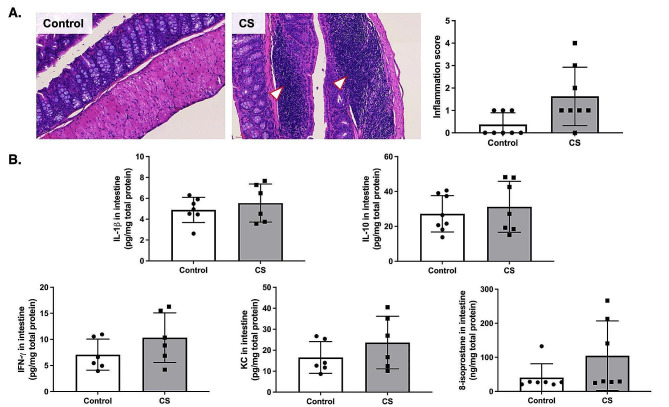
The study found that CS exposure significantly decreased forced vital capacity (FVC), thickened airway walls, and induced emphysema. Increased lung damage was observed along with higher lung keratinocyte chemoattractant (KC) levels by CS exposure. Lung microbiome analysis revealed a rise in Actinobacteriota, while intestinal microbiome showed significant diversity changes, indicating dysbiosis. Principal coordinate analysis highlighted distinct intestinal microbiome compositions between control and CS-exposed groups. In the intestinal microbiome, notable decreases in Patescibacteria, Campilobacterota, Defferibacterota, Actinobacteriota, and Desulfobacterota were observed. We also identified correlations between lung function and dysbiosis in both lung and intestinal microbiomes. Lung interleukins, interferon-ɣ, KC, and 8-isoprostane levels were linked to lung microbiome dysbiosis. Notably, dysbiosis patterns in CS-exposed mice were similar to those in COPD patients, particularly of Global Initiative for Chronic Obstructive Lung Disease (GOLD) stage 4 patients. This suggests a systemic impact of CS exposure.
In summary, CS exposure induces significant dysbiosis in lung and intestinal microbiomes, correlating with lung function decline and injury. These results align with changes in COPD patients, underscoring the important role of microbiome in smoke-related lung diseases.
香烟烟雾(CS)对肺部疾病的影响以及微生物组失调在慢性阻塞性肺疾病(COPD)中的作用此前已有报道;然而,这些关系仍不清楚。
我们的研究检测了 20 周香烟烟雾(CS)暴露对 C57BL/6JNarl 小鼠肺部和肠道微生物组的影响,并与公共数据集 COPD 患者肠道微生物组数据进行了比较。
研究发现 CS 暴露显著降低了用力肺活量(FVC),使气道壁变厚,并导致肺气肿。CS 暴露导致肺部损伤增加,同时肺部角质细胞趋化因子(KC)水平升高。肺部微生物组分析显示,放线菌门增加,而肠道微生物组显示出显著的多样性变化,表明存在失调。主坐标分析突出了对照组和 CS 暴露组之间肠道微生物组组成的明显差异。在肠道微生物组中,观察到 Patescibacteria、Campilobacterota、Defferibacterota、Actinobacteriota 和 Desulfobacterota 的明显减少。我们还发现了肺部和肠道微生物组中肺功能与失调之间的相关性。肺部白细胞介素、干扰素-γ、KC 和 8-异前列腺素水平与肺部微生物组失调有关。值得注意的是,CS 暴露小鼠的失调模式与 COPD 患者相似,特别是 GOLD 阶段 4 患者。这表明 CS 暴露具有全身影响。
总之,CS 暴露会引起肺部和肠道微生物组的显著失调,与肺功能下降和损伤相关。这些结果与 COPD 患者的变化一致,强调了微生物组在与烟雾相关的肺部疾病中的重要作用。