Wendlinger Simone, Wohlfarth Jonas, Siedel Claudia, Kreft Sophia, Kilian Teresa, Junker Sarah, Schmid Luisa, Sinnberg Tobias, Dischinger Ulrich, Heppt Markus V, Wistuba-Hamprecht Kilian, Meier Friedegund, Erpenbeck Luise, Neubert Elsa, Goebeler Matthias, Gesierich Anja, Schrama David, Kosnopfel Corinna, Schilling Bastian
Department of Dermatology, University Hospital Würzburg, 97080 Würzburg, Germany.
Mildred Scheel Early Career Center Wuerzburg, University Hospital Wuerzburg, 97080 Würzburg, Germany.
Cancers (Basel). 2024 May 2;16(9):1767. doi: 10.3390/cancers16091767.
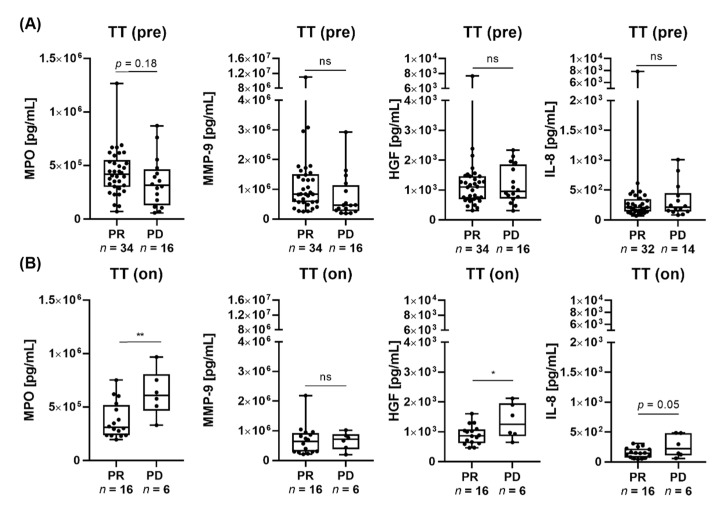
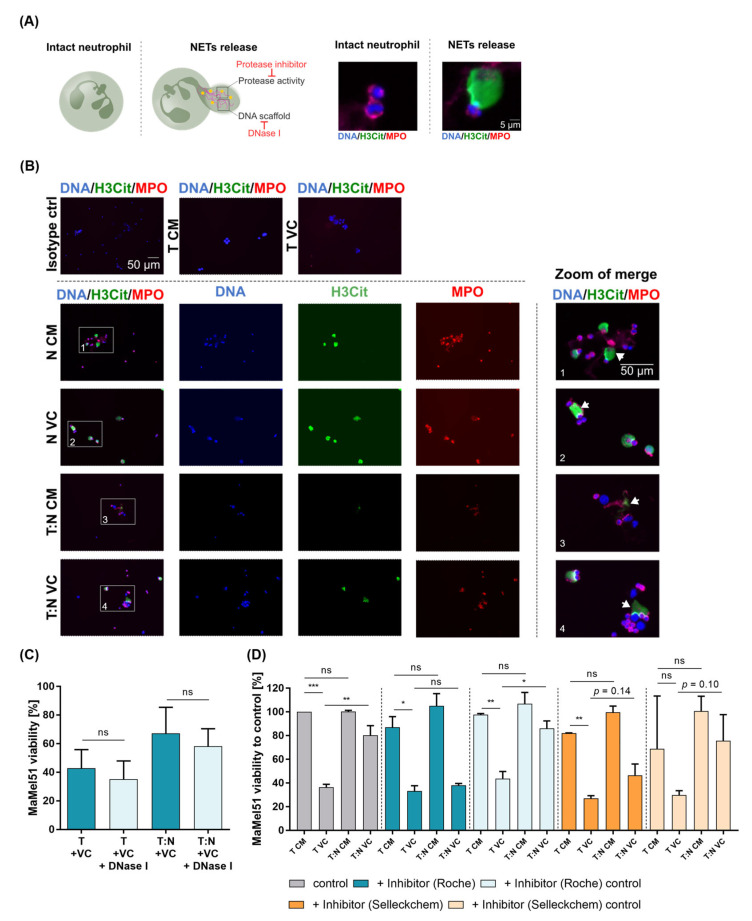
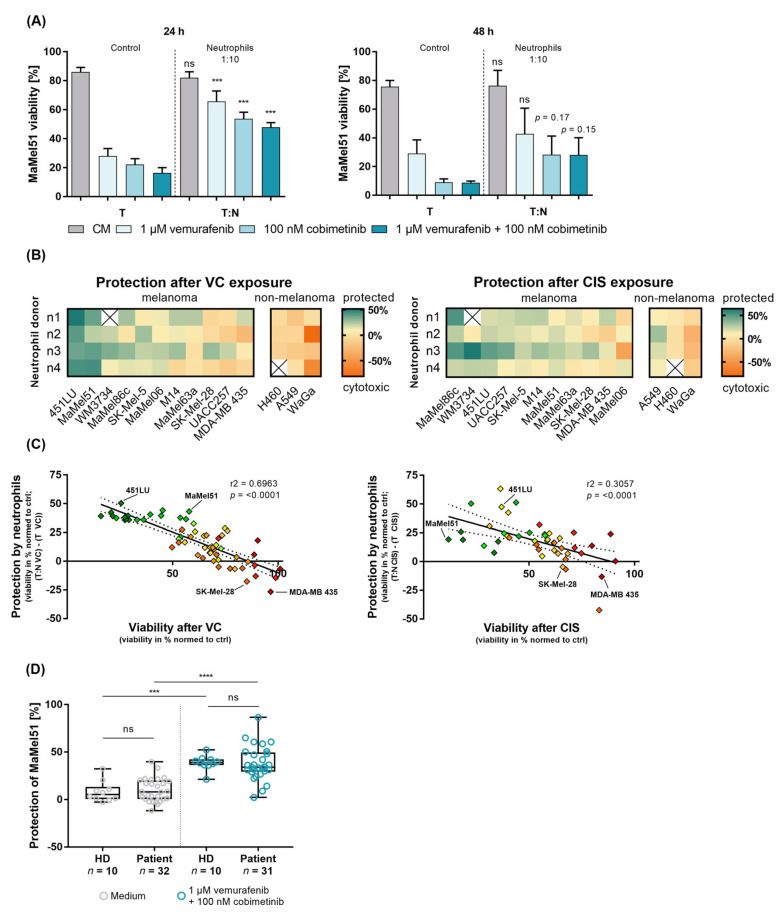
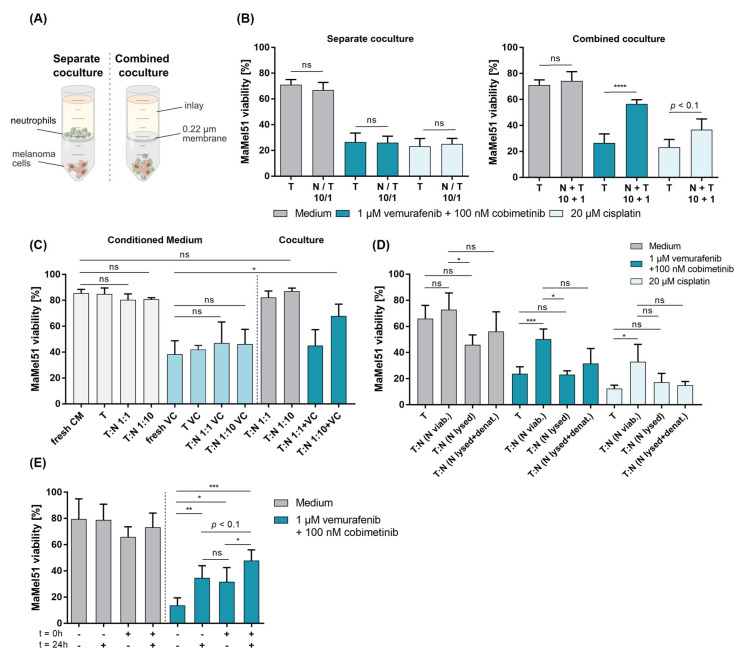
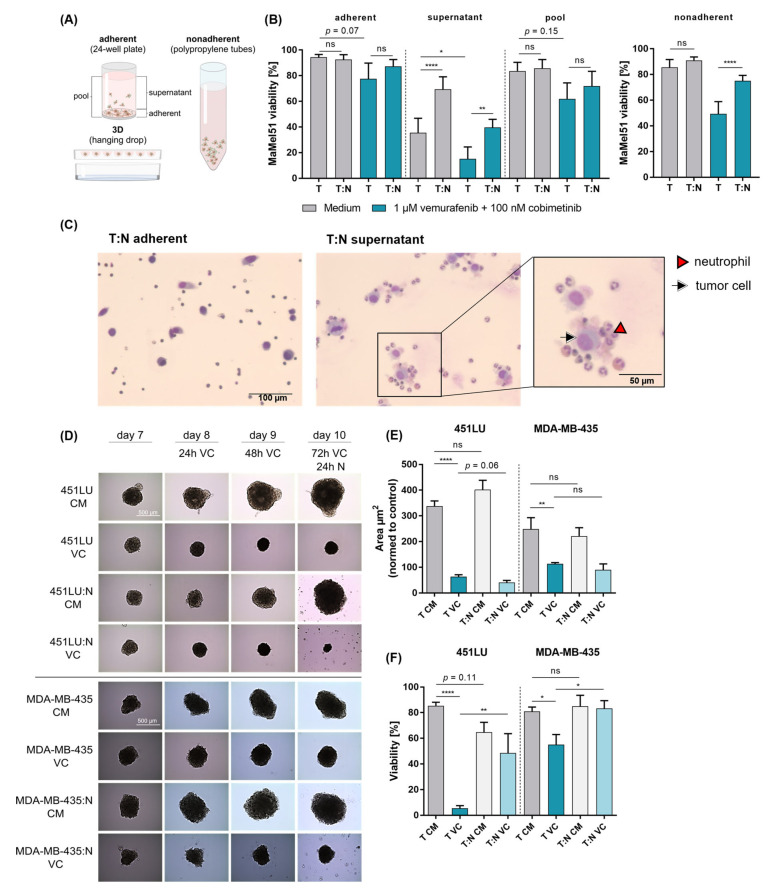
Elevated levels of peripheral blood and tumor tissue neutrophils are associated with poorer clinical response and therapy resistance in melanoma. The underlying mechanism and the role of neutrophils in targeted therapy is still not fully understood. Serum samples of patients with advanced melanoma were collected and neutrophil-associated serum markers were measured and correlated with response to targeted therapy. Blood neutrophils from healthy donors and patients with advanced melanoma were isolated, and their phenotypes, as well as their in vitro functions, were compared. In vitro functional tests were conducted through nonadherent cocultures with melanoma cells. Protection of melanoma cell lines by neutrophils was assessed under MAPK inhibition. Blood neutrophils from advanced melanoma patients exhibited lower CD16 expression compared to healthy donors. In vitro, both healthy-donor- and patient-derived neutrophils prevented melanoma cell apoptosis upon dual MAPK inhibition. The effect depended on cell-cell contact and melanoma cell susceptibility to treatment. Interference with protease activity of neutrophils prevented melanoma cell protection during treatment in cocultures. The negative correlation between neutrophils and melanoma outcomes seems to be linked to a protumoral function of neutrophils. In vitro, neutrophils exert a direct protective effect on melanoma cells during dual MAPK inhibition. This study further hints at a crucial role of neutrophil-related protease activity in protection.
外周血和肿瘤组织中中性粒细胞水平升高与黑色素瘤较差的临床反应和治疗耐药性相关。中性粒细胞在靶向治疗中的潜在机制和作用仍未完全明确。收集晚期黑色素瘤患者的血清样本,检测中性粒细胞相关血清标志物,并将其与靶向治疗反应进行关联分析。分离健康供者和晚期黑色素瘤患者的血液中性粒细胞,比较它们的表型及其体外功能。通过与黑色素瘤细胞进行非贴壁共培养进行体外功能测试。在丝裂原活化蛋白激酶(MAPK)抑制作用下评估中性粒细胞对黑色素瘤细胞系的保护作用。与健康供者相比,晚期黑色素瘤患者的血液中性粒细胞CD16表达较低。在体外,在双重MAPK抑制作用下,来自健康供者和患者的中性粒细胞均能阻止黑色素瘤细胞凋亡。该效应取决于细胞间接触以及黑色素瘤细胞对治疗的敏感性。干扰中性粒细胞的蛋白酶活性可阻止共培养中治疗期间黑色素瘤细胞的保护作用。中性粒细胞与黑色素瘤预后之间的负相关似乎与中性粒细胞的促肿瘤功能有关。在体外,在双重MAPK抑制作用下,中性粒细胞对黑色素瘤细胞发挥直接保护作用。本研究进一步提示中性粒细胞相关蛋白酶活性在保护作用中起关键作用。