Andriollo Luca, Pietramala Silvia, Polizzi Alberto, Niccoli Giuseppe, Zattoni Guido, Morea Vincenzo
Orthopedics and Traumatology, Fondazione Poliambulanza Hospital, 25124 Brescia, Italy.
Department of Orthopedics, Catholic University of the Sacred Heart, 00168 Rome, Italy.
J Clin Med. 2024 Apr 25;13(9):2512. doi: 10.3390/jcm13092512.
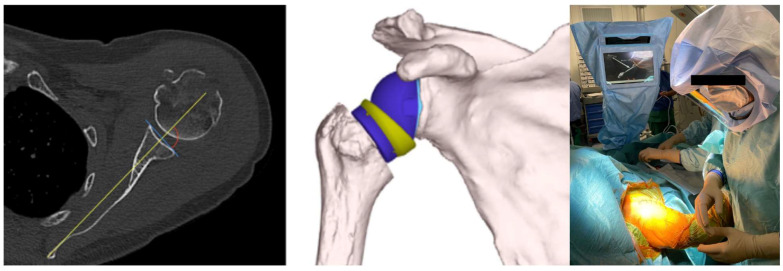
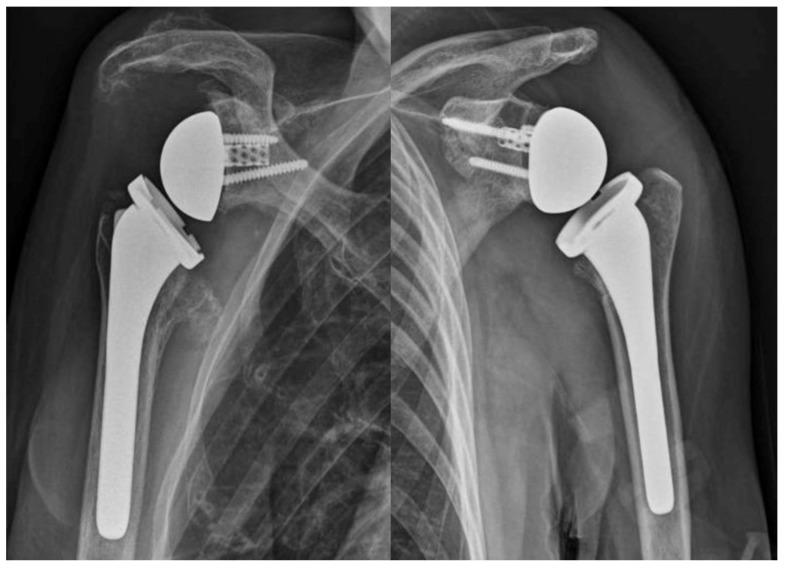
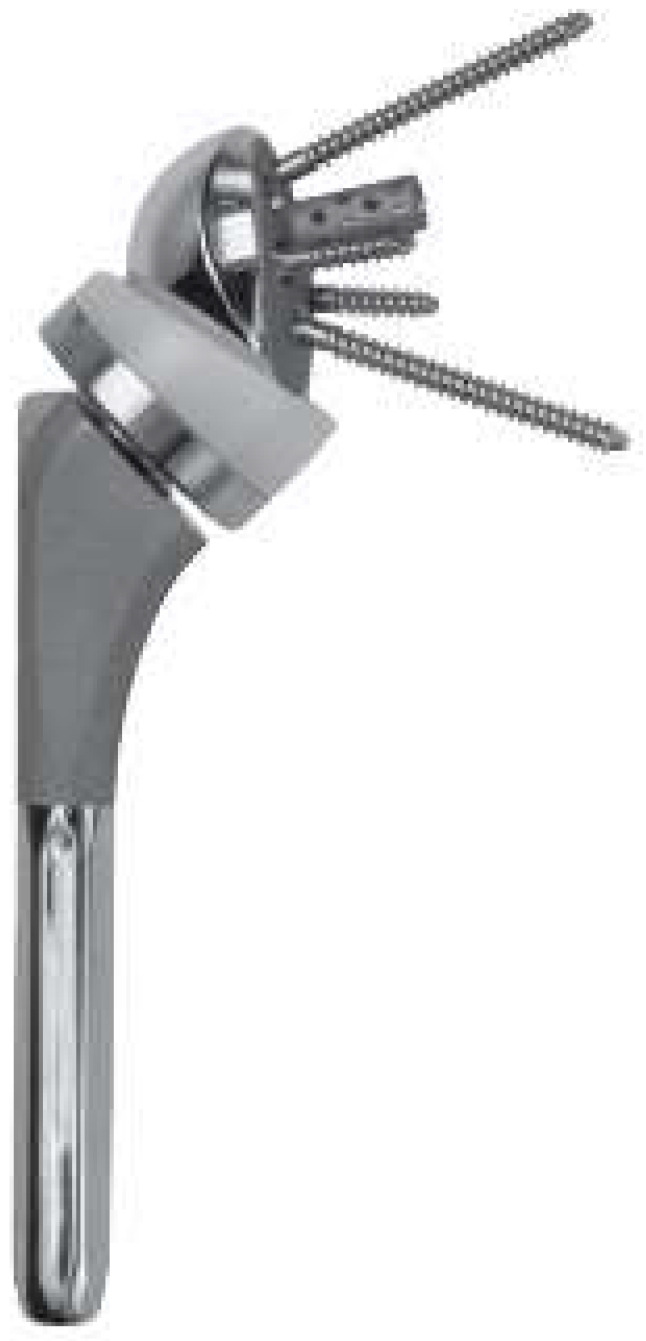
The primary cause of medium- to long-term complications in reverse shoulder arthroplasty (RSA) is the failure of the glenoid component. The purpose of this study was to evaluate both the achievement of planning through computer-assisted navigation and the clinical outcomes at a minimum follow-up (FU) of 12 months. From December 2019 to December 2022, 57 Equinoxe RSAs with computer-assisted navigation were performed. The average age was 72.8 ± 6.6 years. Using the Orthoblue software, the version and inclination of the glenoid were evaluated from a preoperative CT scan, and planning was performed. Intraoperative navigation data were evaluated, and the clinical outcomes were assessed at a minimum follow-up of 12 months. The average follow-up was 30.7 ± 13.5 months. The planning was reproduced in all implants. No errors in the computer-assisted navigation system were detected. No intraoperative or postoperative complications were recorded. At the final FU, the average active anterior elevation was 143° ± 36°, external rotation was 34° ± 5°, QuickDASH score was 19 ± 16 points, and constant score was 77 ± 18. Computer-assisted navigation is a reliable system for positioning prosthetic implants on challenging glenoids. A longer follow-up period is necessary to confirm the reduction in postoperative complications and the increase in survival compared to traditional RSA.
反肩关节置换术(RSA)中长期并发症的主要原因是关节盂假体的失败。本研究的目的是评估通过计算机辅助导航实现规划的情况以及至少随访12个月时的临床结果。2019年12月至2022年12月,采用计算机辅助导航进行了57例Equinoxe RSA手术。平均年龄为72.8±6.6岁。使用Orthoblue软件,从术前CT扫描评估关节盂的版本和倾斜度,并进行规划。评估术中导航数据,并在至少随访12个月时评估临床结果。平均随访时间为30.7±13.5个月。所有植入物均重现了规划。未检测到计算机辅助导航系统存在错误。未记录术中或术后并发症。在最终随访时,平均主动前屈为143°±36°,外旋为34°±5°,QuickDASH评分为19±16分,Constant评分为77±18分。计算机辅助导航是一种在具有挑战性的关节盂上定位假体植入物的可靠系统。与传统RSA相比,需要更长的随访期来确认术后并发症的减少和生存率的提高。