Thalassemia and Sickle Cell Disease Unit, Center of Expertise in Rare Hematological Diseases (Hemoglobinopathies), Laikon General Hospital Member of EuroBlood NET, 16 Sevastoupoleos Str., 11526 Athens, Greece.
Int J Mol Sci. 2024 Apr 27;25(9):4792. doi: 10.3390/ijms25094792.
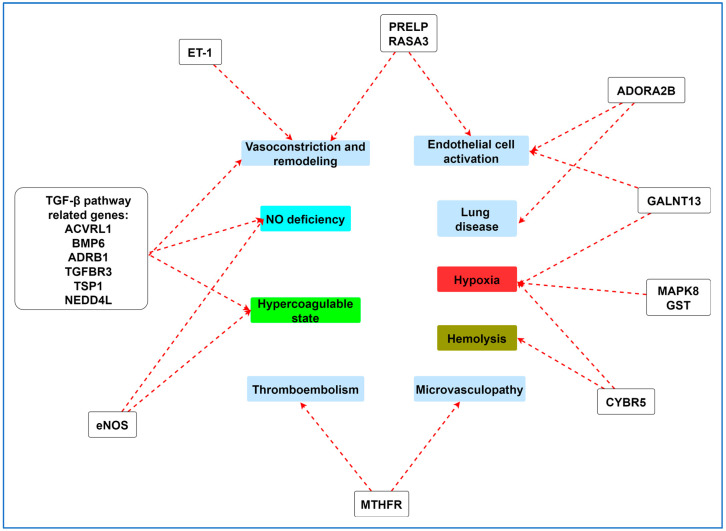
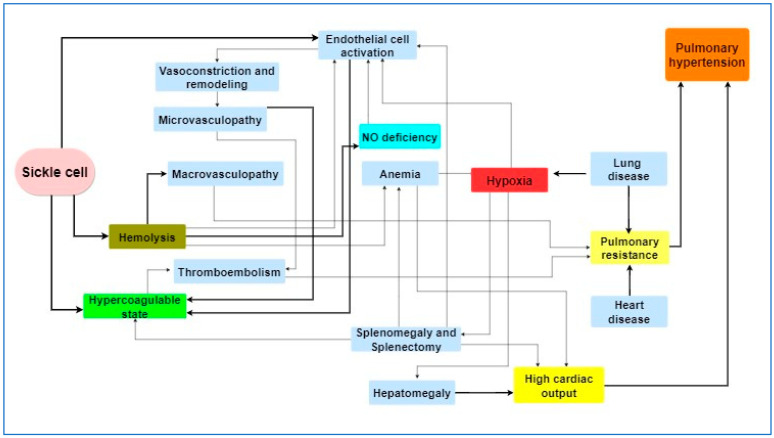
Pulmonary hypertension (PH) is a progressive and potentially fatal complication of sickle cell disease (SCD), affecting 6-10% of adult SCD patients. Various mechanisms and theories have been evaluated to explain the pathophysiology of this disease. However, questions remain, particularly regarding the clinical heterogeneity of the disease in terms of symptoms, complications, and survival. Beyond the classical mechanisms that have been thoroughly investigated and include hemolysis, nitric oxide availability, endothelial disorders, thrombosis, and left heart failure, attention is currently focused on the potential role of genes involved in such processes. Potential candidate genes are investigated through next-generation sequencing, with the transforming growth factor-beta (TGF-β) pathway being the initial target. This field of research may also provide novel targets for pharmacologic agents in the future, as is already the case with idiopathic PH. The collection and processing of data and samples from multiple centers can yield reliable results that will allow a better understanding of SCD-related PH as a part of the disease's clinical spectrum. This review attempts to capture the most recent findings of studies on gene polymorphisms that have been associated with PH in SCD patients.
肺动脉高压(PH)是镰状细胞病(SCD)的一种进行性且潜在致命的并发症,影响 6-10%的成年 SCD 患者。已经评估了各种机制和理论来解释这种疾病的病理生理学。然而,仍存在疑问,特别是在疾病的症状、并发症和生存方面的临床异质性方面。除了已经进行了深入研究的经典机制,包括溶血、一氧化氮可用性、内皮紊乱、血栓形成和左心衰竭之外,目前还关注了参与这些过程的基因的潜在作用。通过下一代测序研究候选基因,转化生长因子-β(TGF-β)途径是最初的目标。该研究领域未来也可能为药物提供新的靶点,就像特发性 PH 一样。从多个中心收集和处理数据和样本可以得出可靠的结果,从而更好地了解 SCD 相关 PH 作为疾病临床谱的一部分。本综述试图总结与 SCD 患者 PH 相关的基因多态性研究的最新发现。