HRB Clinical Research Facility Galway, School of Medicine, University of Galway, Galway, Ireland.
Wellcome Trust-HRB, Irish Clinical Academic Training, Dublin, Ireland.
Eur J Neurol. 2024 Aug;31(8):e16314. doi: 10.1111/ene.16314. Epub 2024 May 13.
Blood pressure variability, in acute stroke, may be an important modifiable determinant of functional outcome after stroke. In a large international cohort of participants with acute stroke, it was sought to determine the association of blood pressure variability (in the early period of admission) and functional outcomes, and to explore risk factors for increased blood pressure variability.
INTERSTROKE is an international case-control study of risk factors for first acute stroke. Blood pressure was recorded at the time of admission, the morning after admission and the time of interview in cases (median time from admission 36.7 h). Multivariable ordinal regression analysis was employed to determine the association of blood pressure variability (standard deviation [SD] and coefficient of variance) with modified Rankin score at 1-month follow-up, and logistic regression was used to identify risk factors for blood pressure variability.
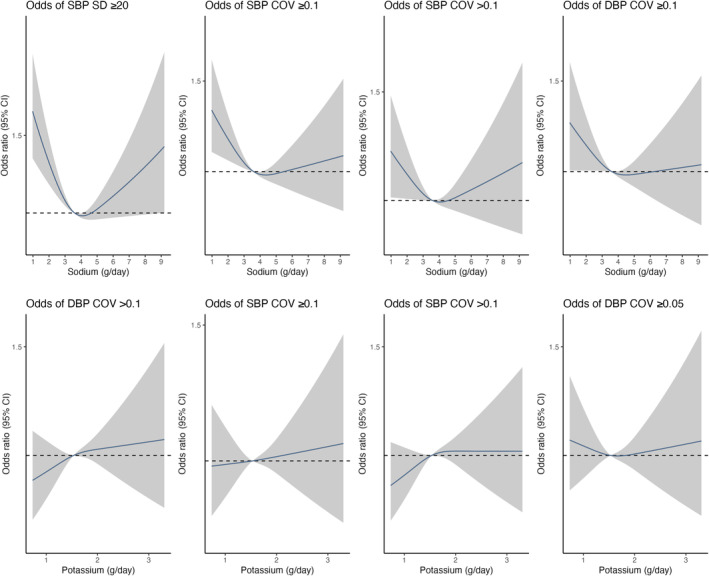
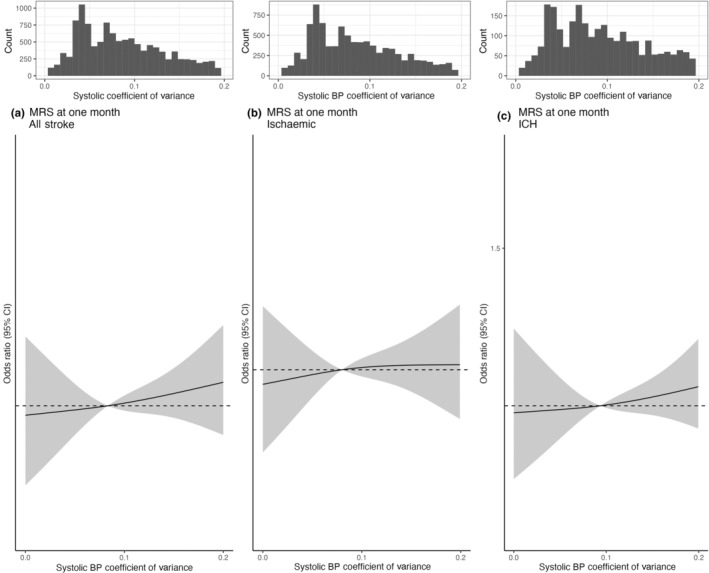
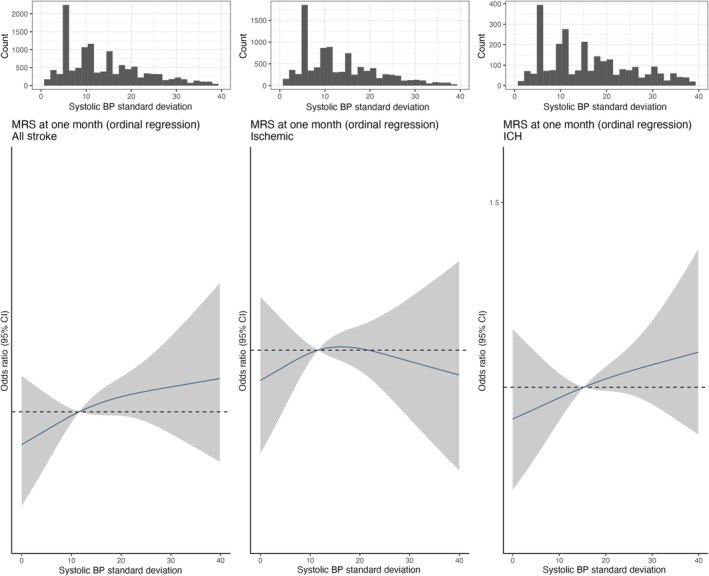
Amongst 13,206 participants, the mean age was 62.19 ± 13.58 years. When measured by SD, both systolic blood pressure variability (odds ratio 1.13; 95% confidence interval 1.03-1.24 for SD ≥20 mmHg) and diastolic blood pressure variability (odds ratio 1.15; 95% confidence interval 1.04-1.26 for SD ≥10 mmHg) were associated with a significant increase in the odds of poor functional outcome. The highest coefficient of variance category was not associated with a significant increase in risk of higher modified Rankin score at 1 month. Increasing age, female sex, high body mass index, history of hypertension, alcohol use, and high urinary potassium and low urinary sodium excretion were associated with increased blood pressure variability.
Increased blood pressure variability in acute stroke, measured by SD, is associated with an increased risk of poor functional outcome at 1 month. Potentially modifiable risk factors for increased blood pressure variability include low urinary sodium excretion.
在急性脑卒中患者中,血压变异性可能是影响脑卒中后功能结局的一个重要的可改变因素。在一项包含大量急性脑卒中患者的国际队列研究中,旨在确定血压变异性(入院早期)与功能结局之间的相关性,并探索导致血压变异性增加的危险因素。
INTERSTROKE 是一项关于首次急性脑卒中危险因素的国际病例对照研究。病例组在入院时、入院次日清晨和接受访谈时记录血压(入院后中位时间 36.7 小时)。采用多变量有序回归分析确定血压变异性(标准差[SD]和变异系数)与 1 个月随访时改良 Rankin 评分之间的相关性,采用逻辑回归确定血压变异性的危险因素。
在 13206 名参与者中,平均年龄为 62.19 ± 13.58 岁。当以 SD 来衡量时,收缩压变异性(SD≥20mmHg 时比值比 1.13,95%置信区间 1.03-1.24)和舒张压变异性(SD≥10mmHg 时比值比 1.15,95%置信区间 1.04-1.26)均与较差的功能结局发生风险显著增加相关。最高变异系数类别与 1 个月时改良 Rankin 评分较高的风险增加无关。年龄增长、女性、高体质指数、高血压病史、饮酒、高尿钾和低尿钠排泄与血压变异性增加相关。
以 SD 衡量的急性脑卒中患者血压变异性增加与 1 个月时功能结局较差相关。血压变异性增加的潜在可改变危险因素包括低尿钠排泄。