Massri Abdull J, Berrio Alejandro, Afanassiev Anton, Greenstreet Laura, Pipho Krista, Byrne Maria, Schiebinger Geoffrey, McClay David R, Wray Gregory A
Department of Biology, Duke University, Durham, NC 27701 USA.
Department of Mathematics, University of British Colombia, Vancouver, BC V6T 1Z4 Canada.
bioRxiv. 2024 May 1:2024.04.30.591752. doi: 10.1101/2024.04.30.591752.
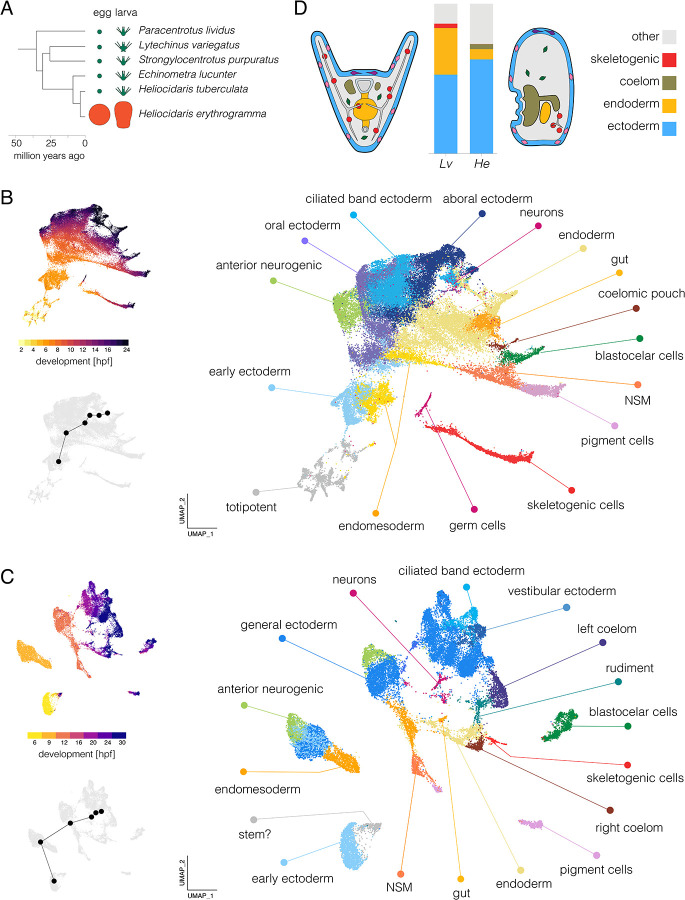
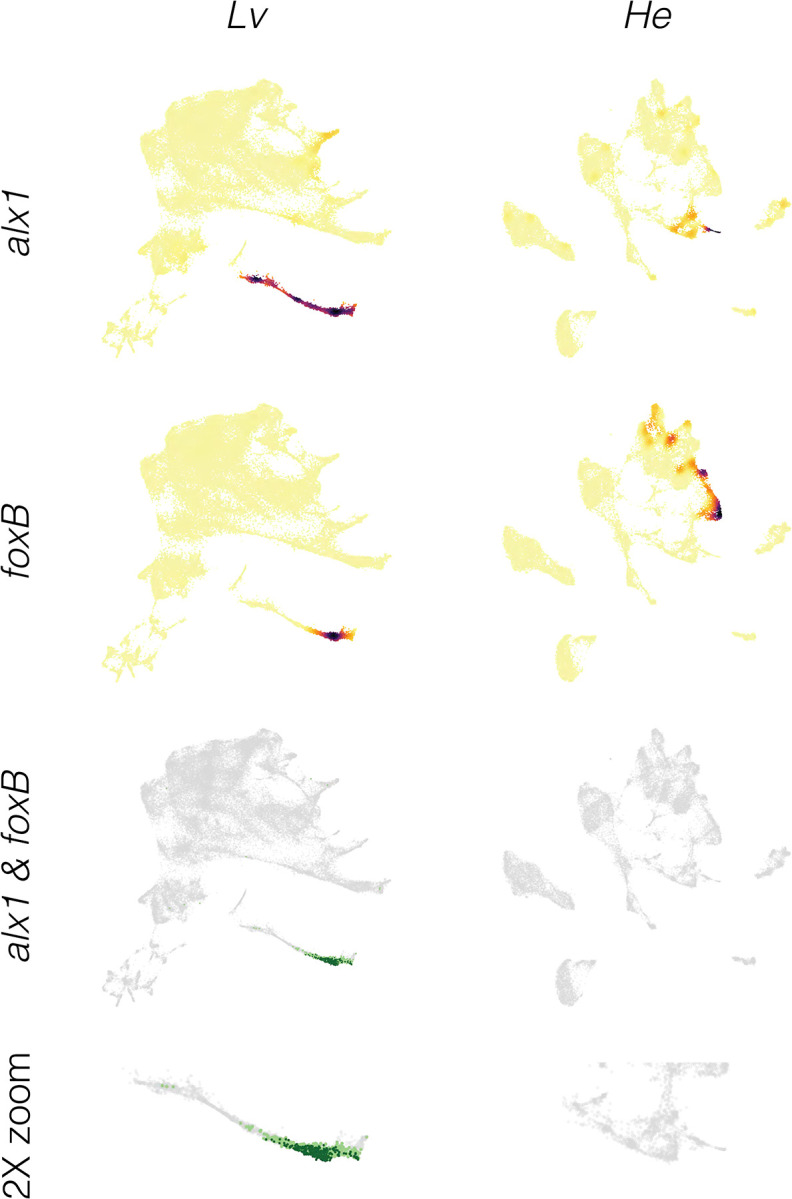
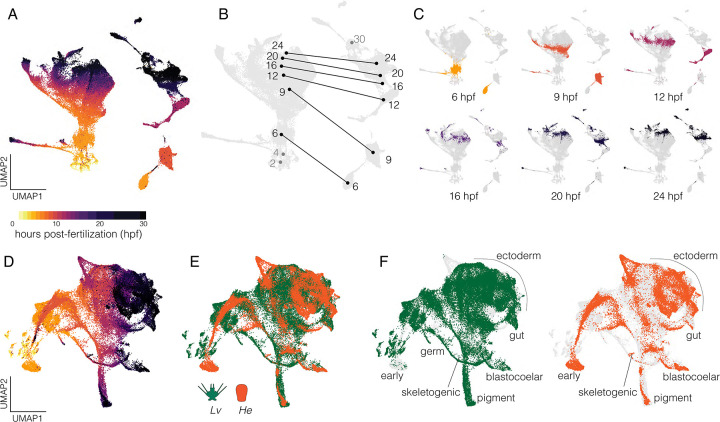
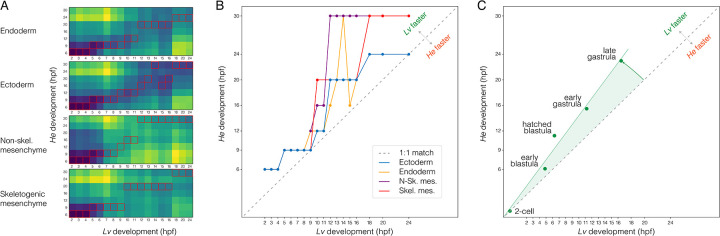
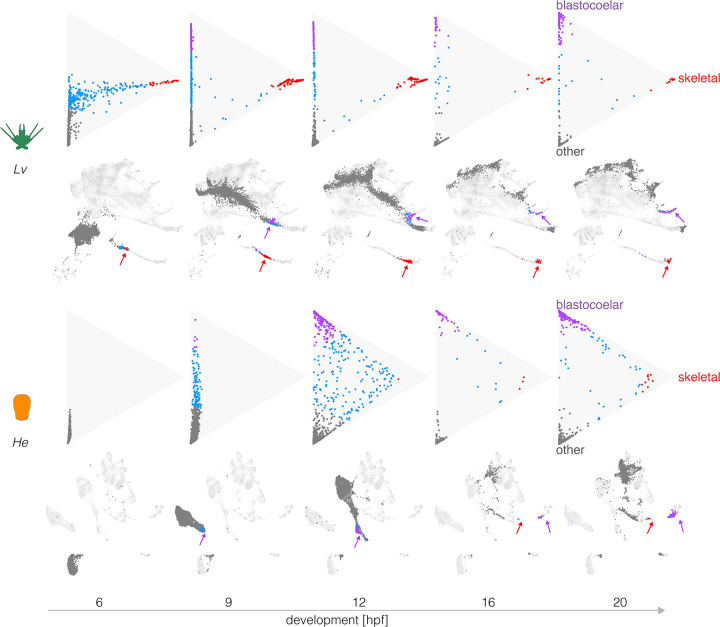
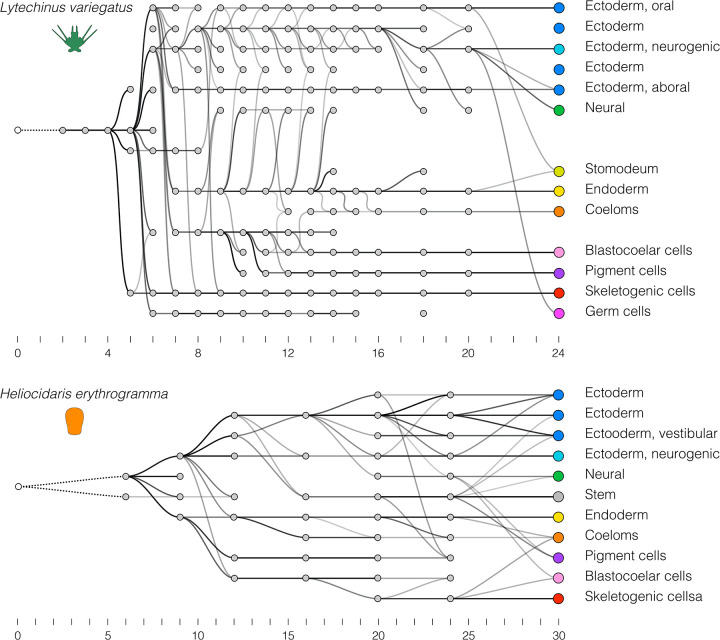
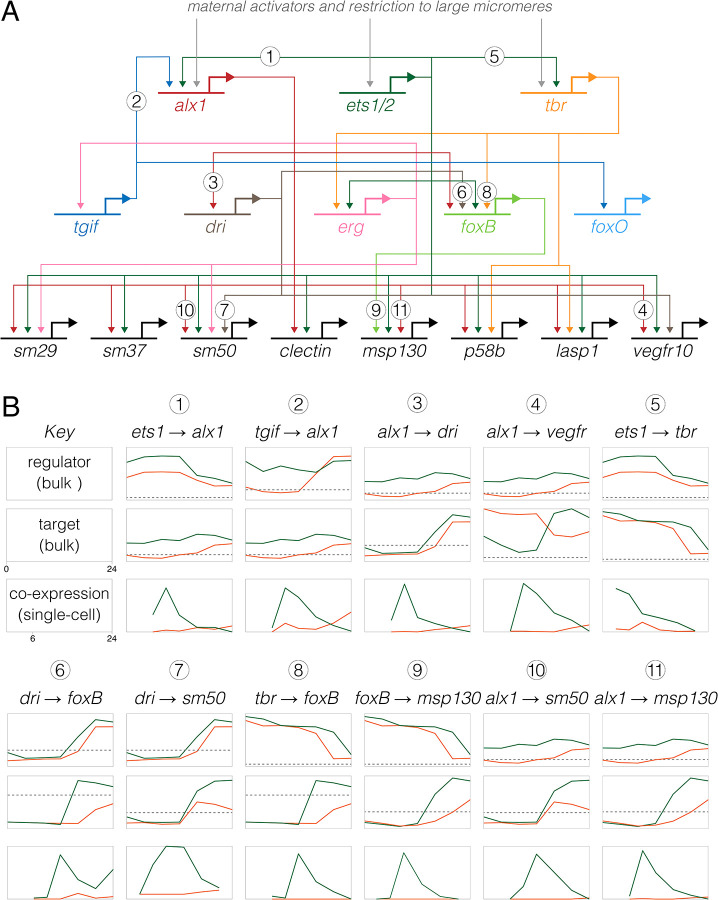
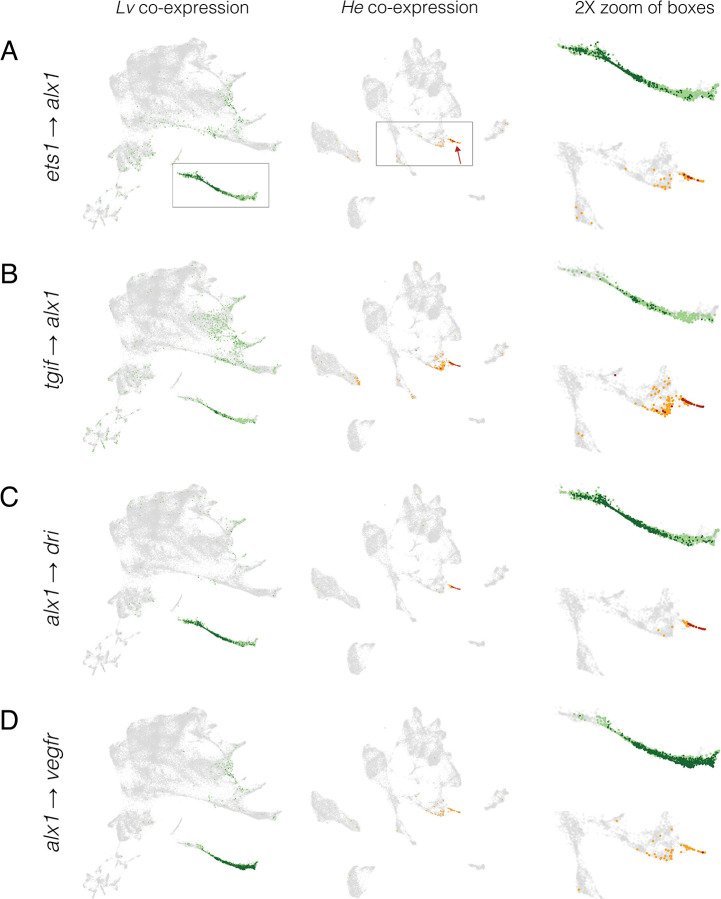
Altered regulatory interactions during development likely underlie a large fraction of phenotypic diversity within and between species, yet identifying specific evolutionary changes remains challenging. Analysis of single-cell developmental transcriptomes from multiple species provides a powerful framework for unbiased identification of evolutionary changes in developmental mechanisms. Here, we leverage a "natural experiment" in developmental evolution in sea urchins, where a major life history switch recently evolved in the lineage leading to , precipitating extensive changes in early development. Comparative analyses of scRNA-seq developmental time courses from and (representing the derived and ancestral states respectively) reveals numerous evolutionary changes in embryonic patterning. The earliest cell fate specification events, and the primary signaling center are co-localized in the ancestral dGRN but remarkably, in they are spatially and temporally separate. Fate specification and differentiation are delayed in most embryonic cell lineages, although in some cases, these processes are conserved or even accelerated. Comparative analysis of regulator-target gene co-expression is consistent with many specific interactions being preserved but delayed in , while some otherwise widely conserved interactions have likely been lost. Finally, specific patterning events are directly correlated with evolutionary changes in larval morphology, suggesting that they are directly tied to the life history shift. Together, these findings demonstrate that comparative scRNA-seq developmental time courses can reveal a diverse set of evolutionary changes in embryonic patterning and provide an efficient way to identify likely candidate regulatory interactions for subsequent experimental validation.
发育过程中调控相互作用的改变可能是物种内部和物种之间大部分表型多样性的基础,但识别具体的进化变化仍然具有挑战性。对多个物种的单细胞发育转录组进行分析,为无偏倚地识别发育机制中的进化变化提供了一个强大的框架。在这里,我们利用海胆发育进化中的一个“自然实验”,在导致[物种名称]的谱系中,最近进化出了一个主要的生活史转变,这在早期发育中引发了广泛的变化。对来自[物种名称1]和[物种名称2](分别代表衍生状态和祖先状态)的scRNA-seq发育时间进程进行比较分析,揭示了胚胎模式形成中的许多进化变化。最早的细胞命运特化事件和主要信号中心在祖先的双梯度反应网络(dGRN)中是共定位的,但值得注意的是,在[物种名称1]中它们在空间和时间上是分开的。大多数胚胎细胞谱系中的命运特化和分化都延迟了,尽管在某些情况下,这些过程是保守的,甚至是加速的。调控因子-靶基因共表达的比较分析表明,许多特定的相互作用在[物种名称1]中得以保留但延迟了,而一些原本广泛保守的相互作用可能已经丧失。最后,特定的模式形成事件与幼虫形态的进化变化直接相关,这表明它们与生活史转变直接相关。总之,这些发现表明,比较scRNA-seq发育时间进程可以揭示胚胎模式形成中一系列不同的进化变化,并提供一种有效的方法来识别可能的候选调控相互作用,以供后续实验验证。