Department of Anatomy, Graduate School of Medical Science, Brain Korea 21 Project, Yonsei University College of Medicine, Seoul 03722, Republic of Korea.
Department of Pharmacology, Graduate School of Medical Science, Brain Korea 21 Project, Yonsei University College of Medicine, Seoul 03722, Republic of Korea.
Proc Natl Acad Sci U S A. 2024 May 21;121(21):e2321388121. doi: 10.1073/pnas.2321388121. Epub 2024 May 15.
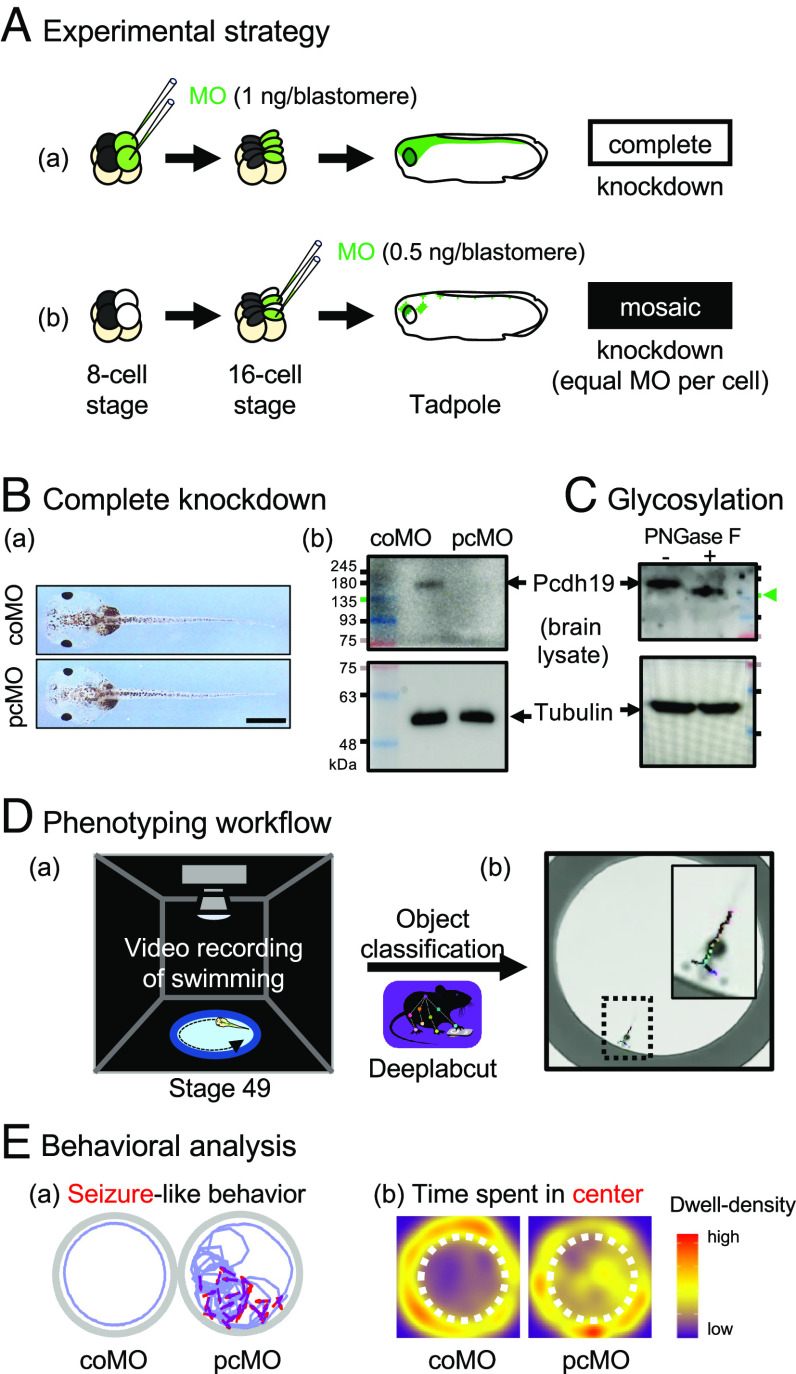
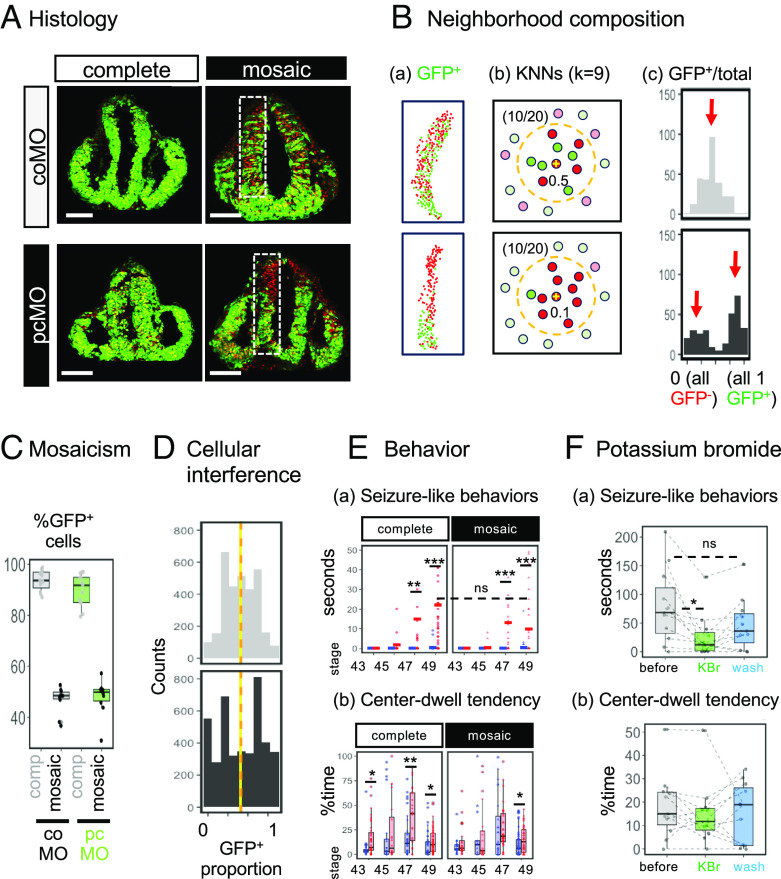
Protocadherin19 ()-related epilepsy syndrome is a rare disorder characterized by early-onset epilepsy, intellectual disability, and autistic behaviors. is located on the X chromosome and encodes a calcium-dependent single-pass transmembrane protein, which regulates cell-to-cell adhesion through homophilic binding. In human, 90% of heterozygous females, containing wild-type and mutant cells due to random X inactivation, are affected, whereas mutant males, containing only mutant cells, are typically not. The current view, the cellular interference, is that the altered interactions between wild-type and mutant cells during development, rather than loss of function itself, are responsible. However, studies using knockout mice showed that the complete loss of function also causes autism-like behaviors both in males and females, suggesting that other functions of PCDH19 may also contribute to pathogenesis. To address whether mosaicism is required for -related epilepsy, we generated tadpoles with complete or mosaic loss of function by injecting antisense morpholino oligonucleotides into the blastomeres of neural lineage at different stages of development. We found that either mosaic or complete knockdown results in seizure-like behaviors, which could be rescued by antiseizure medication, and repetitive behaviors. Our results suggest that the loss of PCDH19 function itself, in addition to cellular interference, may also contribute to -related epilepsy.
原钙黏蛋白 19 ()-相关癫痫综合征是一种罕见疾病,其特征为早发性癫痫、智力障碍和自闭症行为。位于 X 染色体上,编码一种钙依赖性单次跨膜蛋白,通过同源结合调节细胞间黏附。在人类中,由于随机 X 染色体失活,90%的杂合子女性(包含野生型和突变型细胞)受到影响,而仅含有突变型细胞的突变型男性通常不受影响。目前的观点是细胞干扰,即发育过程中野生型和突变型细胞之间的异常相互作用,而不是功能丧失本身,是导致疾病的原因。然而,使用 敲除小鼠的研究表明,完全丧失功能也会导致雄性和雌性出现类似自闭症的行为,这表明 PCDH19 的其他功能也可能与发病机制有关。为了确定是否需要镶嵌现象才能导致 -相关癫痫,我们通过在不同发育阶段的神经谱系胚泡中注射反义形态发生素寡核苷酸,来生成完全或镶嵌失活的 。我们发现,无论是镶嵌失活还是完全失活,都会导致类似癫痫发作的行为,抗癫痫药物可以挽救这些行为,以及重复性行为。我们的结果表明,PCDH19 功能丧失本身,除了细胞干扰外,也可能导致 -相关癫痫。