Department of Medicine, Surgery and Dentistry, "Scuola Medica Salernitana", University of Salerno, Baronissi, SA, Italy.
Theoreo srl, Montecorvino Pugliano, SA, Italy.
Intern Emerg Med. 2024 Nov;19(8):2293-2307. doi: 10.1007/s11739-024-03626-3. Epub 2024 May 16.
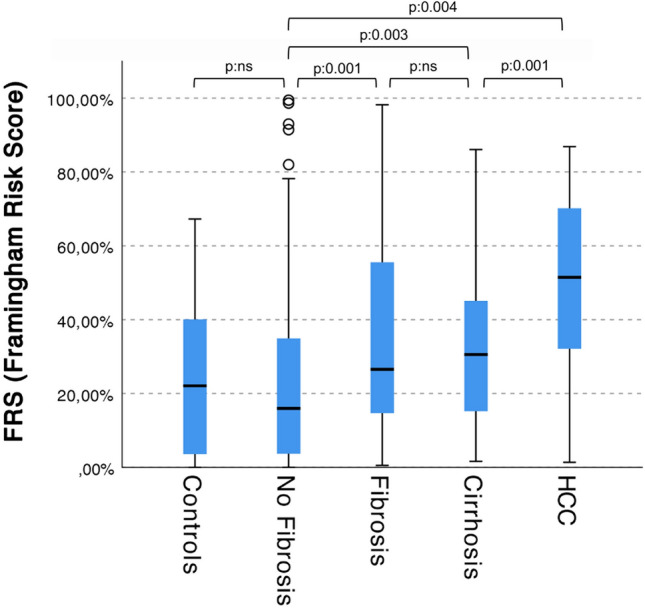
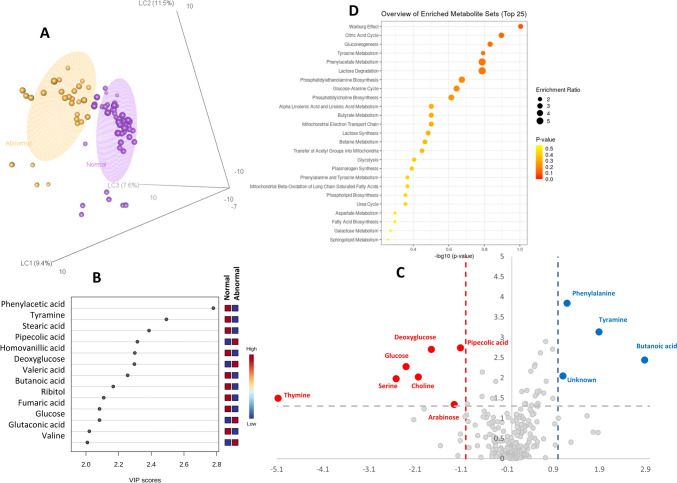
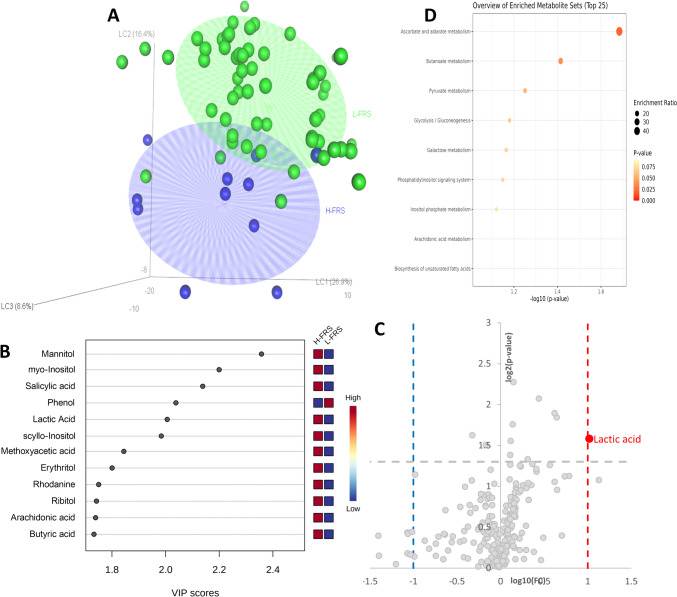
Metabolic associated steatotic liver disease (MASLD) is the most common liver condition. It is associated with increased liver-related morbidity and mortality, and also with high risk of cardiovascular events (CVD), representing itself an independent risk factor for it. This makes MASLD a presentation of high interest for internal medicine, also because of its association with metabolic syndrome (MetS). It is crucial to assess its risks in a noninvasive way. With the aim of finding specific risk profiles for CVD development in MASLD by performing a noninvasive assessment of: (1) preclinical signs of endothelial dysfunction (ED); (2) clinical assessment of CVD risk by Framingham Heart Risk Score (FHRs); (3) genomic characterization of MASLD associated polymorphisms; (4) specific untargeted metabolomic profiles, we enrolled 466 MASLD patients non-invasively classified in 4 group of liver fibrosis severity (group-A: low-fibrosis risk, group-B: high-fibrosis risk, group-C: MASLD-cirrhosis, group-D: MASLD-HCC) and 73 healthy controls. FHRs was similar in controls and low-fibrosis group and significantly higher in high-fibrosis patients, cirrhosis, and HCC, increasing among classes. At a multivariable regression, FHRs was associated with liver disease severity and diabetes. 38.2% of patients had altered EndoPAT, resembling ED. Patients with high FHRs (> 40%) and ED had different metabolomics compared to those without ED. Our study reveals that a deep, non-invasive characterization of MASLD patients through precision medicine approaches (untargeted metabolomics, SNPs, ED assessment) was able to show a peculiar pattern in MASLD patients with increased CVD risk, mostly correlated with liver disease severity.
代谢相关性脂肪性肝病(MASLD)是最常见的肝脏疾病。它与肝脏相关发病率和死亡率的增加有关,也与心血管事件(CVD)的高风险有关,本身就是其独立的危险因素。这使得 MASLD 成为内科的一个重要表现,也因为它与代谢综合征(MetS)有关。以非侵入性方式评估其风险至关重要。为了通过对以下方面进行非侵入性评估来找到 MASLD 发生 CVD 的特定风险特征:(1)内皮功能障碍(ED)的临床前迹象;(2)通过 Framingham 心脏风险评分(FHRs)进行 CVD 风险的临床评估;(3)MASLD 相关多态性的基因组特征;(4)特定的非靶向代谢组学特征,我们招募了 466 名 MASLD 患者,这些患者未经侵入性分类为 4 组肝纤维化严重程度(组 A:低纤维化风险,组 B:高纤维化风险,组 C:MASLD-肝硬化,组 D:MASLD-HCC)和 73 名健康对照。对照组和低纤维化组的 FHRs 相似,而高纤维化患者、肝硬化和 HCC 的 FHRs 显著更高,且随着等级的增加而增加。在多变量回归中,FHRs 与肝病严重程度和糖尿病有关。38.2%的患者出现了 EndoPAT 改变,类似于 ED。具有高 FHRs(>40%)和 ED 的患者与没有 ED 的患者相比,代谢组学存在差异。我们的研究表明,通过精准医学方法(非靶向代谢组学、SNP、ED 评估)对 MASLD 患者进行深入的、非侵入性的特征描述,能够显示出 MASLD 患者中一种具有更高 CVD 风险的特殊模式,主要与肝病严重程度相关。