Centro de Investigación en Enfermedades Infecciosas (CIENI), Instituto Nacional de Enfermedades Respiratorias Ismael Cosío Villegas, Mexico.
Centro de Investigación en Enfermedades Infecciosas (CIENI), Instituto Nacional de Enfermedades Respiratorias Ismael Cosío Villegas, Mexico.
Epidemics. 2024 Jun;47:100770. doi: 10.1016/j.epidem.2024.100770. Epub 2024 May 14.
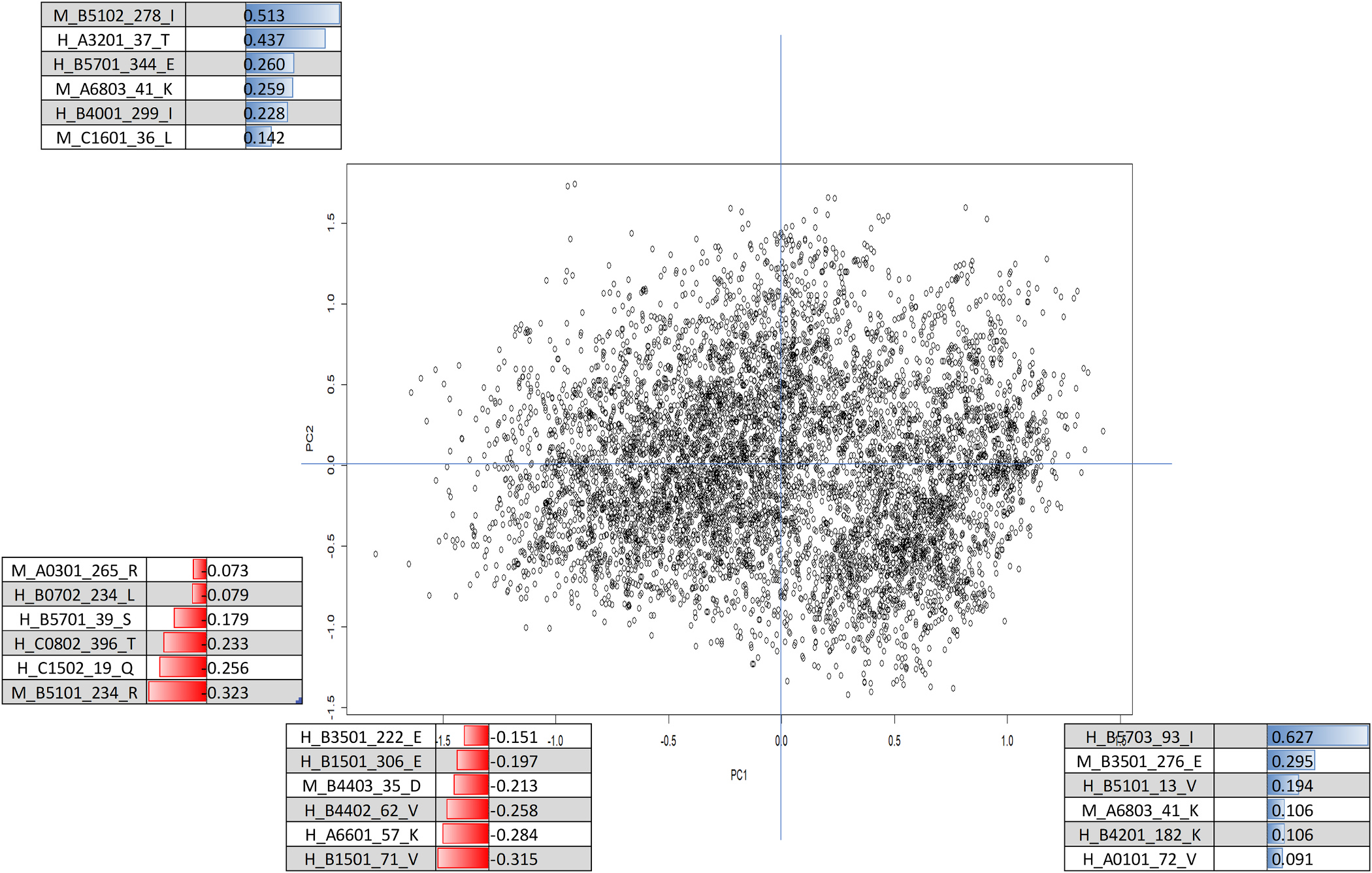
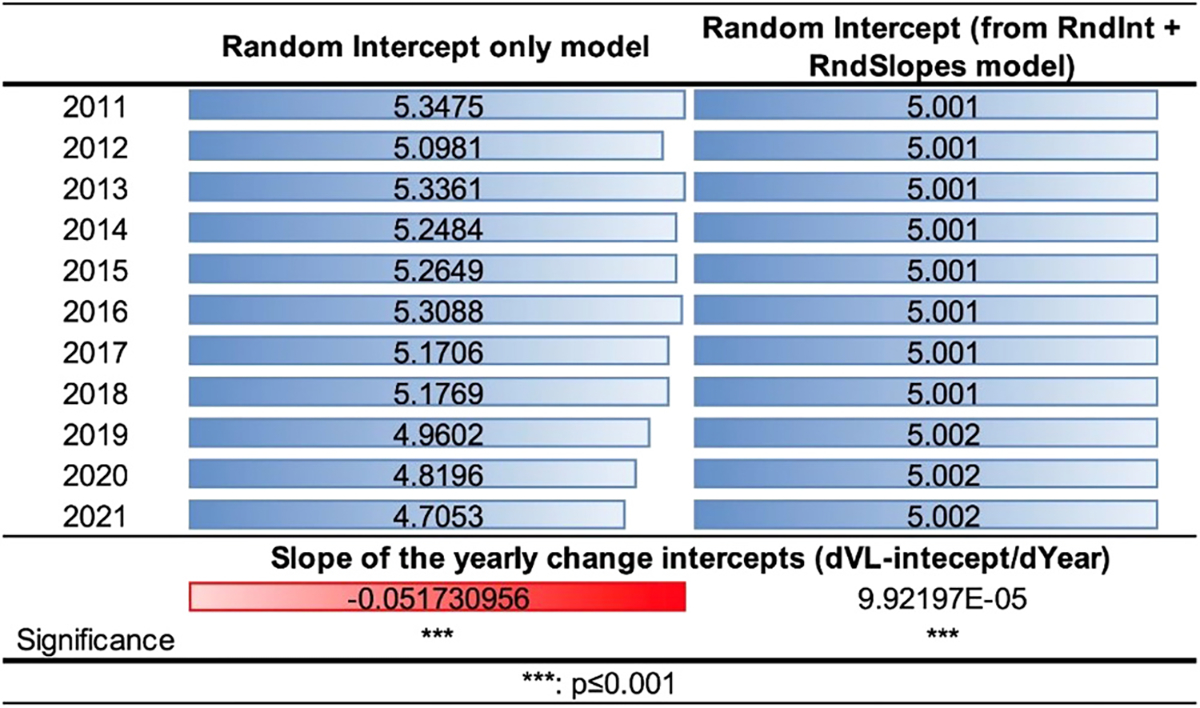
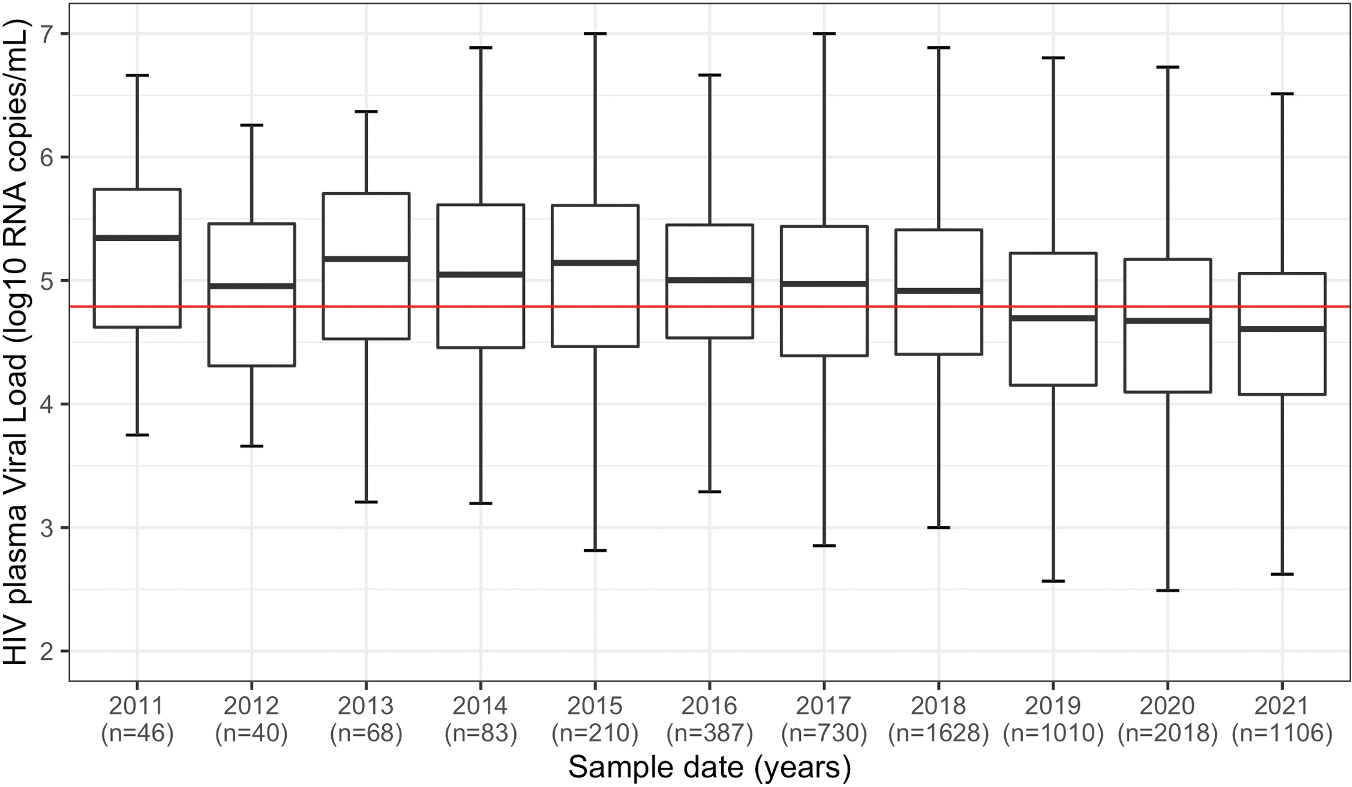
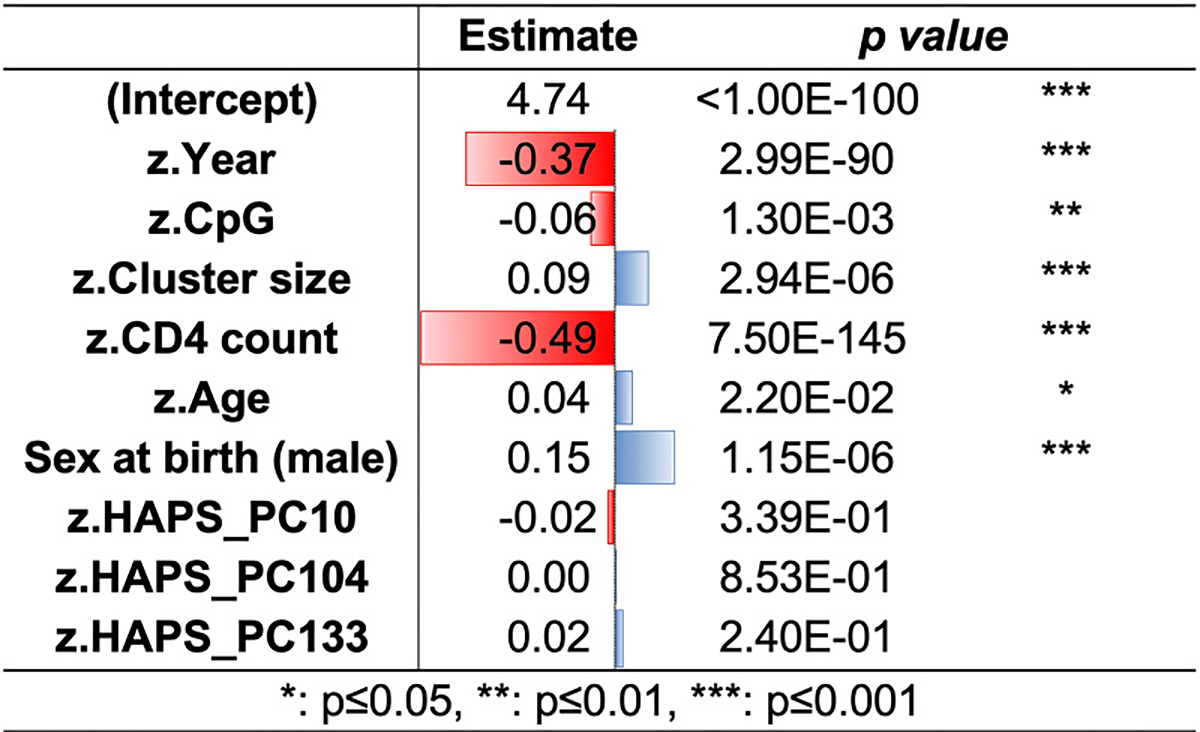
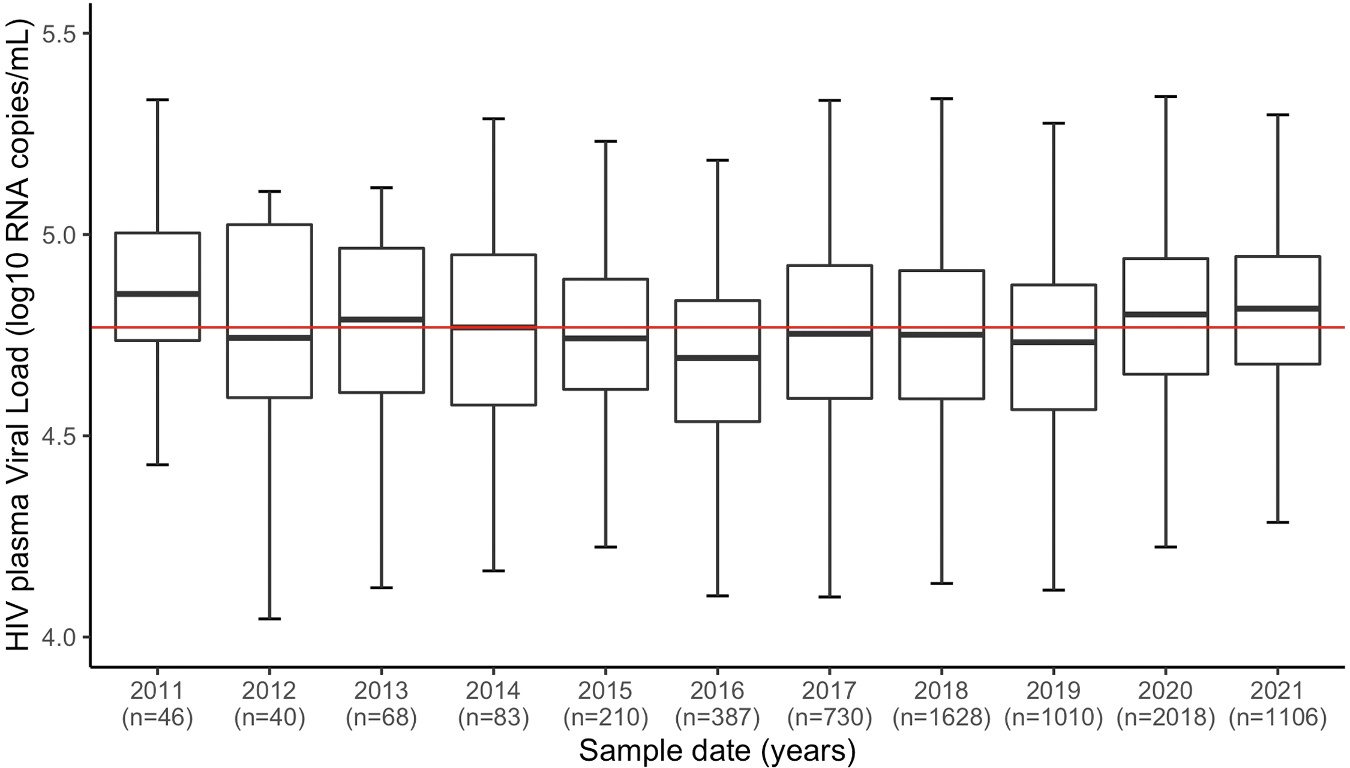
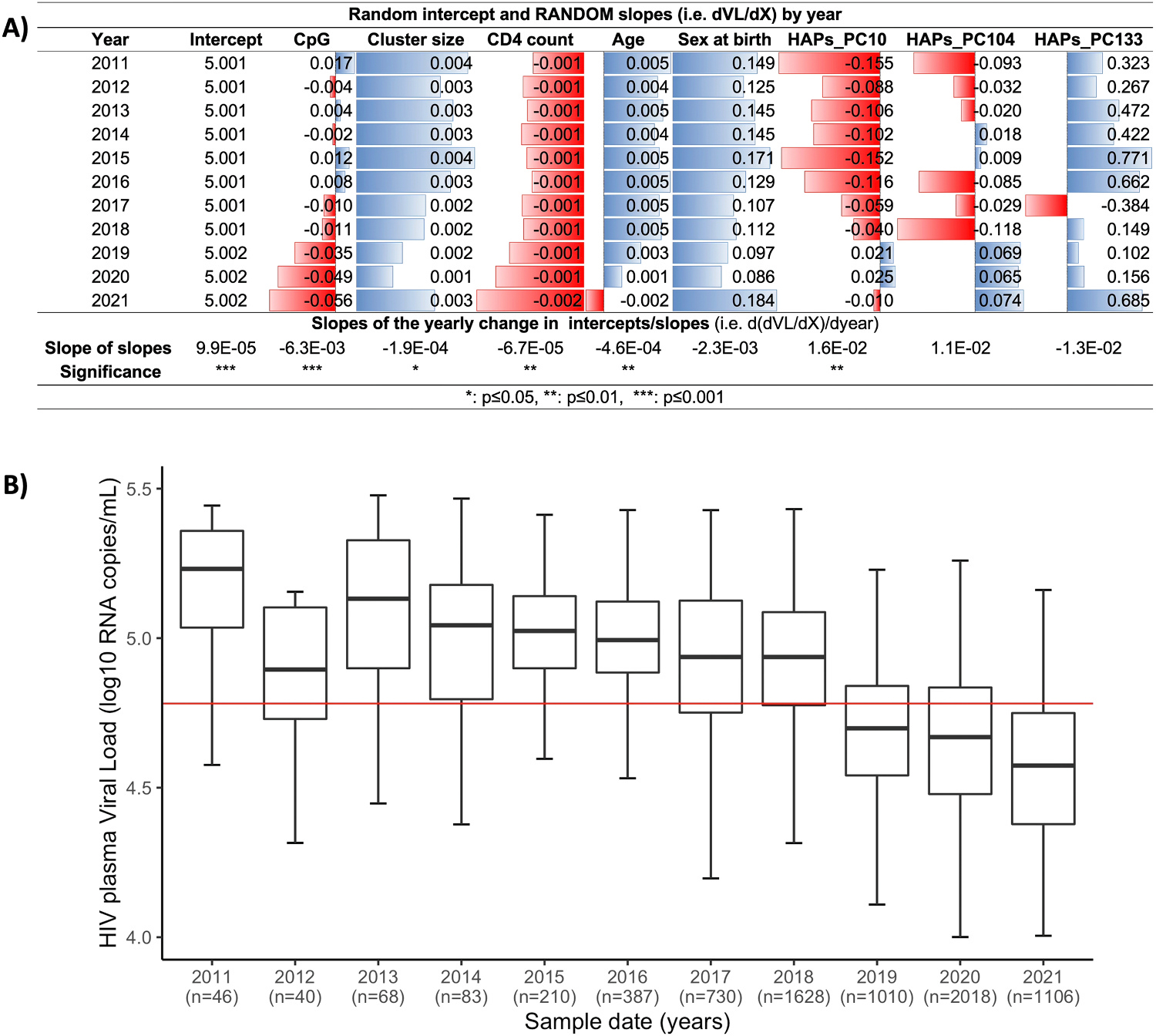
In the context of infectious diseases, the dynamic interplay between ever-changing host populations and viral biology demands a more flexible modeling approach than common fixed correlations. Embracing random-effects regression models allows for a nuanced understanding of the intricate ecological and evolutionary dynamics underlying complex phenomena, offering valuable insights into disease progression and transmission patterns. In this article, we employed a random-effects regression to model an observed decreasing median plasma viral load (pVL) among individuals with HIV in Mexico City during 2019-2021. We identified how these functional slope changes (i.e. random slopes by year) improved predictions of the observed pVL median changes between 2019 and 2021, leading us to hypothesize underlying ecological and evolutionary factors. Our analysis involved a dataset of pVL values from 7325 ART-naïve individuals living with HIV, accompanied by their associated clinical and viral molecular predictors. A conventional fixed-effects linear model revealed significant correlations between pVL and predictors that evolved over time. However, this fixed-effects model could not fully explain the reduction in median pVL; thus, prompting us to adopt random-effects models. After applying a random effects regression model-with random slopes and intercepts by year-, we observed potential "functional changes" within the local HIV viral population, highlighting the importance of ecological and evolutionary considerations in HIV dynamics: A notably stronger negative correlation emerged between HIV pVL and the CpG content in the pol gene, suggesting a changing immune landscape influenced by CpG-induced innate immune responses that could impact viral load dynamics. Our study underscores the significance of random effects models in capturing dynamic correlations and the crucial role of molecular characteristics like CpG content. By enriching our understanding of changing host-virus interactions and HIV progression, our findings contribute to the broader relevance of such models in infectious disease research. They shed light on the changing interplay between host and pathogen, driving us closer to more effective strategies for managing infectious diseases. SIGNIFICANCE OF THE STUDY: This study highlights a decreasing trend in median plasma viral loads among ART-naïve individuals living with HIV in Mexico City between 2019 and 2021. It uncovers various predictors significantly correlated with pVL, shedding light on the complex interplay between host-virus interactions and disease progression. By employing a random-slopes model, the researchers move beyond traditional fixed-effects models to better capture dynamic correlations and evolutionary changes in HIV dynamics. The discovery of a stronger negative correlation between pVL and CpG content in HIV-pol sequences suggests potential changes in the immune landscape and innate immune responses, opening avenues for further research into adaptive changes and responses to environmental shifts in the context of HIV infection. The study's emphasis on molecular characteristics as predictors of pVL adds valuable insights to epidemiological and evolutionary studies of viruses, providing new avenues for understanding and managing HIV infection at the population level.
在传染病领域,宿主群体和病毒生物学的不断变化需要一种比常见的固定相关性更灵活的建模方法。采用随机效应回归模型可以更细致地了解复杂现象背后的生态和进化动态,为疾病进展和传播模式提供有价值的见解。在本文中,我们采用随机效应回归模型来模拟 2019-2021 年期间墨西哥城 HIV 感染者血浆病毒载量(pVL)中位数的下降趋势。我们确定了这些功能斜率变化(即每年的随机斜率)如何提高对 2019 年至 2021 年间观察到的 pVL 中位数变化的预测,这使我们假设存在潜在的生态和进化因素。我们的分析涉及来自 7325 名未经 ART 治疗的 HIV 感染者的 pVL 值数据集,以及他们相关的临床和病毒分子预测因子。常规固定效应线性模型揭示了 pVL 与随时间演变的预测因子之间的显著相关性。然而,这种固定效应模型并不能完全解释 pVL 中位数的降低;因此,促使我们采用随机效应模型。在应用了具有年度随机斜率和截距的随机效应回归模型之后,我们观察到当地 HIV 病毒群体中可能存在“功能变化”,强调了生态和进化因素在 HIV 动态中的重要性:在 pol 基因中 CpG 含量与 HIV pVL 之间出现了明显更强的负相关关系,表明由 CpG 诱导的先天免疫反应引起的免疫景观发生变化,可能会影响病毒载量动态。我们的研究强调了随机效应模型在捕捉动态相关性方面的重要性,以及 CpG 含量等分子特征的关键作用。通过加深我们对宿主-病毒相互作用和 HIV 进展变化的理解,我们的研究结果为传染病研究中此类模型的更广泛应用提供了依据。它们揭示了宿主和病原体之间不断变化的相互作用,使我们更接近于制定管理传染病的更有效策略。研究的意义:本研究强调了 2019 年至 2021 年期间,墨西哥城未经 ART 治疗的 HIV 感染者血浆病毒载量中位数呈下降趋势。它揭示了与 pVL 显著相关的各种预测因子,阐明了宿主-病毒相互作用和疾病进展之间的复杂关系。通过采用随机斜率模型,研究人员超越了传统的固定效应模型,更好地捕捉了 HIV 动态中的动态相关性和进化变化。发现 pVL 与 HIV-pol 序列中 CpG 含量之间的负相关性更强,这表明免疫景观和先天免疫反应可能发生变化,为进一步研究 HIV 感染背景下的适应性变化和对环境变化的反应开辟了途径。研究强调了分子特征作为 pVL 预测因子的作用,为病毒的流行病学和进化研究提供了有价值的见解,为在人群水平上理解和管理 HIV 感染提供了新的途径。