Maccabi Healthcare Services, Tel Aviv, Israel.
Department of Health system management, Ariel University, Ariel, Israel.
Fam Med Community Health. 2024 May 17;12(2):e002729. doi: 10.1136/fmch-2024-002729.
As populations age globally, effectively managing geriatric health poses challenges for primary care. Comprehensive geriatric assessments (CGAs) aim to address these challenges through multidisciplinary screening and coordinated care planning. However, most CGA tools and workflows have not been optimised for routine primary care delivery.
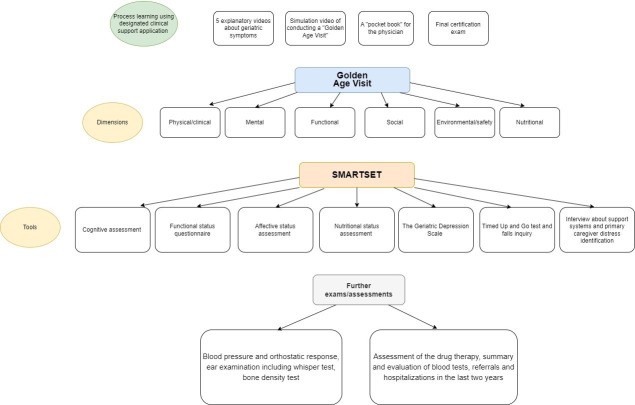
This study aimed to evaluate the impact of a computerised CGA tool, called the Golden Age Visit, implemented in primary care in Israel.
This study employed a quasiexperimental mixed-methods design to evaluate outcomes associated with the Golden Age electronic health assessment tool. Quantitative analysis used electronic medical records data from Maccabi Healthcare Services, the second largest health management organisation (HMO) in Israel. Patients aged 75 and older were included in analyses from January 2017 to December 2019 and January 2021 to December 2022. For patients, data were also collected on controls who did not participate in the Golden Age Visit programme during the same time period, to allow for comparison of outcomes. For physicians, qualitative data were collected via surveys and interviews with primary care physicians who used the Golden Age Visit SMARTEST e-assessment tool.
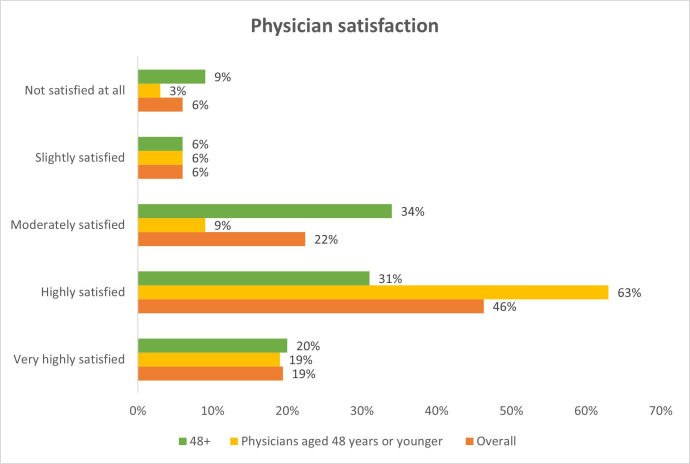
A total of 9022 community-dwelling adults aged 75 and older were included in the study: 1421 patients received a Golden Age Visit CGA (intervention group), and 7601 patients did not receive the assessment (control group). After CGAs, diagnosis rates increased significantly for neuropsychiatric conditions and falls. Referrals to physiotherapy, occupational therapy, dietetics and geriatric outpatient clinics also rose substantially. However, no differences were found in rates of hip fracture or relocation to long-term care between groups. Surveys among physicians (n=151) found high satisfaction with the programme.
Implementation of a large-scale primary care CGA programme was associated with improved diagnosis and management of geriatric conditions. Physicians were also satisfied, suggesting good uptake and feasibility within usual care. Further high-quality studies are still needed but these results provide real-world support for proactively addressing geriatric health needs through structured screening models.
随着全球人口老龄化,有效管理老年健康对初级保健提出了挑战。综合老年评估(CGA)旨在通过多学科筛查和协调的护理计划来应对这些挑战。然而,大多数 CGA 工具和工作流程尚未针对常规初级保健的提供进行优化。
本研究旨在评估在以色列初级保健中实施的一种名为 Golden Age Visit 的计算机化 CGA 工具的影响。
本研究采用准实验混合方法设计来评估与 Golden Age 电子健康评估工具相关的结果。定量分析使用了以色列第二大健康管理组织(HMO)Maccabi Healthcare Services 的电子病历数据。2017 年 1 月至 2019 年 12 月和 2021 年 1 月至 2022 年 12 月期间,年龄在 75 岁及以上的患者纳入了分析。对于患者,还收集了在同一时期未参与 Golden Age Visit 计划的对照组患者的数据,以便比较结果。对于医生,通过对使用 Golden Age Visit SMARTEST 电子评估工具的初级保健医生进行调查和访谈收集了定性数据。
共有 9022 名 75 岁及以上的社区居住成年人参与了这项研究:1421 名患者接受了 Golden Age Visit CGA(干预组),7601 名患者未接受评估(对照组)。进行 CGA 后,神经精神疾病和跌倒的诊断率显著增加。物理治疗、职业治疗、饮食治疗和老年门诊的转介也大幅增加。然而,两组之间髋部骨折或搬迁至长期护理机构的发生率没有差异。对 151 名医生的调查发现,他们对该计划非常满意。
在大规模初级保健 CGA 计划的实施中,与改善老年疾病的诊断和管理相关。医生也很满意,这表明在常规护理中具有良好的接受度和可行性。仍需要进一步的高质量研究,但这些结果为通过结构化筛查模型主动解决老年健康需求提供了真实世界的支持。