Department of Biochemistry, Center for Structural Biology, Vanderbilt University School of Medicine, Nashville, TN 37232.
Department of Microbiology, Icahn School of Medicine at Mount Sinai, New York, NY 10029.
Proc Natl Acad Sci U S A. 2024 May 28;121(22):e2314166121. doi: 10.1073/pnas.2314166121. Epub 2024 May 20.
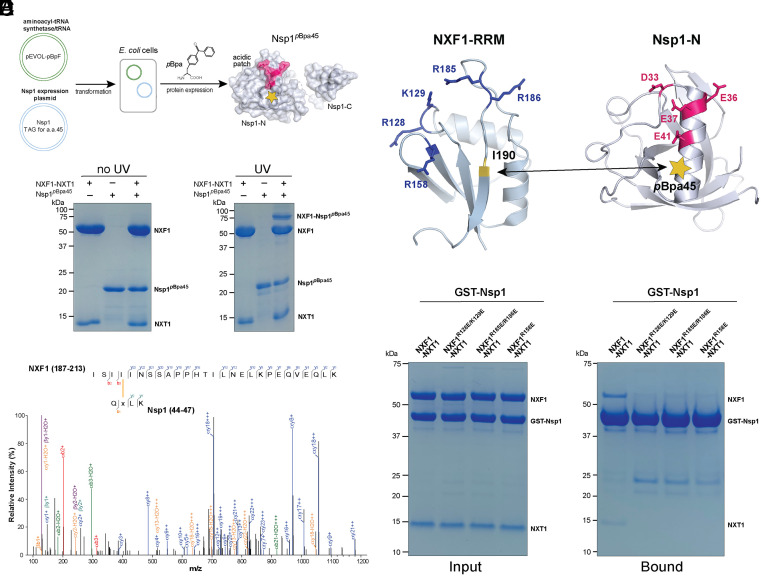
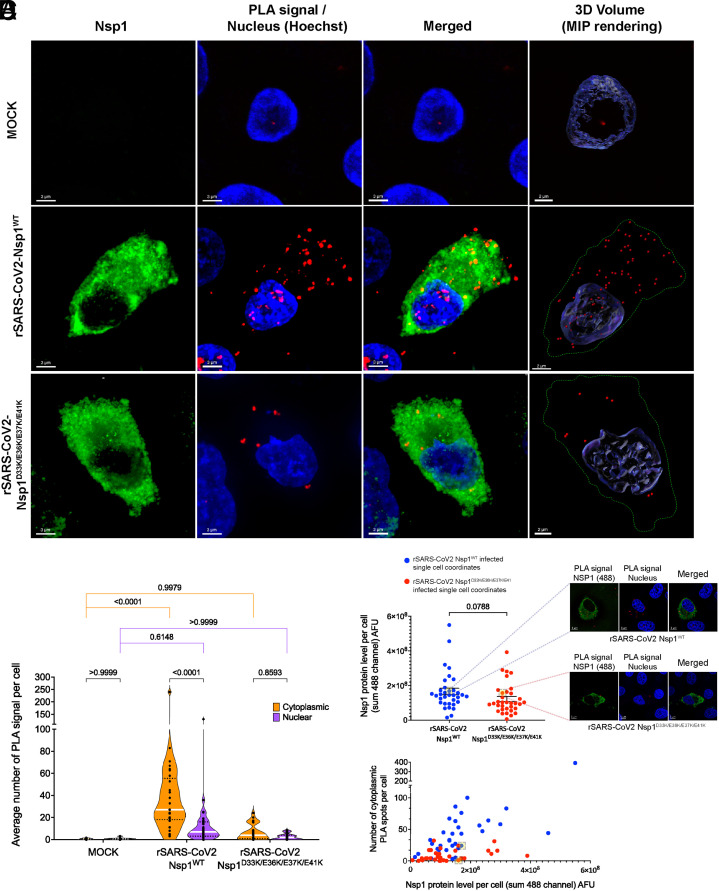
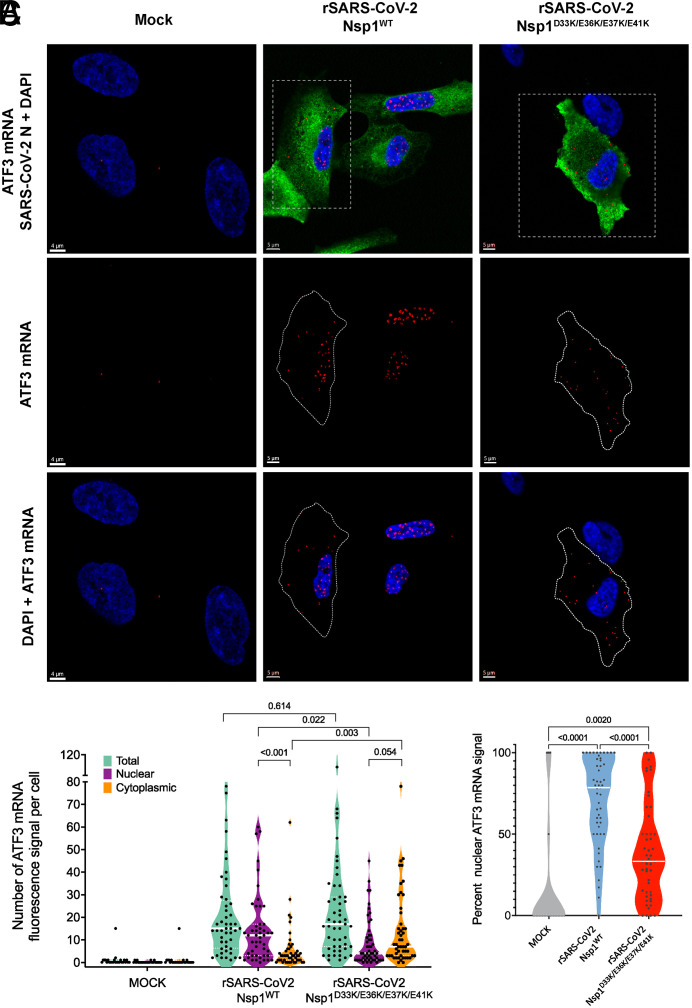
The nonstructural protein 1 (Nsp1) of SARS-CoV-2 (Severe Acute Respiratory Syndrome Coronavirus 2) is a virulence factor that targets multiple cellular pathways to inhibit host gene expression and antiviral response. However, the underlying mechanisms of the various Nsp1-mediated functions and their contributions to SARS-CoV-2 virulence remain unclear. Among the targets of Nsp1 is the mRNA (messenger ribonucleic acid) export receptor NXF1-NXT1, which mediates nuclear export of mRNAs from the nucleus to the cytoplasm. Based on Nsp1 crystal structure, we generated mutants on Nsp1 surfaces and identified an acidic N-terminal patch that is critical for interaction with NXF1-NXT1. Photoactivatable Nsp1 probe reveals the RNA Recognition Motif (RRM) domain of NXF1 as an Nsp1 N-terminal binding site. By mutating the Nsp1 N-terminal acidic patch, we identified a separation-of-function mutant of Nsp1 that retains its translation inhibitory function but substantially loses its interaction with NXF1 and reverts Nsp1-mediated mRNA export inhibition. We then generated a recombinant (r)SARS-CoV-2 mutant on the Nsp1 N-terminal acidic patch and found that this surface is key to promote NXF1 binding and inhibition of host mRNA nuclear export, viral replication, and pathogenicity in vivo. Thus, these findings provide a mechanistic understanding of Nsp1-mediated mRNA export inhibition and establish the importance of this pathway in the virulence of SARS-CoV-2.
SARS-CoV-2(严重急性呼吸综合征冠状病毒 2)的非结构蛋白 1(Nsp1)是一种毒力因子,它靶向多种细胞途径,抑制宿主基因表达和抗病毒反应。然而,Nsp1 介导的各种功能的潜在机制及其对 SARS-CoV-2 毒力的贡献仍不清楚。Nsp1 的靶点之一是 mRNA(信使核糖核酸)输出受体 NXF1-NXT1,它介导 mRNA 从细胞核到细胞质的核输出。基于 Nsp1 晶体结构,我们在 Nsp1 表面生成突变体,并鉴定出一个酸性 N 端补丁,该补丁对于与 NXF1-NXT1 的相互作用至关重要。光活化 Nsp1 探针揭示了 NXF1 的 RNA 识别基序(RRM)结构域是 Nsp1 N 端结合位点。通过突变 Nsp1 N 端酸性补丁,我们鉴定出一个具有分离功能的 Nsp1 突变体,它保留了其翻译抑制功能,但与 NXF1 的相互作用大大丧失,并使 Nsp1 介导的 mRNA 输出抑制逆转。然后,我们在 Nsp1 N 端酸性补丁上生成了一个重组(r)SARS-CoV-2 突变体,发现该表面对于促进 NXF1 结合和抑制宿主 mRNA 核输出、病毒复制和体内致病性至关重要。因此,这些发现提供了对 Nsp1 介导的 mRNA 输出抑制的机制理解,并确立了该途径在 SARS-CoV-2 毒力中的重要性。