Division of Neurology, Department of Internal Medicine, Aleppo University Hospital, Aleppo, Syria.
Department of Internal Medicine, Aleppo University Hospital, Aleppo, Syria.
J Int Med Res. 2024 May;52(5):3000605241248050. doi: 10.1177/03000605241248050.
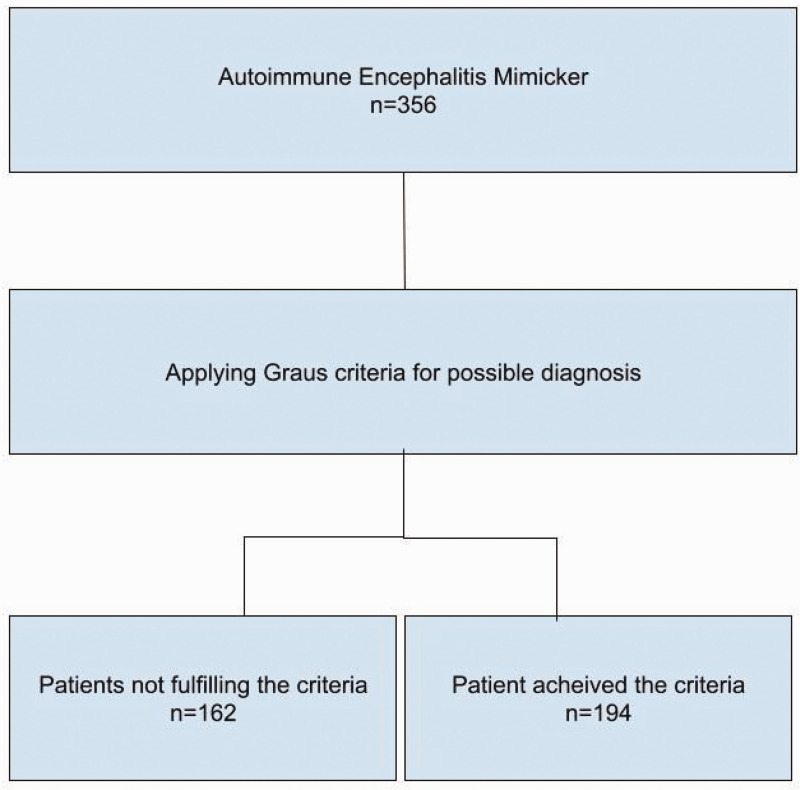
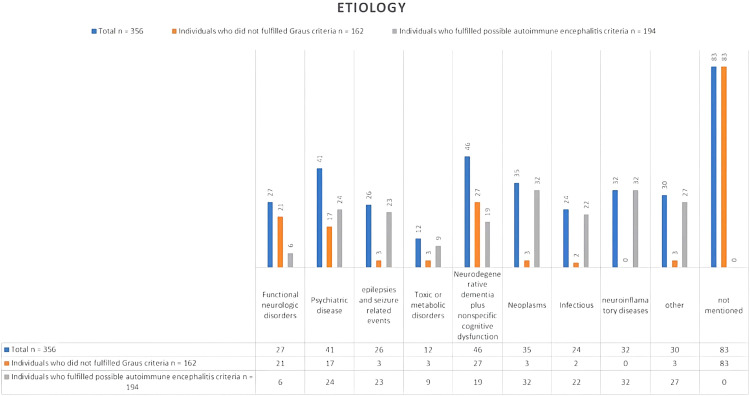
Autoimmune encephalitis (AIE) is a rapid, progressive neurological disorder characterized by nervous system inflammation. While the Graus criteria are the best known criteria for AIE diagnosis, other differential diagnoses meeting the Graus criteria must be considered before management. This narrative review discusses the most common etiologies that resemble AIE. We suggest routine exclusion of mimickers meeting the Graus criteria before confirming an AIE diagnosis. We reviewed 28 studies including 356 patients. The main initial diagnosis was AIE, then paraneoplastic limbic encephalitis and anti-N-methyl-D-aspartate receptor encephalitis. Only 194 patients met the possible Graus criteria. The most frequent conditions among the total population were dementia, other neurodegenerative diseases, and psychiatric and functional neurological disorders. AIE is often misdiagnosed, leading to unnecessary treatment. Despite publication of the Graus criteria, medical cases mimicking this condition are being published. Many neurological diseases entering the differential diagnosis of AIE could be excluded through a detailed history, neurological examination, laboratory analysis, and other investigations, including cerebrospinal fluid and brain magnetic resonance imaging. However, some differential diagnoses complied with the possible Graus criteria, with some having concurrent antineuronal antibodies, which were considered true mimickers. AIE diagnosis suspicion is primarily clinical, but a definitive diagnosis requires various diagnostic tools.
自身免疫性脑炎 (AIE) 是一种快速进展的神经系统疾病,其特征是神经系统炎症。虽然 Graus 标准是 AIE 诊断的最佳标准,但在进行管理之前,必须考虑符合 Graus 标准的其他鉴别诊断。本叙述性综述讨论了最常见的类似于 AIE 的病因。我们建议在确认 AIE 诊断之前,常规排除符合 Graus 标准的类似物。我们回顾了 28 项研究,共纳入 356 例患者。最初的主要诊断是 AIE,然后是副肿瘤性边缘叶脑炎和抗 N-甲基-D-天冬氨酸受体脑炎。仅有 194 例患者符合可能的 Graus 标准。在总人群中最常见的情况是痴呆、其他神经退行性疾病以及精神和功能性神经障碍。AIE 经常被误诊,导致不必要的治疗。尽管 Graus 标准已经公布,但仍有许多类似这种疾病的病例被发表。许多进入 AIE 鉴别诊断的神经疾病可以通过详细的病史、神经系统检查、实验室分析和其他检查(包括脑脊液和脑磁共振成像)来排除,如痴呆、其他神经退行性疾病以及精神和功能性神经障碍。然而,一些鉴别诊断符合可能的 Graus 标准,其中一些同时存在抗神经元抗体,这些被认为是真正的类似物。AIE 的诊断主要基于临床,但明确的诊断需要各种诊断工具。