Department of Laboratory Medicine, The Second Affiliated Hospital of Chongqing Medical University, Chongqing, China.
The Key Laboratory of Molecular Biology of Infectious Diseases Designated by the Chinese Ministry of Education, Chongqing Medical University, Chongqing, China.
PLoS One. 2024 May 22;19(5):e0303945. doi: 10.1371/journal.pone.0303945. eCollection 2024.
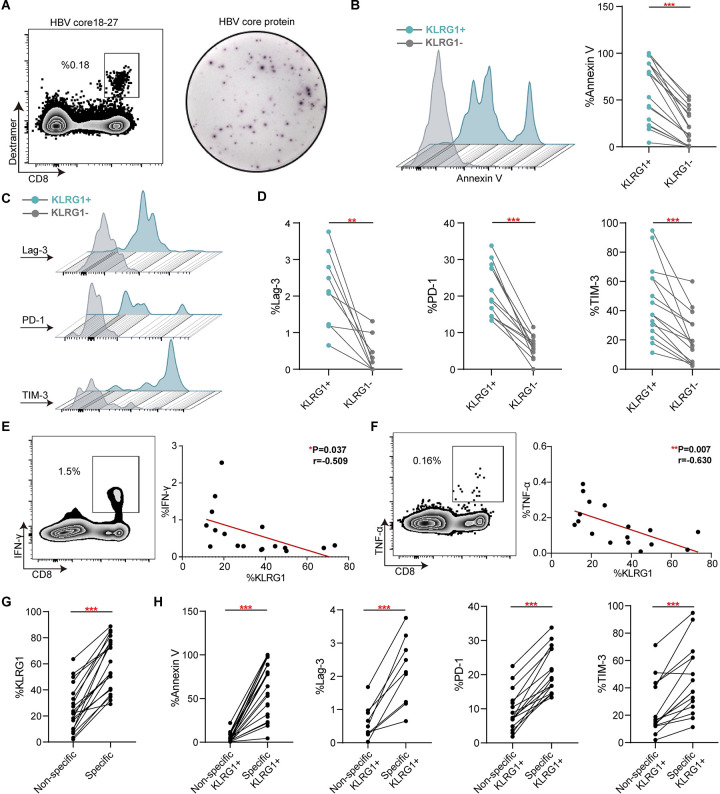
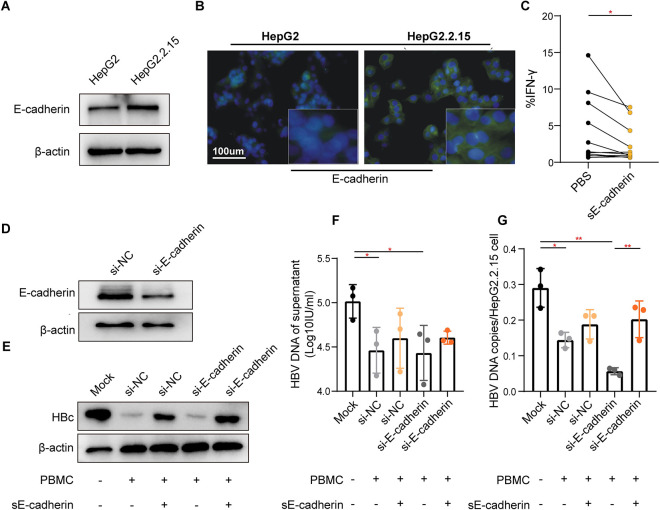
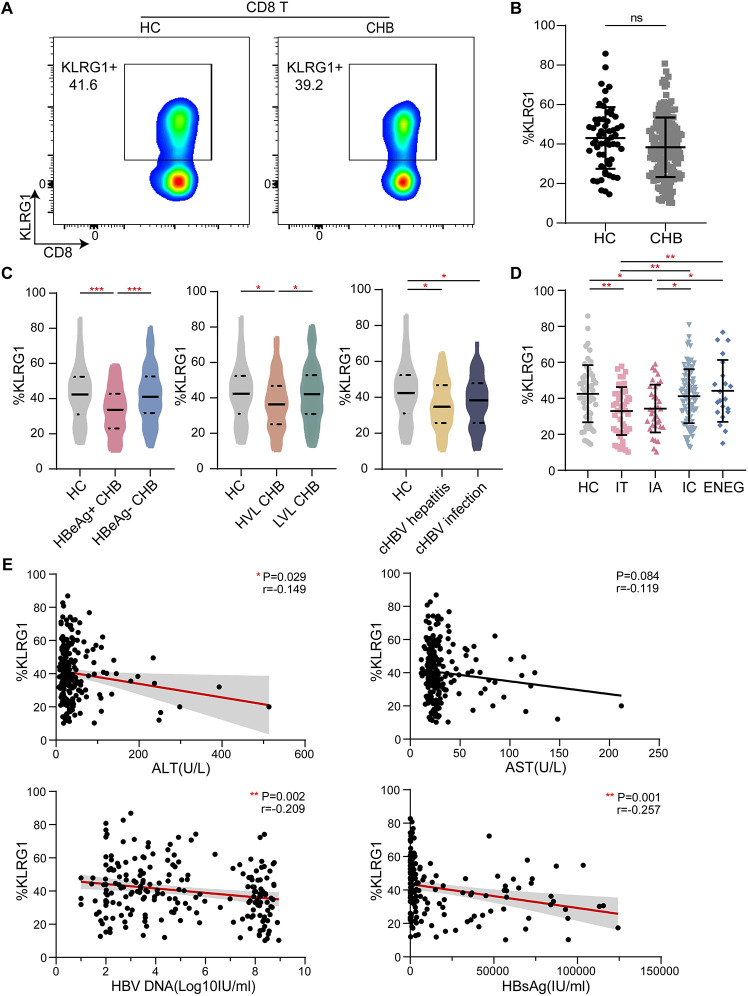
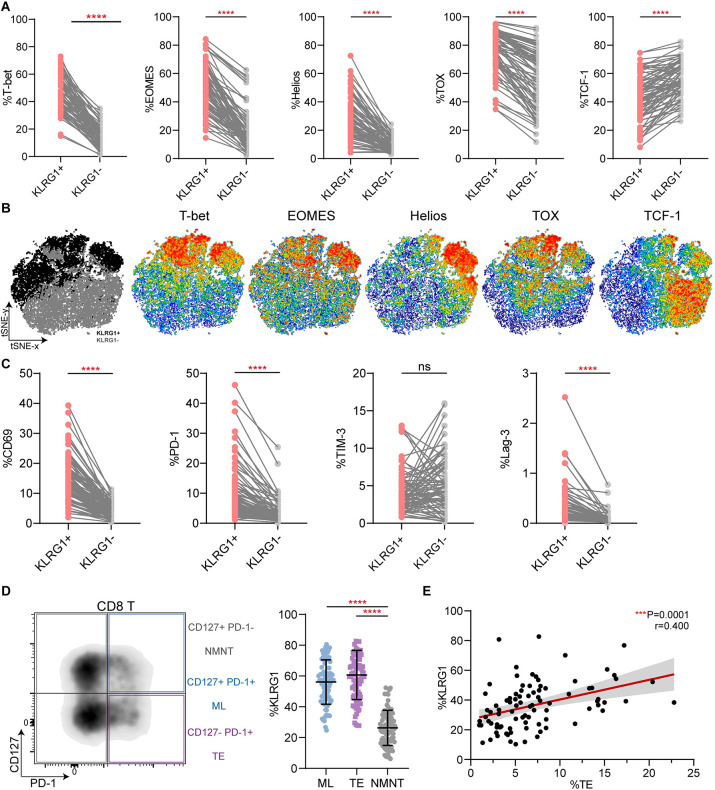
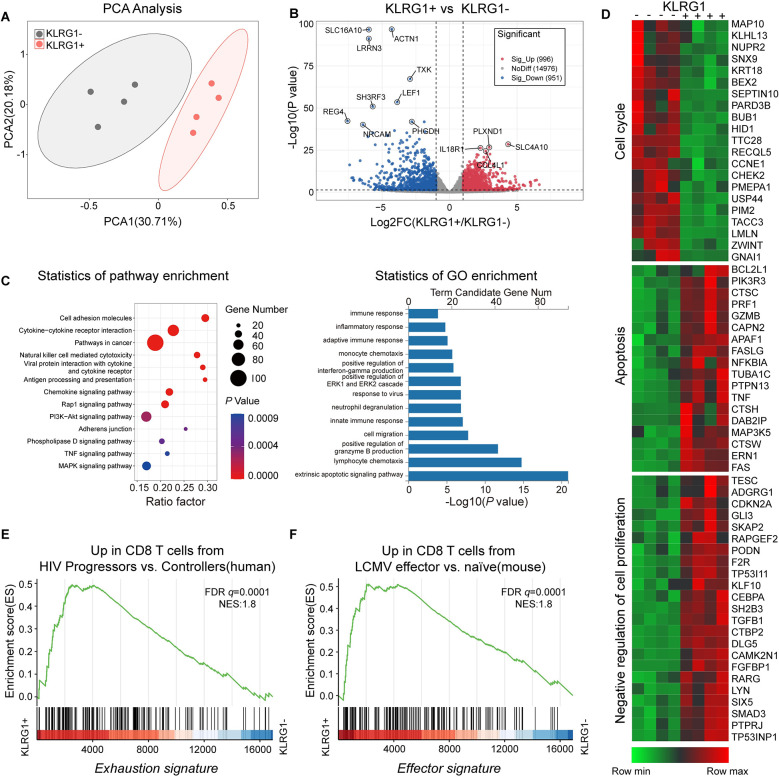
Killer cell lectin-like receptor G1 (KLRG1) has traditionally been regarded as an inhibitory receptor of T cell exhaustion in chronic infection and inflammation. However, its exact role in hepatitis B virus (HBV) infection remains elusive. CD8+ T cells from 190 patients with chronic hepatitis B were analyzed ex vivo for checkpoint and apoptosis markers, transcription factors, cytokines and subtypes in 190 patients with chronic hepatitis B. KLRG1+ and KLRG1- CD8+ T cells were sorted for transcriptome analysis. The impact of the KLRG1-E-cadherin pathway on the suppression of HBV replication mediated by virus-specific T cells was validated in vitro. As expected, HBV-specific CD8+ T cells expressed higher levels of KLRG1 and showed an exhausted molecular phenotype and function. However, despite being enriched for the inhibitory molecules, thymocyte selection-associated high mobility group box protein (TOX), eomesodermin (EOMES), and Helios, CD8+ T cells expressing KLRG1 produced significant levels of tumour necrosis factor (TNF)-α, interferon (IFN)-γ, perforin, and granzyme B, demonstrating not exhausted but active function. Consistent with the in vitro phenotypic assay results, RNA sequencing (RNA-seq) data showed that signature effector T cell and exhausted T cell genes were enriched in KLRG1+ CD8+ T cells. Furthermore, in vitro testing confirmed that KLRG1-E-cadherin binding inhibits the antiviral efficacy of HBV-specific CD8+ T cells. Based on these findings, we concluded that KLRG1+ CD8+ T cells are not only a terminally exhausted subgroup but also exhibit functional diversity, despite inhibitory signs in HBV infection.
杀伤细胞凝集素样受体 G1(KLRG1)传统上被认为是慢性感染和炎症中 T 细胞耗竭的抑制性受体。然而,其在乙型肝炎病毒(HBV)感染中的确切作用仍不清楚。分析了 190 例慢性乙型肝炎患者的 190 例慢性乙型肝炎患者的 CD8+T 细胞的检查点和凋亡标志物、转录因子、细胞因子和亚型。对 KLRG1+和 KLRG1-CD8+T 细胞进行了转录组分析。体外验证了 KLRG1-E-钙黏蛋白通路对病毒特异性 T 细胞抑制 HBV 复制的影响。正如预期的那样,HBV 特异性 CD8+T 细胞表达更高水平的 KLRG1,并表现出衰竭的分子表型和功能。然而,尽管 KLRG1 抑制分子(胸腺细胞选择相关高迁移率族框蛋白(TOX)、Eomesodermin(EOMES)和 Helios)丰富,但表达 KLRG1 的 CD8+T 细胞产生了大量的肿瘤坏死因子(TNF)-α、干扰素(IFN)-γ、穿孔素和颗粒酶 B,表明其功能并未衰竭而是活跃的。与体外表型测定结果一致,RNA 测序(RNA-seq)数据显示,特征性效应 T 细胞和衰竭 T 细胞基因在 KLRG1+CD8+T 细胞中富集。此外,体外试验证实 KLRG1-E-钙黏蛋白结合抑制了 HBV 特异性 CD8+T 细胞的抗病毒功效。基于这些发现,我们得出结论,尽管在 HBV 感染中存在抑制性迹象,但 KLRG1+CD8+T 细胞不仅是一个终末衰竭的亚群,而且还表现出功能多样性。