Epidemiology and Population Health, London School of Hygiene & Tropical Medicine, London, UK
Centre for Academic Mental Health, Population Health Sciences, Bristol Medical School, University of Bristol, Bristol, UK.
J Neurol Neurosurg Psychiatry. 2024 Jul 15;95(8):693-703. doi: 10.1136/jnnp-2023-333149.
Antiseizure medications (ASMs) during the first trimester of pregnancy have been associated with an increased risk of miscarriage.
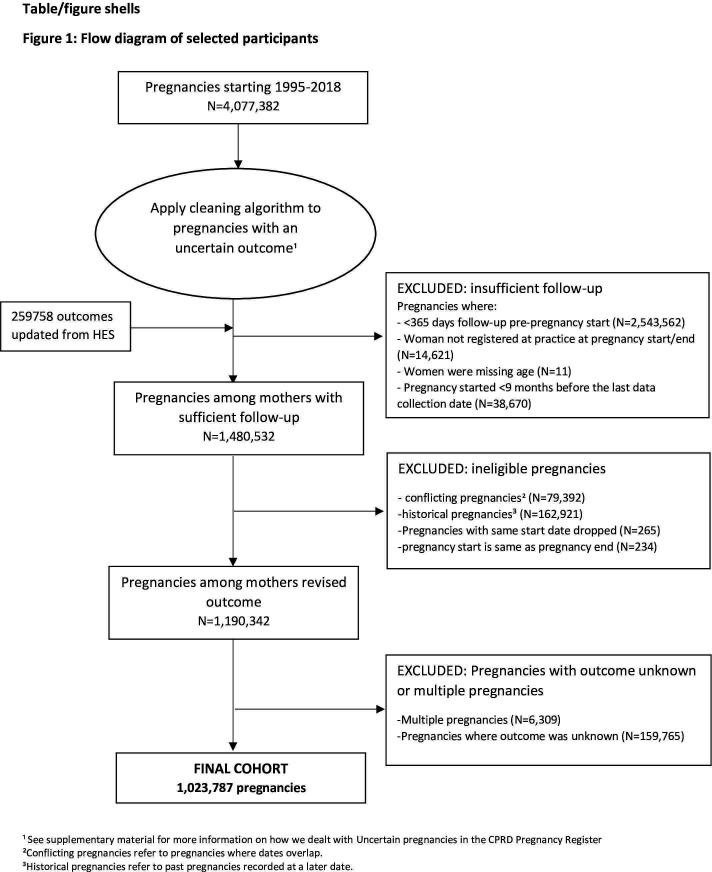
We carried out a population-based cohort study using routinely collected healthcare data from the UK, 1995-2018. Pregnancies were identified in the Clinical Practice Research Datalink and we estimated the HR of miscarriage associated with prescriptions of ASMs during the first trimester of pregnancy, using Cox regression, adjusting for potential confounders, including ASM indications.
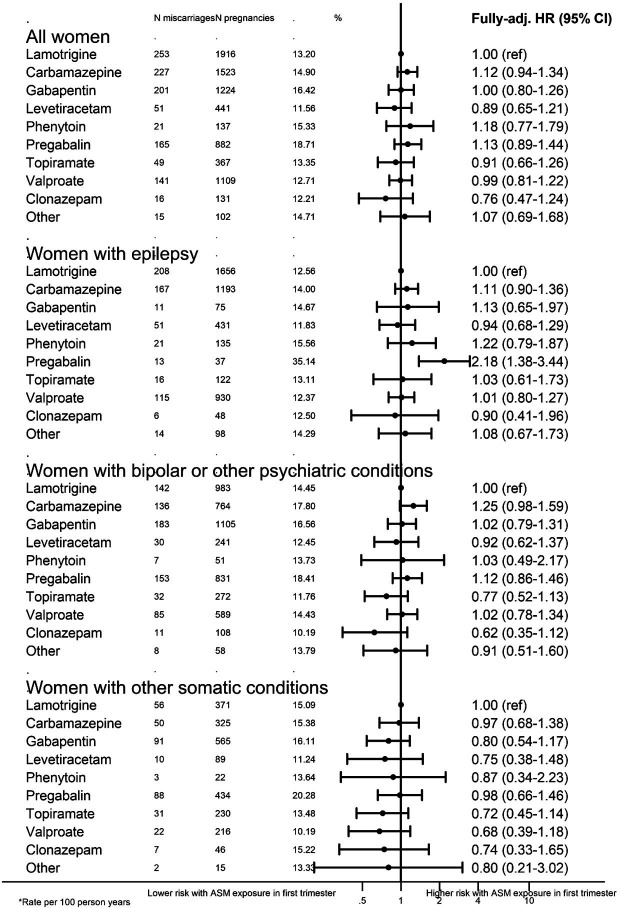
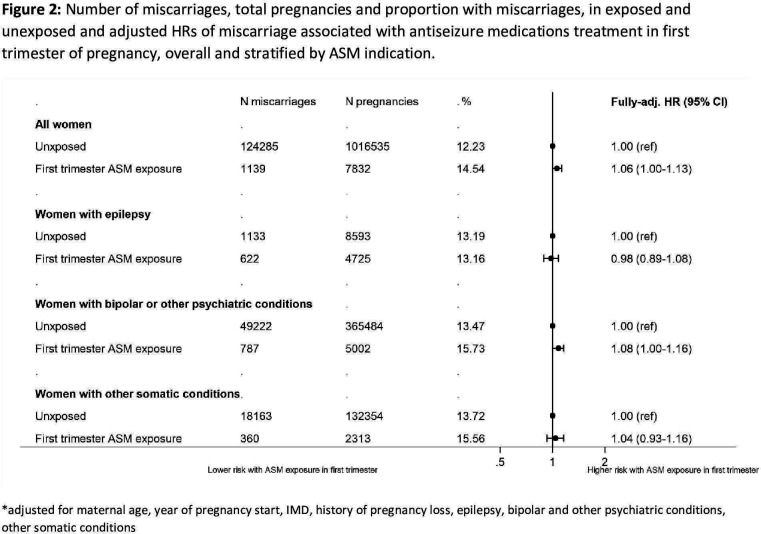
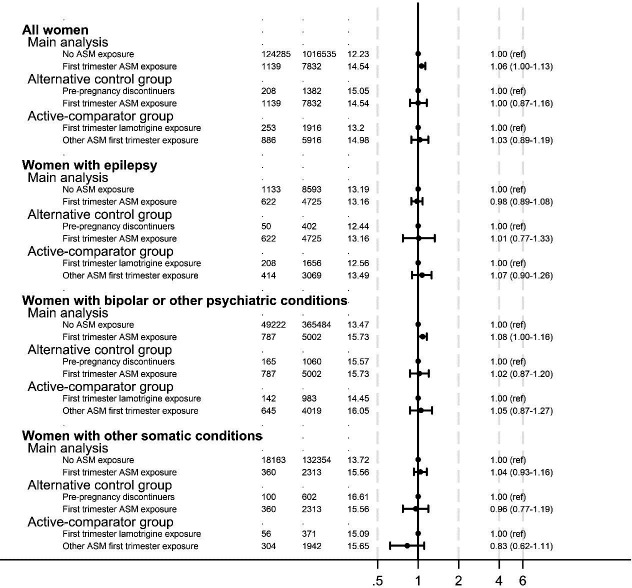
ASMs were prescribed during the first trimester in 7832 (0.8%) of 1 023 787 included pregnancies. 14.5% of pregnancies with first-trimester exposure to ASMs ended in miscarriage, while 12.2% without ASM exposure in the first trimester ended in miscarriage; after adjustment, there was a 1.06-fold relative hazard of miscarriage (95% CI 1.00 to 1.13) in women with first-trimester ASM use. After restricting to women with specific ASM indications, this association was not evident in women with epilepsy (adjusted HR 0.98, 95% CI 0.89 to 1.08), but was observed in women with bipolar or other psychiatric conditions (1.08, 95% CI 1.00 to 1.16) although CIs overlapped. Compared with discontinuation of ASMs prior to pregnancy, there was no evidence of increased risk of miscarriage for first-trimester ASM use in women with bipolar or other psychiatric conditions (1.02, 95% CI 0.87 to 1.20).
We found no clear evidence to suggest that first-trimester ASM use increased the risk of miscarriage. Taken together, our analyses suggest that apparent associations between first-trimester ASM use and miscarriage may be the result of confounding by the presence of a bipolar disorder or associated unmeasured variables.
在妊娠早期使用抗癫痫药物(ASMs)与流产风险增加有关。
我们使用英国的常规医疗保健数据进行了一项基于人群的队列研究,时间跨度为 1995 年至 2018 年。在临床实践研究数据库中确定了妊娠情况,我们使用 Cox 回归估计了在妊娠早期使用 ASMs 与流产相关的风险比(HR),并调整了可能的混杂因素,包括 ASM 适应症。
在纳入的 1023787 例妊娠中,有 7832(0.8%)例在妊娠早期使用了 ASMs。在暴露于妊娠早期 ASM 的妊娠中,14.5%以流产告终,而在未使用 ASM 的妊娠中,12.2%以流产告终;调整后,妊娠早期使用 ASM 的女性流产的相对危险度(RR)为 1.06(95% CI 1.00 至 1.13)。在将研究对象限定为具有特定 ASM 适应症的女性后,癫痫女性中并未发现这种关联(调整 RR 0.98,95% CI 0.89 至 1.08),但在双相或其他精神疾病女性中观察到这种关联(1.08,95% CI 1.00 至 1.16),尽管 CI 存在重叠。与妊娠前停止使用 ASM 相比,双相或其他精神疾病女性妊娠早期使用 ASM 并未增加流产风险(1.02,95% CI 0.87 至 1.20)。
我们没有发现明确的证据表明妊娠早期使用 ASM 会增加流产的风险。总的来说,我们的分析表明,妊娠早期使用 ASM 与流产之间的明显关联可能是由于存在双相情感障碍或相关未测量变量所致的混杂因素。