
身披绿装并非易事:比较两栖动物的典型肤色与因色素细胞缺陷导致的颜色异常。
It's not easy being green: Comparing typical skin colouration among amphibians with colour abnormalities associated with chromatophore deficits.
作者信息
Gould John, McHenry Colin
机构信息
School of Environmental and Life Sciences University of Newcastle Callaghan New South Wales Australia.
出版信息
Ecol Evol. 2024 May 21;14(5):e11438. doi: 10.1002/ece3.11438. eCollection 2024 May.
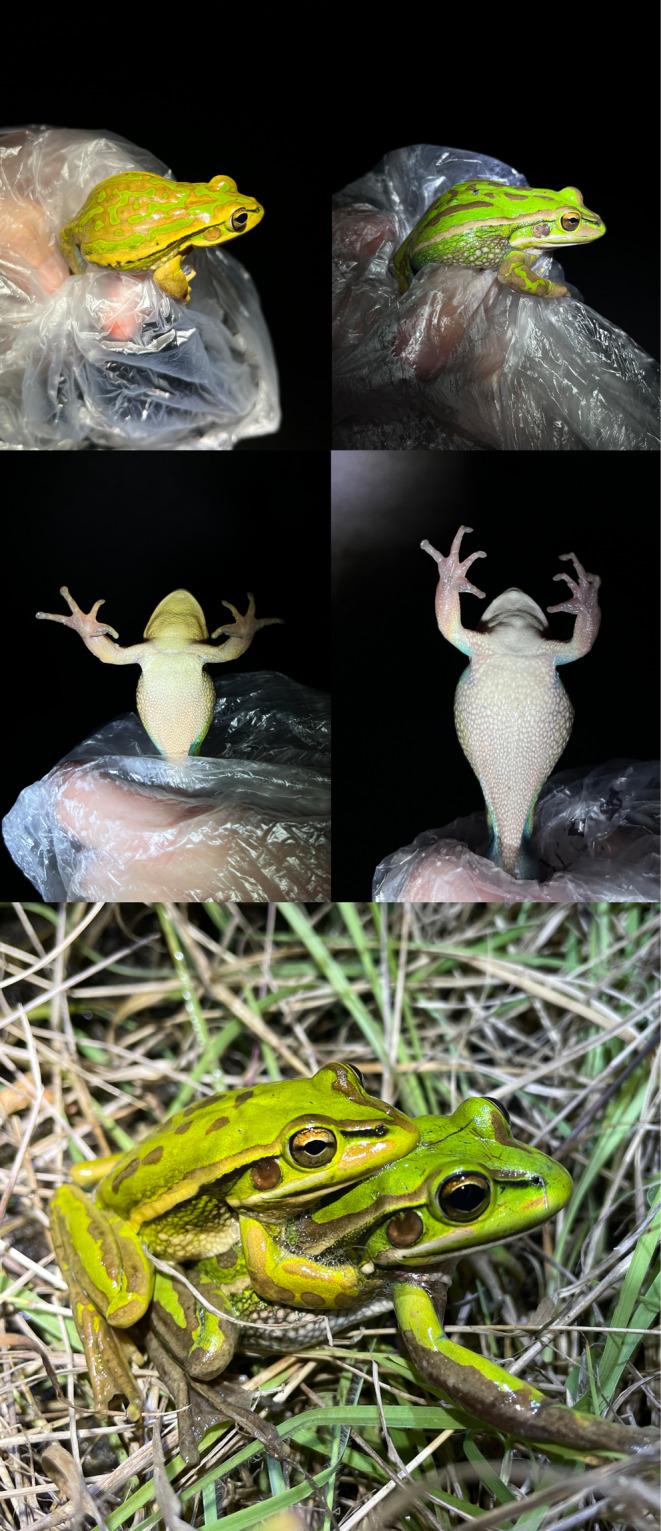
Amphibians can obtain their colour from a combination of several different pigment and light reflecting cell types called chromatophores, with defects in one or several of the cells leading to colour abnormalities. There is a need for better recording of colour abnormalities within wild amphibian populations, as this may provide baseline data that can be used to determine changes in environmental conditions and population dynamics, such as inbreeding. In this study, we provide records of several types of chromatophore deficiencies, including those involving iridophores, xanthophores and melanophores, among two Australian tree frog species; the green and golden bell frog, , and the eastern dwarf tree frog, . We explore these colour abnormalities in terms of the chromatophores that have likely been affected and associated with their expression, in combination with typical colour phenotypes, colour variations and colour changes for these species. We intend for our photographs to be used as a visual guide that addresses the need for more accessible information regarding the physical manifestation of different chromatophore defects among amphibians.
两栖动物的颜色可由几种不同的色素和称为色素细胞的反光细胞组合而成,其中一个或几个细胞出现缺陷会导致颜色异常。有必要更好地记录野生两栖动物种群中的颜色异常情况,因为这可能提供基线数据,用于确定环境条件和种群动态的变化,如近亲繁殖。在本研究中,我们记录了两种澳大利亚树蛙——绿金铃蛙和东部侏儒树蛙——中几种色素细胞缺陷的情况,包括涉及虹彩细胞、黄色素细胞和黑素细胞的缺陷。我们结合这些物种的典型颜色表型、颜色变化和颜色改变,从可能受影响的色素细胞及其表达方面探讨这些颜色异常。我们希望我们的照片能作为一种视觉指南,满足人们对两栖动物不同色素细胞缺陷的物理表现获取更多易获取信息的需求。



 Zotero 插件