Department of Pediatrics, Seoul National University College of Medicine 101, Daehak-Ro, Jongno-Gu, Seoul, 03080, Republic of Korea.
Department of Pediatrics, Seoul National University Bundang Hospital, Seongnam, Republic of Korea.
Eur J Pediatr. 2024 Aug;183(8):3479-3487. doi: 10.1007/s00431-024-05611-6. Epub 2024 May 23.
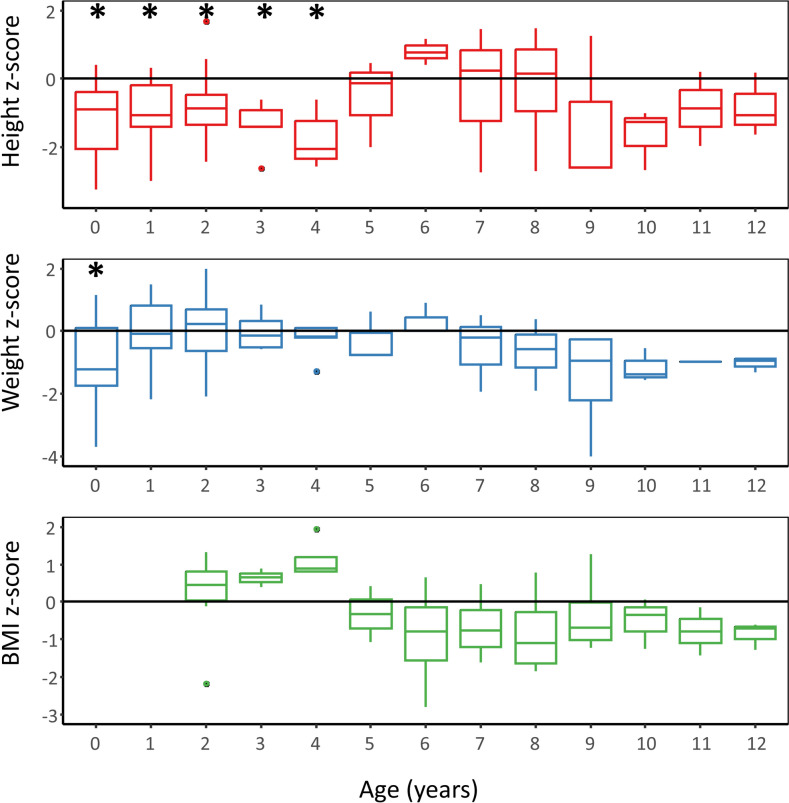
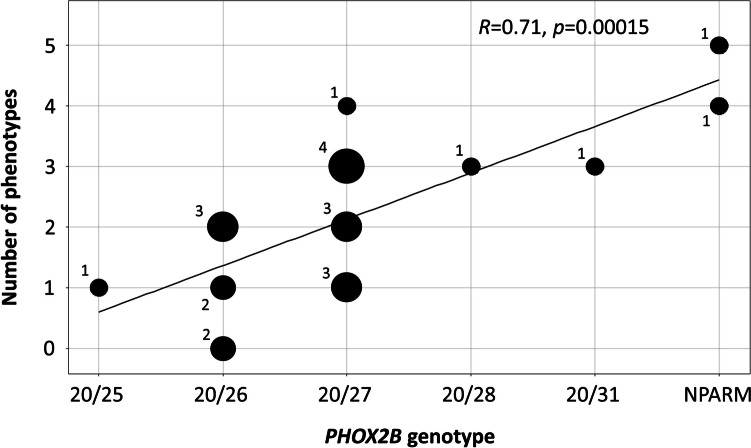
Congenital central hypoventilation syndrome (CCHS) is a rare genetic disorder characterized by hypoventilation due to impaired breathing control by the central nervous system and other symptoms of autonomic dysfunction. Mutations in paired-like homeobox 2 B (PHOX2B) are responsible for most cases of CCHS. Patients with CCHS have various phenotypes and severities, making the diagnosis difficult. This study aimed to present a comprehensive single-center experience of patients with CCHS, including key clinical features, treatment strategies, and outcomes. A retrospective chart review was performed for patients diagnosed with CCHS between January 2001 and July 2023 at Seoul National University Children's Hospital. Finally, we selected 24 patients and collected their demographic data, genotypes, ventilation methods, and clinical features related to autonomic dysfunction. The relationship between the clinical manifestations and genotypes was also examined. All patients used home ventilators, and tracheostomy was performed in 87.5% of patients. Fifteen (62.5%) patients had constipation and nine (37.5%) were diagnosed with Hirschsprung disease. Arrhythmia, endocrine dysfunction, and subclinical hypothyroidism were present in nine (37.5%), six patients (25.0%), and two patients (16.7%), respectively. A significant number of patients exhibited neurodevelopmental delays (19 patients, 79.2%). There was a correlation between the phenotype and genotype of PHOX2B in patients with CCHS. (r = 0.71, p < 0.001). Conclusion: There was a positive correlation between paired-like homeobox 2 B mutations (especially the number of GCN repeats in the polyalanine repeat mutations sequence) and clinical manifestations. This study also demonstrated how initial treatment for hypoventilation affects neurodevelopmental outcomes in patients with CCHS. What is Known: • Congenital central hypoventilation syndrome is a rare genetic disorder characterized by hypoventilation and dysfunction of autonomic nervous system. • The disease-defining gene of CCHS is PHOX2B gene - most of the cases have heterozygous PARMs and the number of GCN triplets varies among the patients(20/24 - 20/33). What is New: • We have noted in the Korean patients with CCHS that there is a correlation between genotype (number of GCN repeats) and severity of phenotype. • National support for rare diseases allowed for a prompter diagnosis of patients with CCHS in Korean population.
先天性中枢性肺泡通气不足综合征(CCHS)是一种罕见的遗传性疾病,其特征是由于中枢神经系统呼吸控制受损而导致通气不足,以及自主神经功能障碍的其他症状。配对同源框 2B(PHOX2B)基因突变是大多数 CCHS 病例的原因。CCHS 患者具有不同的表型和严重程度,这使得诊断变得困难。本研究旨在介绍首尔国立大学儿童医院(Seoul National University Children's Hospital)自 2001 年 1 月至 2023 年 7 月期间诊断的 CCHS 患者的综合单中心经验,包括关键临床特征、治疗策略和结果。我们对在首尔国立大学儿童医院(Seoul National University Children's Hospital)诊断为 CCHS 的患者进行了回顾性图表审查。最终,我们选择了 24 名患者,并收集了他们的人口统计学数据、基因型、通气方法以及与自主神经功能障碍相关的临床特征。还检查了临床表现与基因型之间的关系。所有患者均使用家用呼吸机,87.5%的患者进行了气管切开术。15 名(62.5%)患者有便秘,9 名(37.5%)患者被诊断为先天性巨结肠病。心律失常、内分泌功能障碍和亚临床甲状腺功能减退症分别存在于 9 名(37.5%)、6 名(25.0%)和 2 名(16.7%)患者中。许多患者表现出神经发育迟缓(19 名患者,79.2%)。CCHS 患者的 PHOX2B 表型和基因型之间存在相关性(r=0.71,p<0.001)。结论:配对同源框 2B 突变(尤其是多聚丙氨酸重复突变序列中 GCN 重复的数量)与临床表现之间存在正相关。本研究还表明,初始低通气治疗如何影响 CCHS 患者的神经发育结局。已知:•先天性中枢性肺泡通气不足综合征是一种罕见的遗传性疾病,其特征是通气不足和自主神经系统功能障碍。•CCHS 的致病基因是 PHOX2B 基因-大多数病例为杂合性 PARMs,患者之间的 GCN 三核苷酸数量不同(20/24-20/33)。新内容:•我们在韩国 CCHS 患者中注意到,基因型(GCN 重复数量)与表型严重程度之间存在相关性。•国家对罕见疾病的支持使得韩国人群中 CCHS 患者的诊断更加及时。