Department of Advanced Biomedical Sciences, University of Naples Federico II, Naples, Italy.
Department of Radiology, IRCCS San Raffaele Scientific Institute, Vita-Salute San Raffaele University, Milan, Italy.
Eur Radiol. 2024 Nov;34(11):7481-7491. doi: 10.1007/s00330-024-10792-7. Epub 2024 May 23.
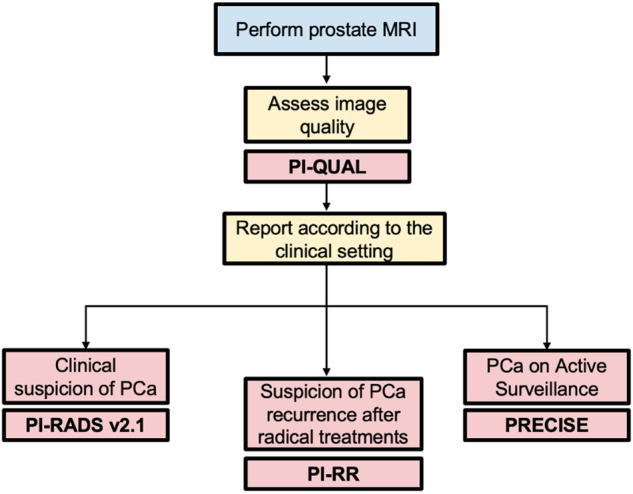
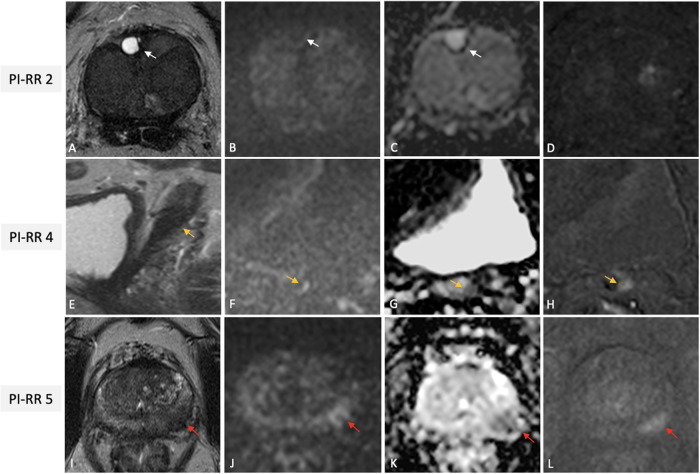
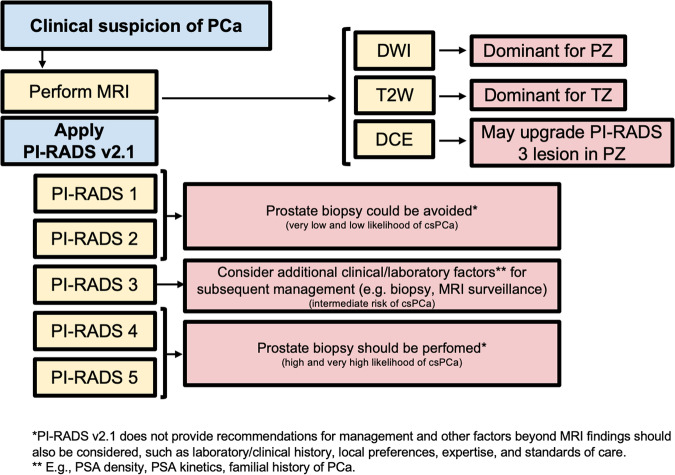
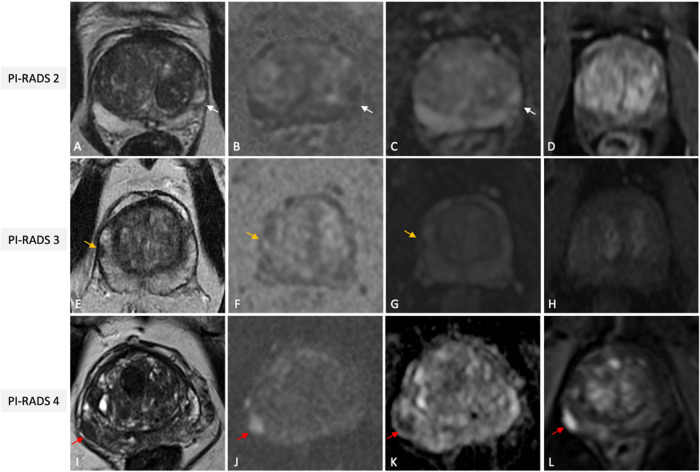
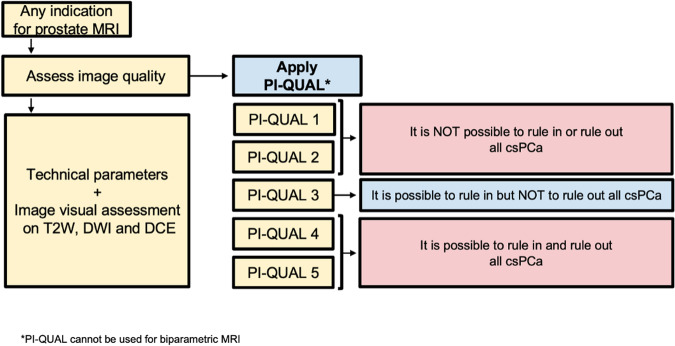
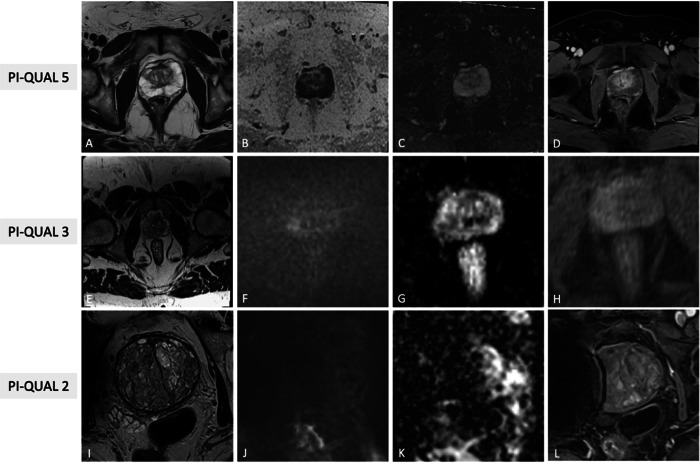
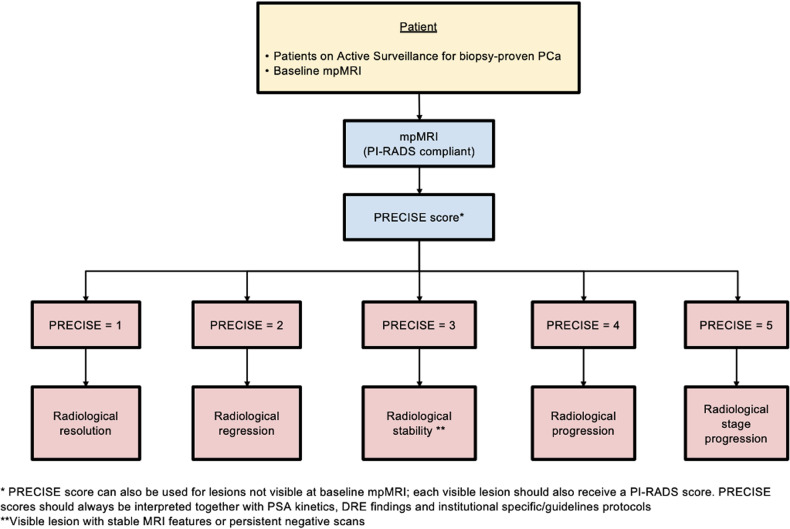
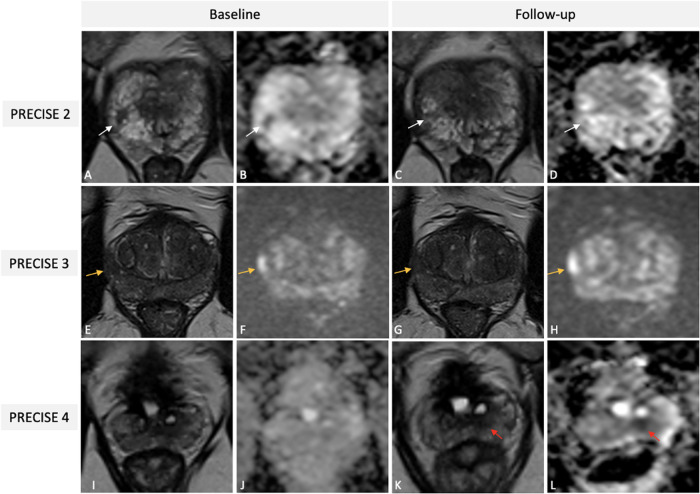
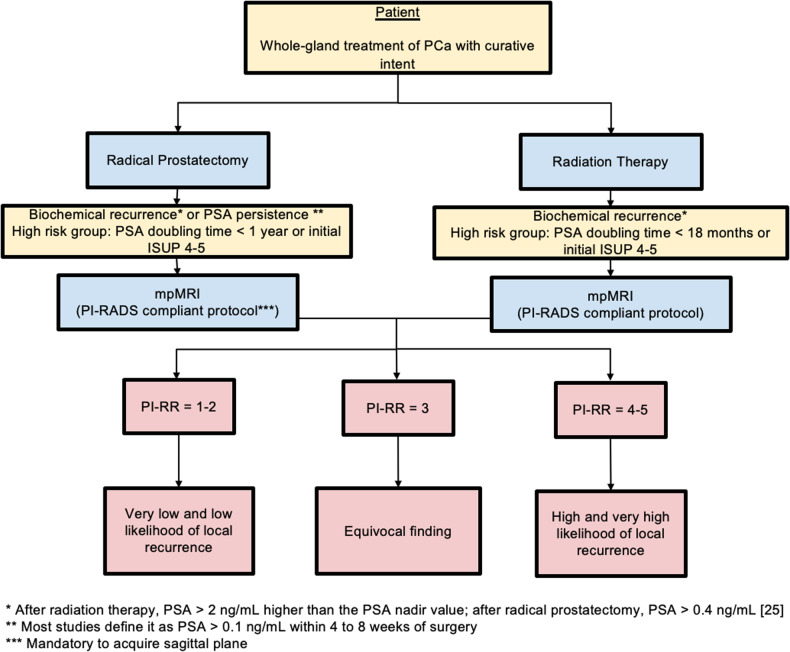
MRI has gained prominence in the diagnostic workup of prostate cancer (PCa) patients, with the Prostate Imaging Reporting and Data System (PI-RADS) being widely used for cancer detection. Beyond PI-RADS, other MRI-based scoring tools have emerged to address broader aspects within the PCa domain. However, the multitude of available MRI-based grading systems has led to inconsistencies in their application within clinical workflows. The Prostate Cancer Radiological Estimation of Change in Sequential Evaluation (PRECISE) assesses the likelihood of clinically significant radiological changes of PCa during active surveillance, and the Prostate Imaging for Local Recurrence Reporting (PI-RR) scoring system evaluates the risk of local recurrence after whole-gland therapies with curative intent. Underlying any system is the requirement to assess image quality using the Prostate Imaging Quality Scoring System (PI-QUAL). This article offers practicing radiologists a comprehensive overview of currently available scoring systems with clinical evidence supporting their use for managing PCa patients to enhance consistency in interpretation and facilitate effective communication with referring clinicians. KEY POINTS: Assessing image quality is essential for all prostate MRI interpretations and the PI-QUAL score represents the standardized tool for this purpose. Current urological clinical guidelines for prostate cancer diagnosis and localization recommend adhering to the PI-RADS recommendations. The PRECISE and PI-RR scoring systems can be used for assessing radiological changes of prostate cancer during active surveillance and the likelihood of local recurrence after radical treatments respectively.
MRI 在前列腺癌(PCa)患者的诊断工作中得到了广泛应用,前列腺影像报告和数据系统(PI-RADS)被广泛用于癌症检测。除了 PI-RADS 之外,其他基于 MRI 的评分工具也已经出现,以解决 PCa 领域更广泛的问题。然而,众多可用的基于 MRI 的分级系统在临床工作流程中的应用存在不一致性。前列腺癌放射学变化的连续评估(PRECISE)评估了在主动监测期间 PCa 的临床显著放射学变化的可能性,前列腺成像局部复发报告(PI-RR)评分系统评估了根治性全腺治疗后局部复发的风险。任何系统的基础都是需要使用前列腺成像质量评分系统(PI-QUAL)评估图像质量。本文为从事放射学工作的医生提供了目前可用的评分系统的全面概述,这些系统的临床证据支持其用于管理 PCa 患者,以提高解释的一致性,并促进与转诊临床医生的有效沟通。要点:评估图像质量对于所有前列腺 MRI 解读都是必不可少的,PI-QUAL 评分代表了为此目的的标准化工具。当前的泌尿外科临床指南建议遵循 PI-RADS 建议,用于前列腺癌的诊断和定位。PRECISE 和 PI-RR 评分系统可分别用于评估主动监测期间前列腺癌的放射学变化以及根治性治疗后局部复发的可能性。