Department of Trauma and Orthopedics, Peking University People's Hospital, Beijing, China.
Orthop Surg. 2024 Jul;16(7):1684-1694. doi: 10.1111/os.14041. Epub 2024 May 24.
AO/OTA 31-A3.3 intertrochanteric fracture is the most unstable type of intertrochanteric fracture, with a high rate of postoperative complications and implant failure. We have designed a new intramedullary fixation, proximal femoral totally bionic nail (PFTBN), for the treatment of A3.3 intertrochanteric fracture. To test its biomechanical performance, we adopted the method of finite element analysis and compared PFTBN with proximal femoral nail antirotation (PFNA) and proximal femoral bionic nail (PFBN, another internal fixation we previously designed for stable intertrochanteric fractures).
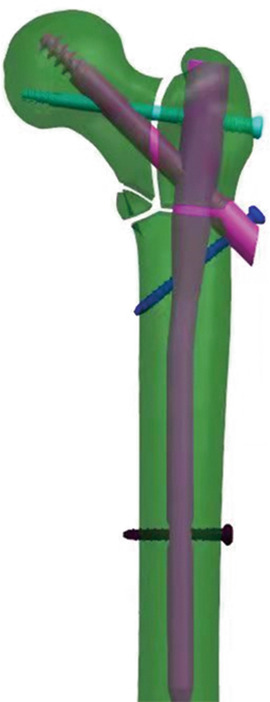
Mimics, 3-matic, ANSYS, and other software were used to construct a highly precise and realistic 3D digital model of the human femur. An AO/OTA 31-A3.3 intertrochanteric fracture of the femur was constructed according to the 2018 classification of AO/OTA, and then assembled with PFNA, PFBN and PFTBN models, respectively. The stress distribution and displacement distribution of the three groups of constructs were tested under three times the body weight load and one-foot standing configuration.
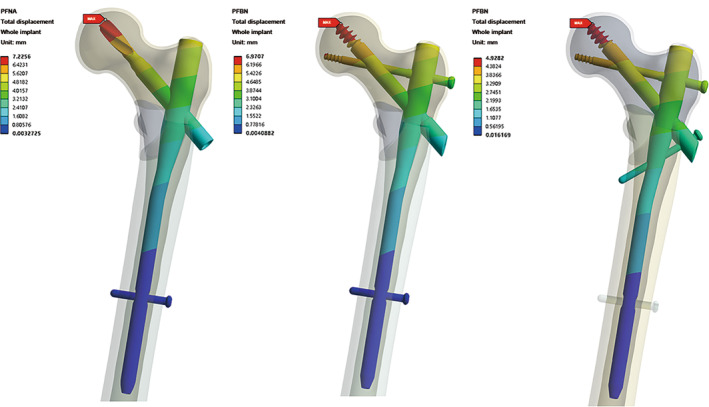
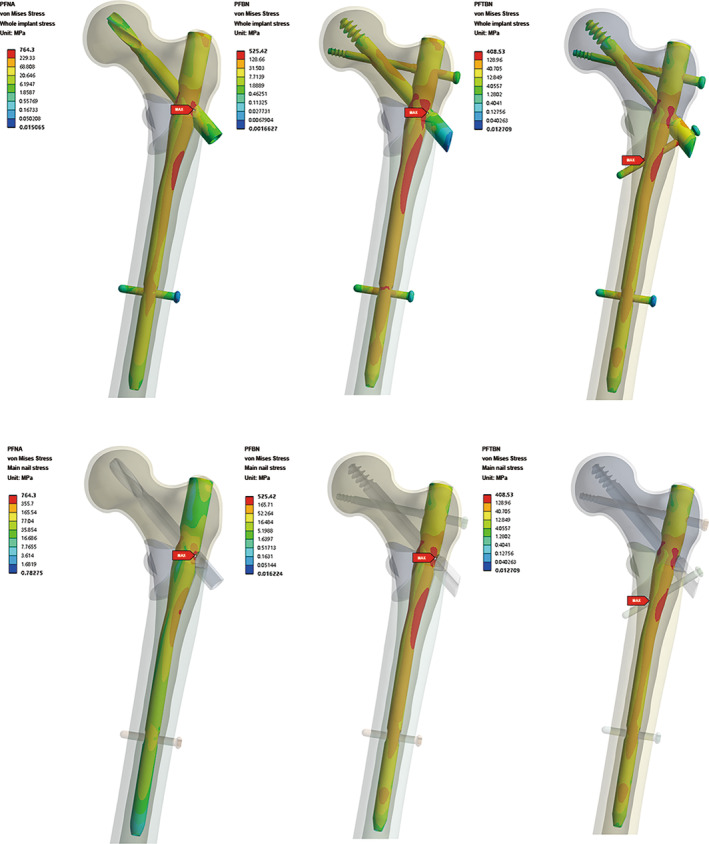
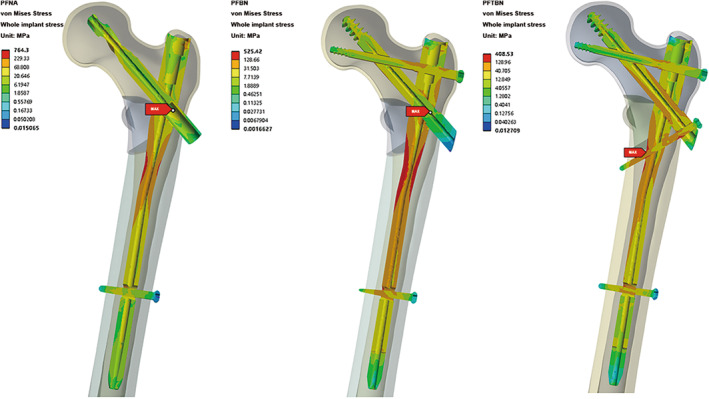
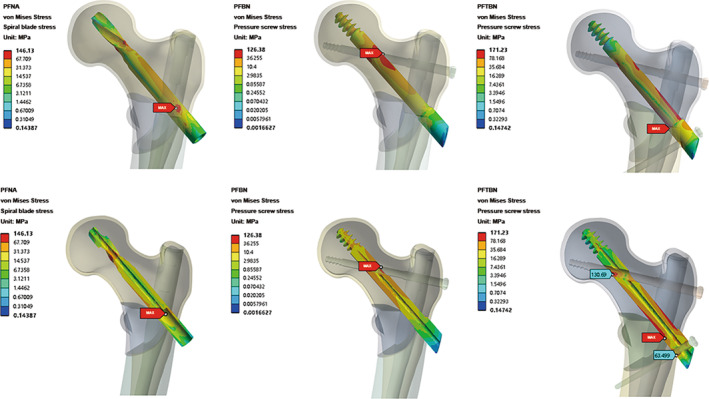
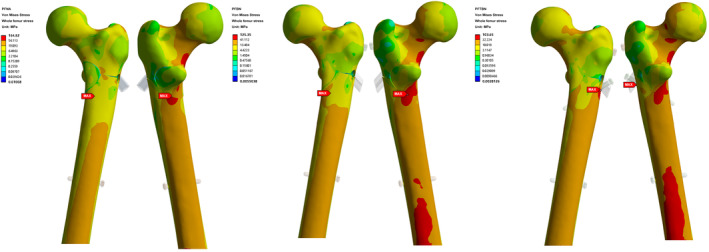
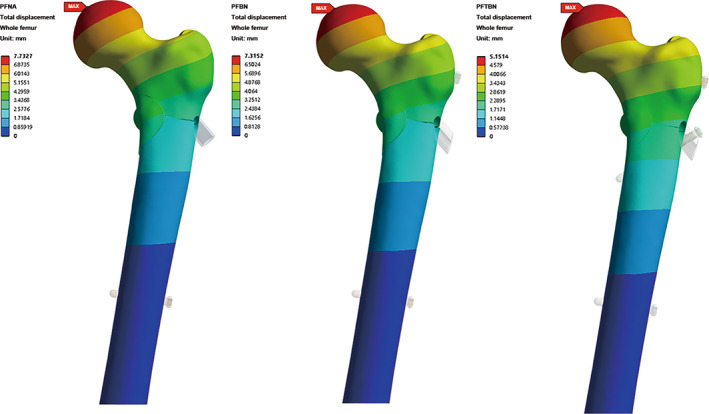
In terms of maximum stress and maximum displacement, the PFTBN group outperforms the PFBN group, and the PFBN group, in turn, surpasses the PFNA group. The maximum stress of PFTBN group was 408.5 Mpa, that of PFBN group was 525.4 MPa, and that of PFNA group was 764.3 Mpa. Comparatively, the maximum stress in the PFTBN group was reduced by 46.6% when contrasted with the PFNA group. Moreover, the stress dispersion within the PFTBN group was more evenly distributed than PFNA group. Regarding maximum displacement, the PFTBN group displayed the least displacement at 5.15 mm, followed by the PFBN group at 7.32 mm, and the PFNA group at 7.73 mm. Notably, the maximum displacement of the PFTBN group was 33.4% less than that observed in the PFNA group. Additionally, the relative displacement between the fragment and implant at the tip of pressure screw or helical blade was 0.22 mm in the PFTBN group, 0.34 mm in the PFBN group, and substantially higher 0.51 mm in the PFNA group.
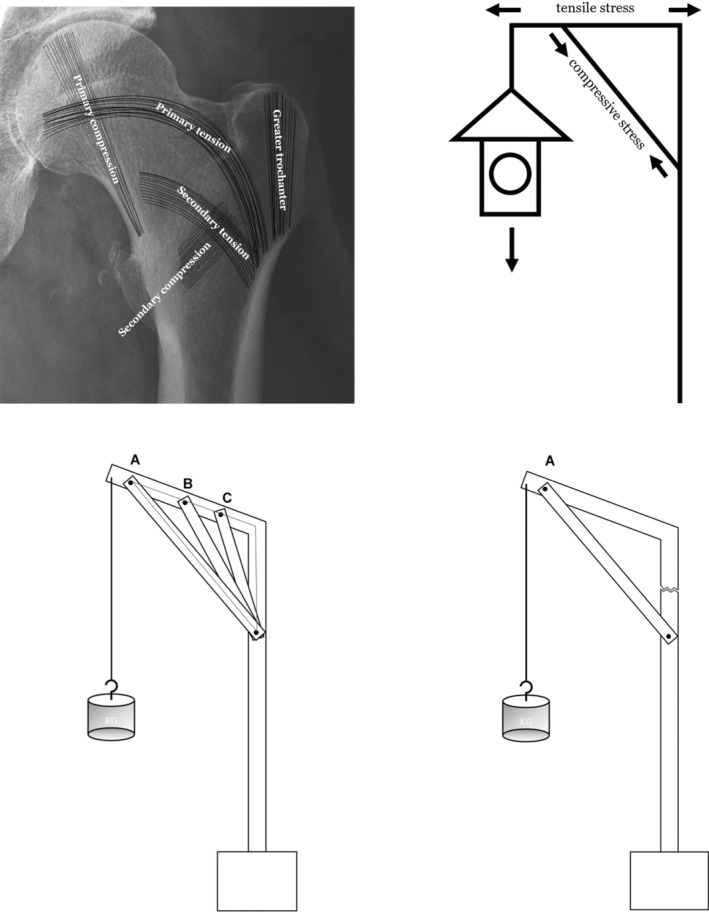
The "lever-reconstruction-balance" theory provides a new perspective for us to understand the mechanical conduction of the proximal femur. Compared with PFNA, in treating A3.3 intertrochanteric fractures PFTBN can better reconstruct the function of lateral wall, restore physiological mechanical conduction, increase postoperative stability, and finally reduce the risk of postoperative cut-out and implant failure. It might be a better alternative for the treatment of A3.3 intertrochanteric fracture.
AO/OTA31-A3.3 转子间骨折是最不稳定的转子间骨折类型,术后并发症和植入物失败的发生率较高。我们设计了一种新的髓内固定物,股骨近端全仿生钉(PFTBN),用于治疗 A3.3 转子间骨折。为了测试其生物力学性能,我们采用有限元分析的方法,将 PFTBN 与股骨近端防旋髓内钉(PFNA)和股骨近端仿生钉(PFBN,我们之前设计用于稳定转子间骨折的另一种内固定物)进行比较。
采用 Mimics、3-matic、ANSYS 等软件构建了高度精确和逼真的人体股骨三维数字模型。根据 AO/OTA2018 分类,构建了股骨 AO/OTA31-A3.3 转子间骨折,然后分别与 PFNA、PFBN 和 PFTBN 模型组装。在三倍体重负荷和单足站立状态下,测试三组模型的应力分布和位移分布。
在最大应力和最大位移方面,PFTBN 组优于 PFBN 组,而 PFBN 组又优于 PFNA 组。PFTBN 组的最大应力为 408.5Mpa,PFBN 组为 525.4Mpa,PFNA 组为 764.3Mpa。相比之下,PFTBN 组与 PFNA 组相比,最大应力降低了 46.6%。此外,PFTBN 组的应力分布比 PFNA 组更均匀。在最大位移方面,PFTBN 组的位移最小,为 5.15mm,其次是 PFBN 组,为 7.32mm,PFNA 组为 7.73mm。值得注意的是,PFTBN 组的最大位移比 PFNA 组减少了 33.4%。此外,在压力螺钉或螺旋刀片尖端,PFTBN 组的骨碎片与植入物之间的相对位移为 0.22mm,PFBN 组为 0.34mm,而 PFNA 组则明显较高,为 0.51mm。
“杠杆-重建-平衡”理论为我们理解股骨近端的力学传导提供了一个新的视角。与 PFNA 相比,在治疗 A3.3 转子间骨折时,PFTBN 可以更好地重建外侧壁的功能,恢复生理力学传导,增加术后稳定性,最终降低术后切出和植入物失败的风险。它可能是治疗 A3.3 转子间骨折的更好选择。