Ma Zhenbao, Wang Bo, Zeng Dongping, Ding Huanzhong, Zeng Zhenling
Guangdong Provincial Key Laboratory of Veterinary Pharmaceutics Development and Safety Evaluation, National Risk Assessment Laboratory for Antimicrobial Resistance of Animal Original Bacteria, South China Agricultural University, Guangzhou 510642, China.
Animal Husbandry and Fisheries Research Center of Guangdong Haid Group Co., Ltd., Guangzhou 511490, China.
Pathogens. 2024 May 7;13(5):387. doi: 10.3390/pathogens13050387.
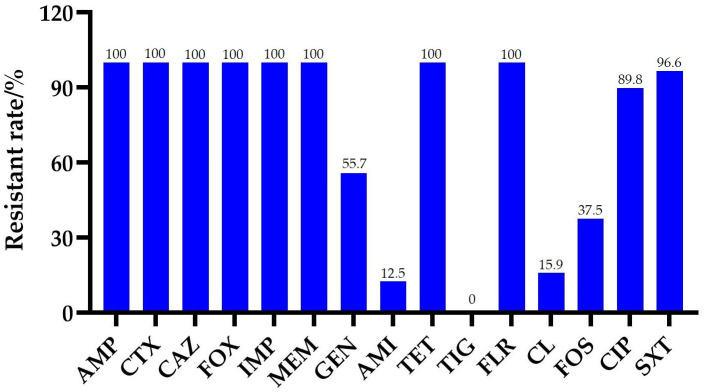
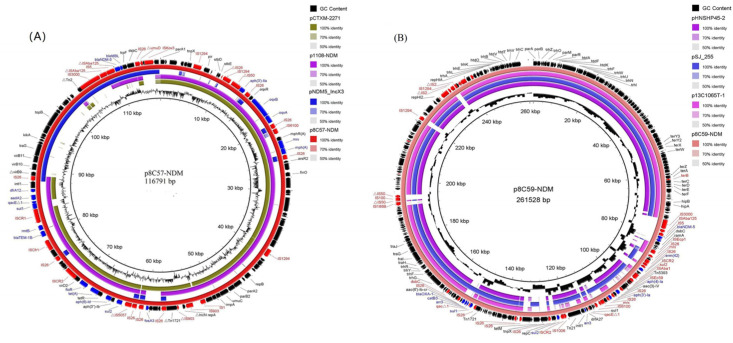
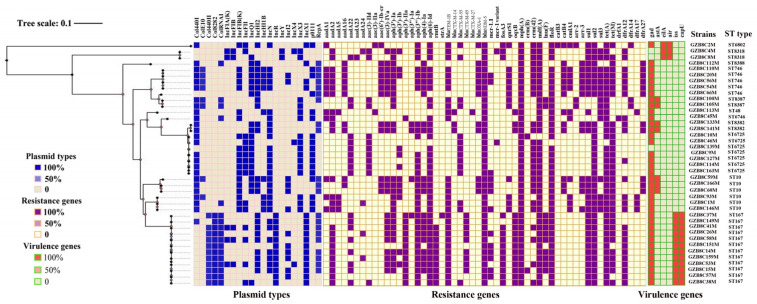
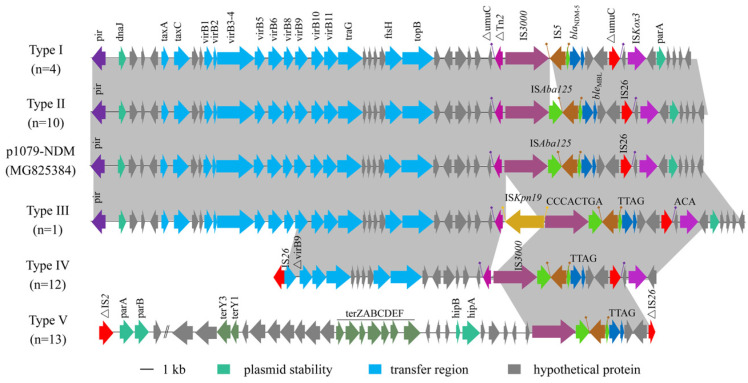
Although carbapenems have not been approved for animal use, carbapenem-resistant (CREC) strains are increasingly being detected in food-producing animals, posing a significant public health risk. However, the epidemiological characteristics of CREC isolates in yellow-feather broiler farms remain unclear. We comprehensively investigated the genetic features of carbapenem-resistance genes among isolates recovered from a yellow-feather broiler farm in Guangdong province, China. Among the 172 isolates, 88 (51.2%) were recovered from chicken feces (88.5%, 54/61), the farm environment (51.1%, 24/47), and specimens of dead chickens (15.6%, 41/64). All CREC isolates were positive for the gene and negative for other carbapenem-resistance genes. Among 40 randomly selected isolates subjected to whole-genome sequencing, 10 belonged to distinct sequence types (STs), with ST167 (n = 12) being the most prevalent across different sources, suggesting that the dissemination of was mainly due to horizontal and clonal transmission. Plasmid analysis indicated that IncX3, IncHI2, and IncR-X1-X3 hybrid plasmids were responsible for the rapid transmission of the gene, and the genetic surrounding of contained a common mobile element of the genetic fragment designated "IS-△IS----". These findings demonstrate a critical role of multiple plasmid replicons in the dissemination of and carbapenem resistance.
尽管碳青霉烯类药物尚未被批准用于动物,但在食用动物中越来越多地检测到耐碳青霉烯类(CREC)菌株,这对公众健康构成了重大风险。然而,黄羽肉鸡场中CREC分离株的流行病学特征仍不清楚。我们全面调查了从中国广东省一个黄羽肉鸡场分离出的菌株中耐碳青霉烯类基因的遗传特征。在172株分离株中,88株(51.2%)从鸡粪便(88.5%,54/61)、农场环境(51.1%,24/47)和死鸡标本(15.6%,41/64)中分离得到。所有CREC分离株该基因呈阳性,其他耐碳青霉烯类基因呈阴性。在随机选择的40株进行全基因组测序的分离株中,10株属于不同的序列类型(STs),其中ST167(n = 12)在不同来源中最为普遍,这表明该基因的传播主要是由于水平和克隆传播。质粒分析表明,IncX3、IncHI2和IncR-X1-X3杂交质粒是该基因快速传播的原因,且该基因的遗传周围包含一个指定为“IS-△IS----”的遗传片段的常见移动元件。这些发现证明了多种质粒复制子在该基因和碳青霉烯耐药性传播中的关键作用。