Anguera Georgia, Mulet Maria, Zamora Carlos, Osuna-Gómez Rubén, Barba Andrés, Sullivan Ivana, Serra-López Jorgina, Cantó Elisabet, Vidal Silvia, Majem Margarita
Department of Medical Oncology, Hospital de la Santa Creu i Sant Pau, 08041 Barcelona, Spain.
Department of Medicine, Universitat Autònoma de Barcelona, 08193 Bellaterra, Spain.
Biomedicines. 2024 Apr 25;12(5):958. doi: 10.3390/biomedicines12050958.
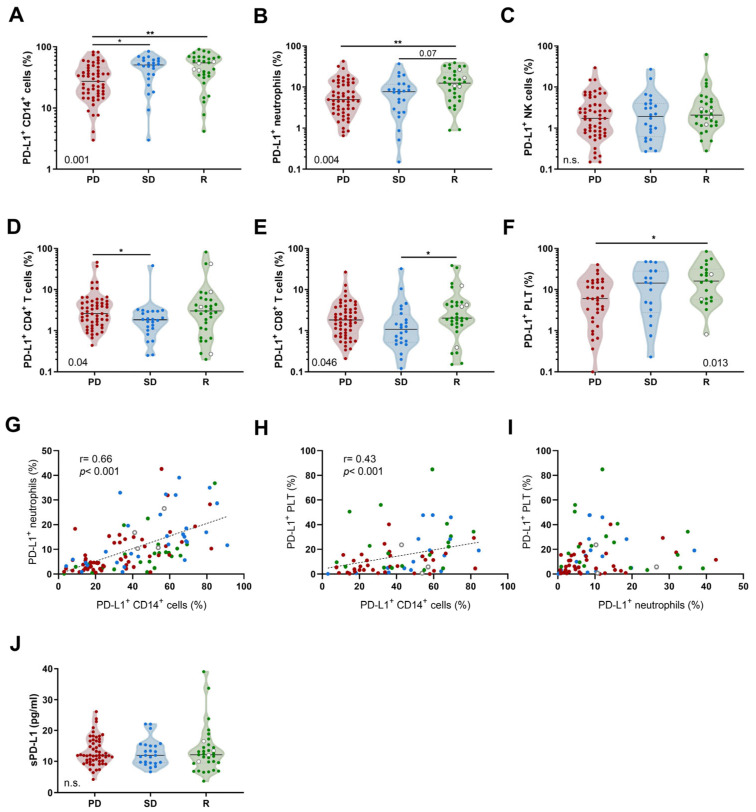
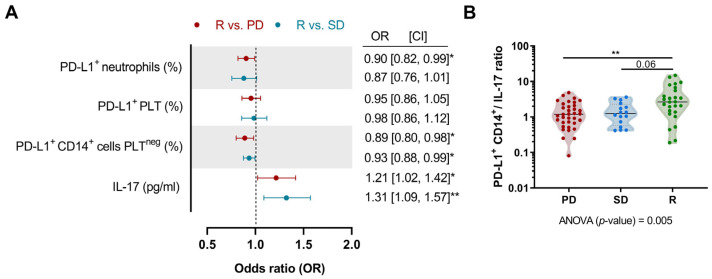
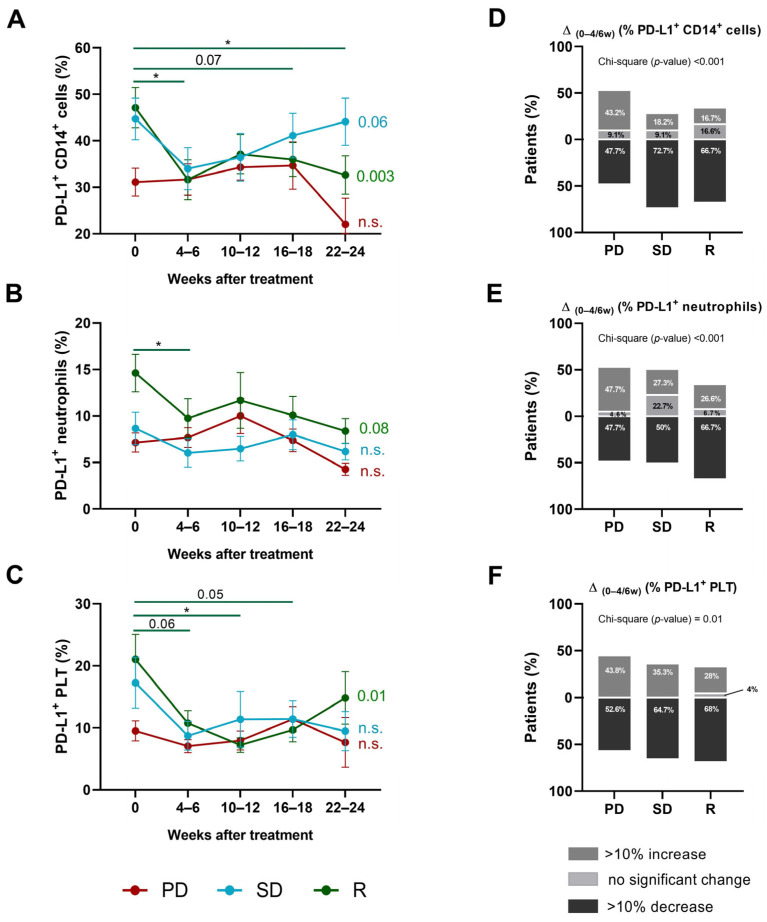
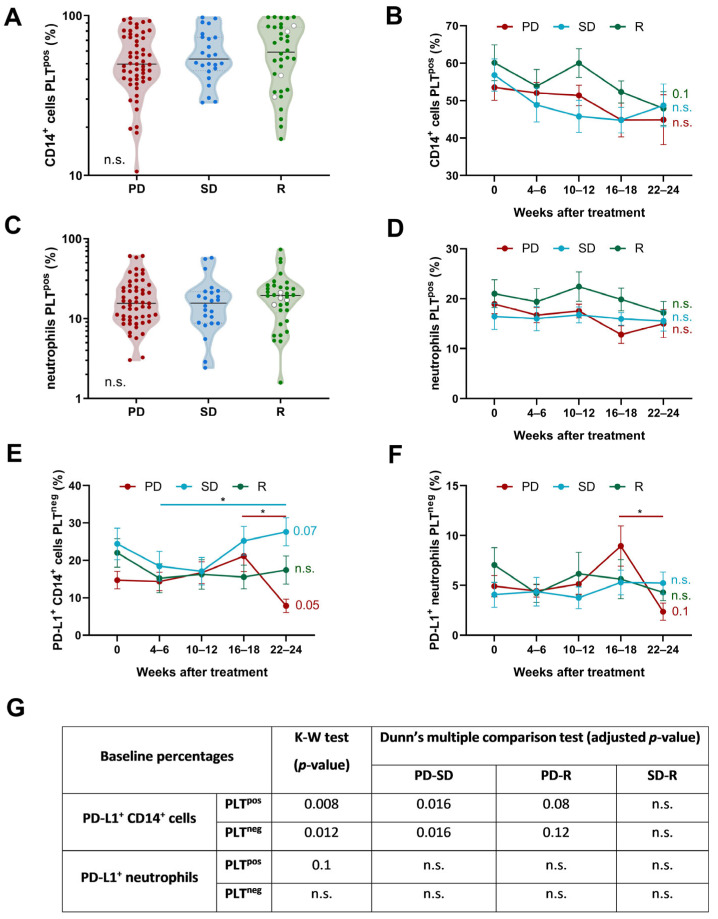
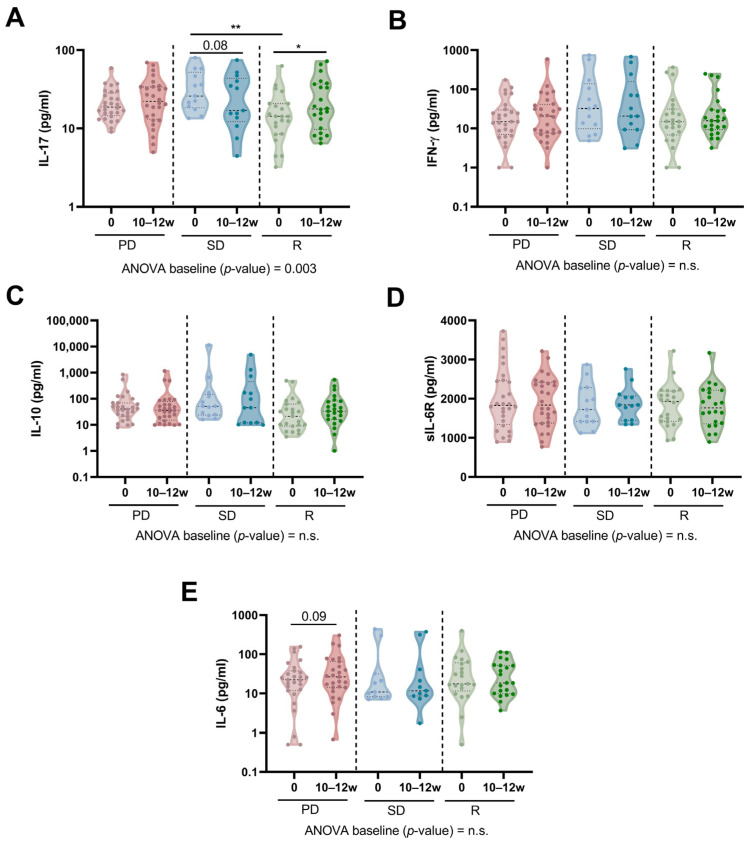
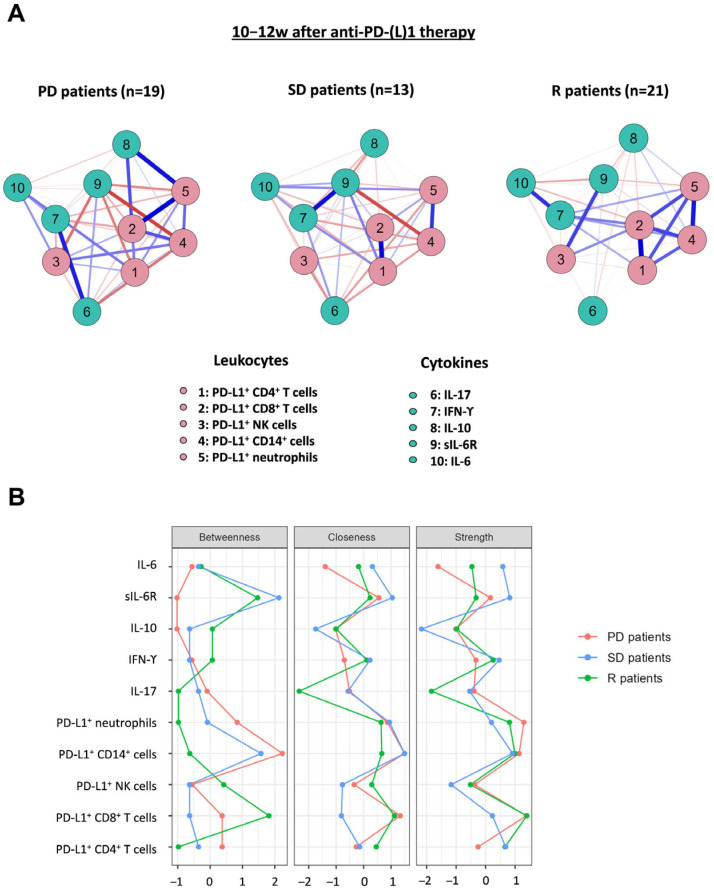
PD-(L)1 inhibitors are part of the treatment strategy for non-small cell lung cancer (NSCLC) although its efficacy is limited to certain patients. Our study aimed to identify patients who might benefit from anti-PD-(L)1 inhibitors by analyzing the PD-L1 expression on circulating leukocytes and its evolution during treatment. One hundred thirteen NSCLC patients, according to their radiological response after 10-12 weeks of treatment, were classified into responders, stable, and progressive disease. Percentages of circulating PD-L1 leukocytes, PD-L1 platelets (PLTs), and leukocyte-PLT complexes were assessed using flow cytometry, and plasma concentrations of soluble immunomodulatory factors were quantified by ELISA. Responders exhibited significantly higher pre-treatment percentages of PD-L1 neutrophils, PD-L1 CD14 cells, and PD-L1 PLTs than progressors. The percentages of these populations decreased in responders post-treatment, contrasting with stables and progressors. PLTs notably contributed to PD-L1 expression in CD14 cells and neutrophils. Plasma cytokine analysis revealed baseline differences only in IL-17 concentration among groups, whereas network analyses highlighted distinct association patterns between plasma molecules and PD-L1 leukocytes after 10-12 weeks of treatment. Our findings suggest that pre-treatment assessment of circulating PD-L1 neutrophils, PD-L1 CD14 cells, and PD-L1 PLTs may be helpful in identifying NSCLC patients who are potential candidates for anti-PD-(L)1 therapy.
PD-(L)1抑制剂是非小细胞肺癌(NSCLC)治疗策略的一部分,尽管其疗效仅限于某些患者。我们的研究旨在通过分析循环白细胞上的PD-L1表达及其在治疗过程中的演变,来确定可能从抗PD-(L)1抑制剂中获益的患者。113例NSCLC患者根据治疗10-12周后的放射学反应分为反应者、病情稳定者和疾病进展者。使用流式细胞术评估循环PD-L1白细胞、PD-L1血小板(PLT)和白细胞-PLT复合物的百分比,并通过ELISA定量可溶性免疫调节因子的血浆浓度。反应者治疗前PD-L1中性粒细胞、PD-L1 CD14细胞和PD-L1 PLT的百分比显著高于疾病进展者。这些群体的百分比在反应者治疗后下降,与病情稳定者和疾病进展者形成对比。血小板对CD14细胞和中性粒细胞中的PD-L1表达有显著贡献。血浆细胞因子分析显示,各组之间仅在IL-17浓度上存在基线差异,而网络分析突出了治疗10-12周后血浆分子与PD-L1白细胞之间不同的关联模式。我们的研究结果表明,治疗前评估循环PD-L1中性粒细胞、PD-L1 CD14细胞和PD-L1 PLT可能有助于识别可能是抗PD-(L)1治疗潜在候选者的NSCLC患者。