Oh Julyun, Kirsh Charles, Hsin Jing-Ping, Radecki Kelly C, Zampieri Alexandre, Manry Diane, Ando Yuta, Miller Sara, Chan Jamie, McLeod Ethan, Cunningham Kathleen M, Wong Lu Min, Xu Han, Kamb Alexander
A2 Biotherapeutics; 30301 Agoura Rd., Agoura Hills 91301, CA, USA.
iScience. 2024 May 7;27(6):109913. doi: 10.1016/j.isci.2024.109913. eCollection 2024 Jun 21.
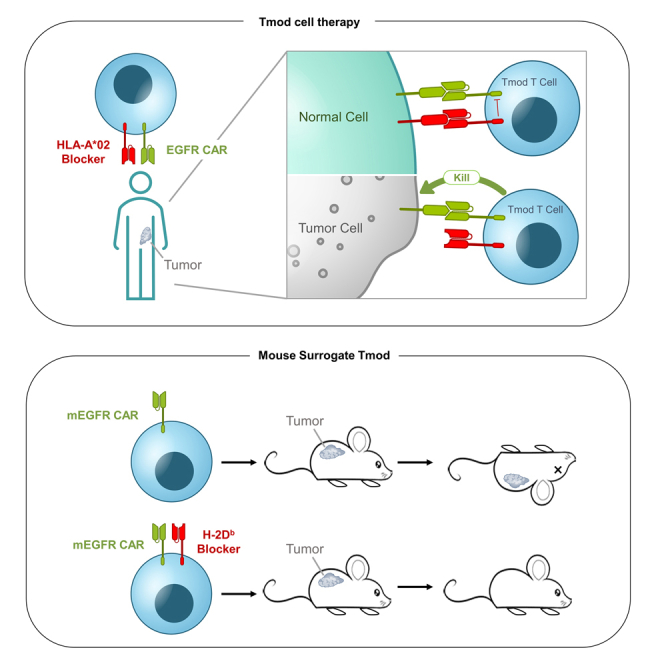
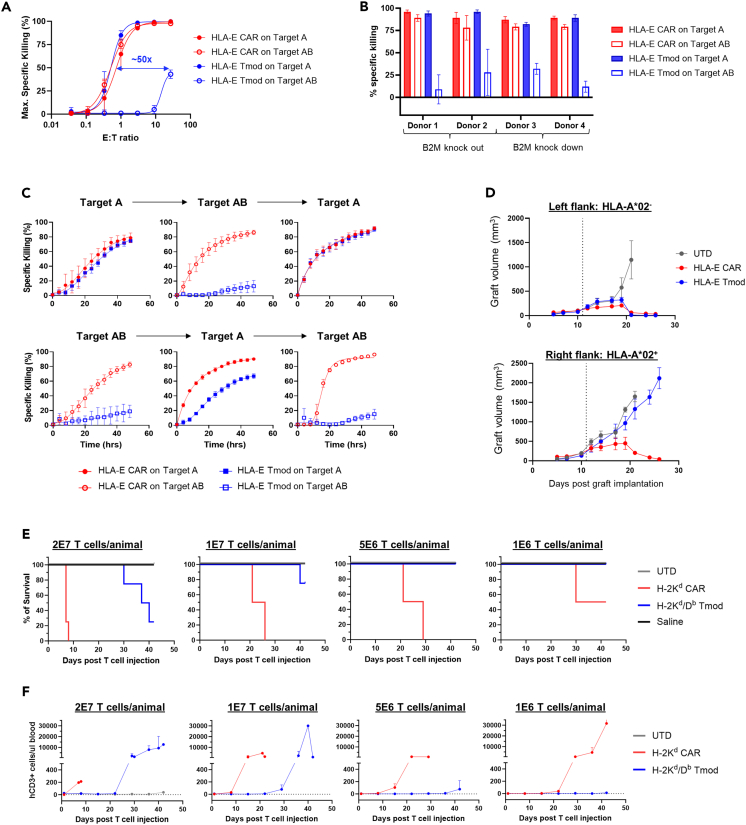
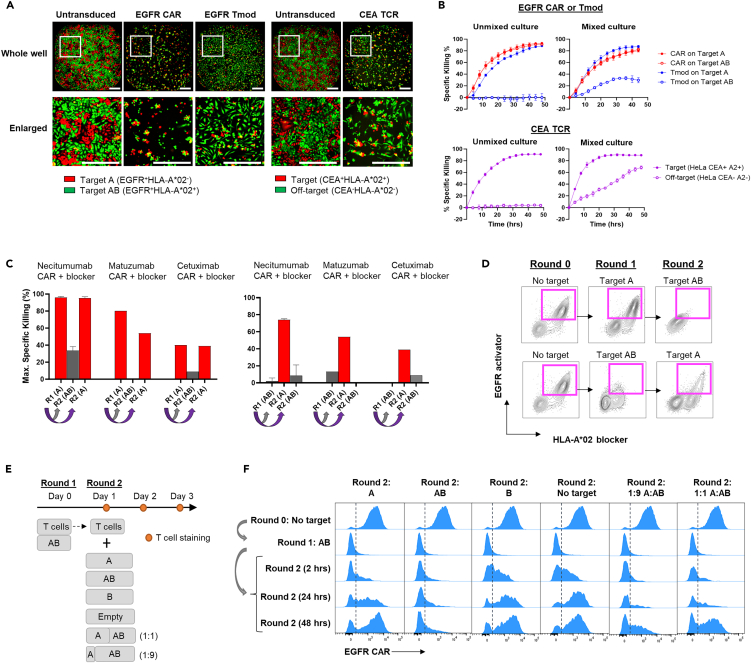
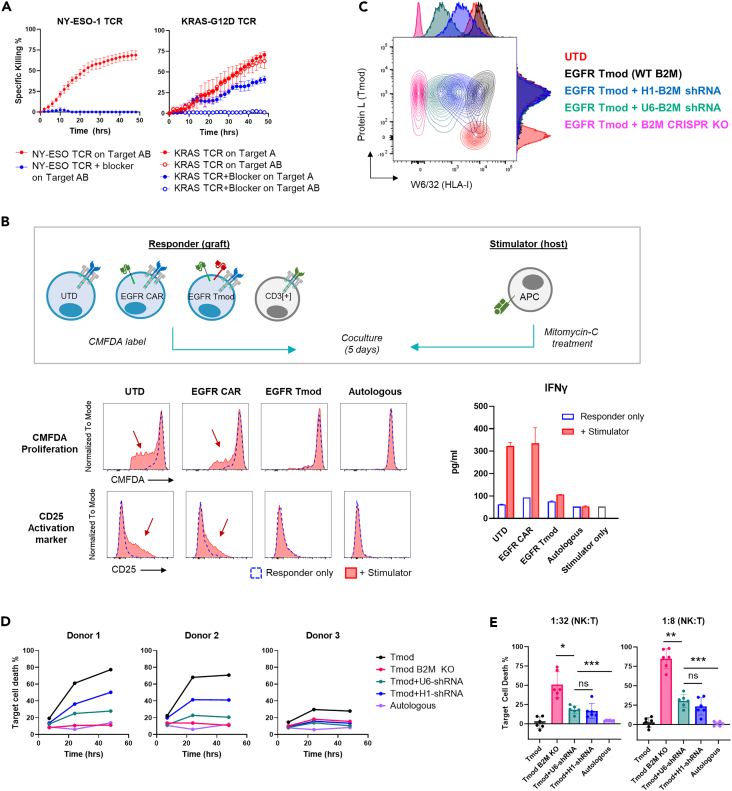
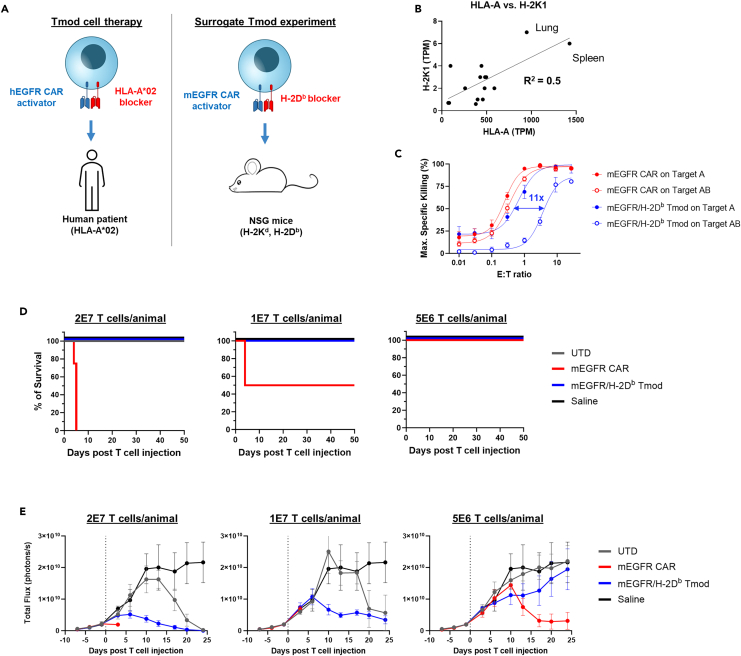
Here, we show that a NOT gated cell therapy (Tmod) can exploit antigens such as epidermal growth factor receptor (EGFR) and human leukocyte antigen-E (HLA-E) which are widely expressed on cancer cells. Noncancerous cells-despite high expression of these antigens-are protected from cytotoxicity by the action of an inhibitory receptor ("blocker") via a mechanism that involves blocker modulation of CAR surface expression. The blocker is triggered by the product of a polymorphic HLA allele (e.g., HLA-A∗02) deleted in a significant subset of solid tumors via loss of heterozygosity. Moreover, Tmod constructs that target mouse homologs of EGFR or HLA-E for activation, and a mouse-equivalent of HLA-A∗02 for inhibition, protect mice from toxicity caused by the CAR alone. The blocker also controls graft vs. host response in allogeneic T cells , consistent with the use of Tmod cells for off-the-shelf therapy without additional gene-editing.
在此,我们表明一种非门控细胞疗法(Tmod)可利用在癌细胞上广泛表达的抗原,如表皮生长因子受体(EGFR)和人类白细胞抗原-E(HLA-E)。尽管这些抗原在非癌细胞中高表达,但通过一种涉及阻断剂调节嵌合抗原受体(CAR)表面表达的机制,非癌细胞可受到抑制性受体(“阻断剂”)的作用保护而免受细胞毒性。阻断剂由在相当一部分实体瘤中通过杂合性缺失而缺失的多态性HLA等位基因(例如,HLA-A∗02)的产物触发。此外,靶向EGFR或HLA-E的小鼠同源物以进行激活,以及靶向HLA-A∗02的小鼠等效物以进行抑制的Tmod构建体,可保护小鼠免受单独CAR引起的毒性。阻断剂还可控制同种异体T细胞中的移植物抗宿主反应,这与使用Tmod细胞进行现成疗法而无需额外基因编辑一致。