Department of Economics, Tulane University, New Orleans, LA, United States.
Front Public Health. 2024 May 10;12:1370563. doi: 10.3389/fpubh.2024.1370563. eCollection 2024.
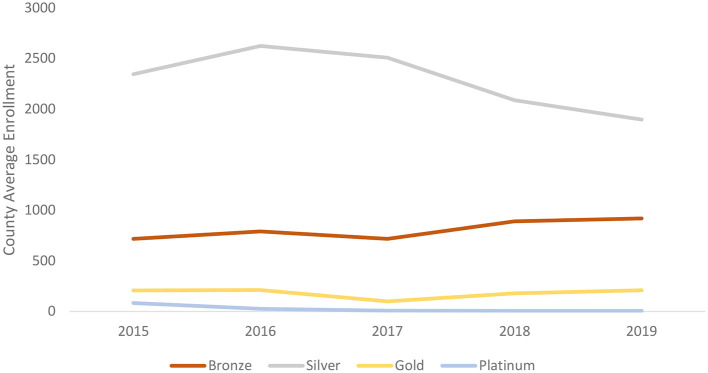
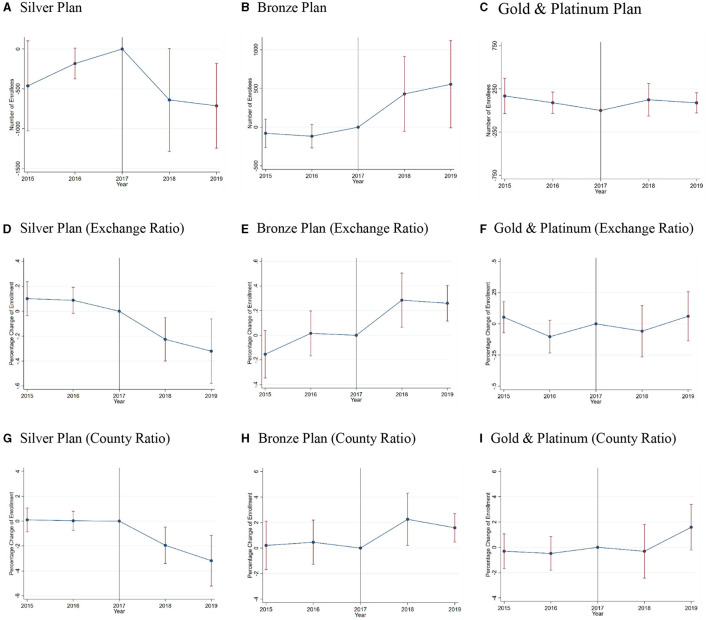
The Trump administration terminated cost-sharing reductions (CSRs) payments to health insurers in 2017, while still required insurers to provide CSRs to eligible enrollees in the Marketplace. Marketplace administration data reveals that, in response to this termination, insurers raised premiums to compensate for their loss. Consequently, premium increases led to more advanced premium tax credits for enrollees in the Marketplace. To investigate the impact of CSRs payment termination on low-income consumer insurance plan choices, I leverage variations in state price regulations and employed a difference-in-differences design. In a robustness analysis, I utilized differences in county income distributions to examine the effects of the termination on insurance choices. The results indicate that after the termination, more low-income enrollees opted for cheaper bronze plans, and fewer chose silver plans. These results suggest that alterations in subsidy channels may inadvertently encourage low-income individuals to purchase less expensive health insurance plans, highlighting an unintended consequence of the termination of cost-sharing subsidies.
特朗普政府于 2017 年终止了向医疗保险提供商支付共付减免(CSR)款项,而仍要求保险公司向市场上符合条件的参保者提供 CSR 款项。市场管理数据显示,作为对此项终止措施的回应,保险公司提高了保费以弥补损失。因此,保费的增加导致市场上参保者的高级保费税收抵免增加。为了调查 CSR 支付终止对低收入消费者保险计划选择的影响,我利用了各州价格法规的差异,并采用了双重差分设计。在稳健性分析中,我利用了县收入分配的差异来检验终止对保险选择的影响。结果表明,终止后,更多的低收入参保者选择了更便宜的 Bronze 计划,而选择 Silver 计划的人数减少。这些结果表明,补贴渠道的变化可能会无意中鼓励低收入个人购买更便宜的医疗保险计划,突显了终止共付补贴的一个意外后果。