Terasaki Institute for Biomedical Innovation (TIBI), 1018 Westwood Blvd, Los Angeles, CA, USA.
Terasaki Institute for Biomedical Innovation (TIBI), 1018 Westwood Blvd, Los Angeles, CA, USA; BIOMATEN, Center of Excellence in Biomaterials and Tissue Engineering Middle East Technical University, Ankara 06800, Turkey.
Acta Biomater. 2024 Jul 15;183:89-100. doi: 10.1016/j.actbio.2024.05.020. Epub 2024 May 25.
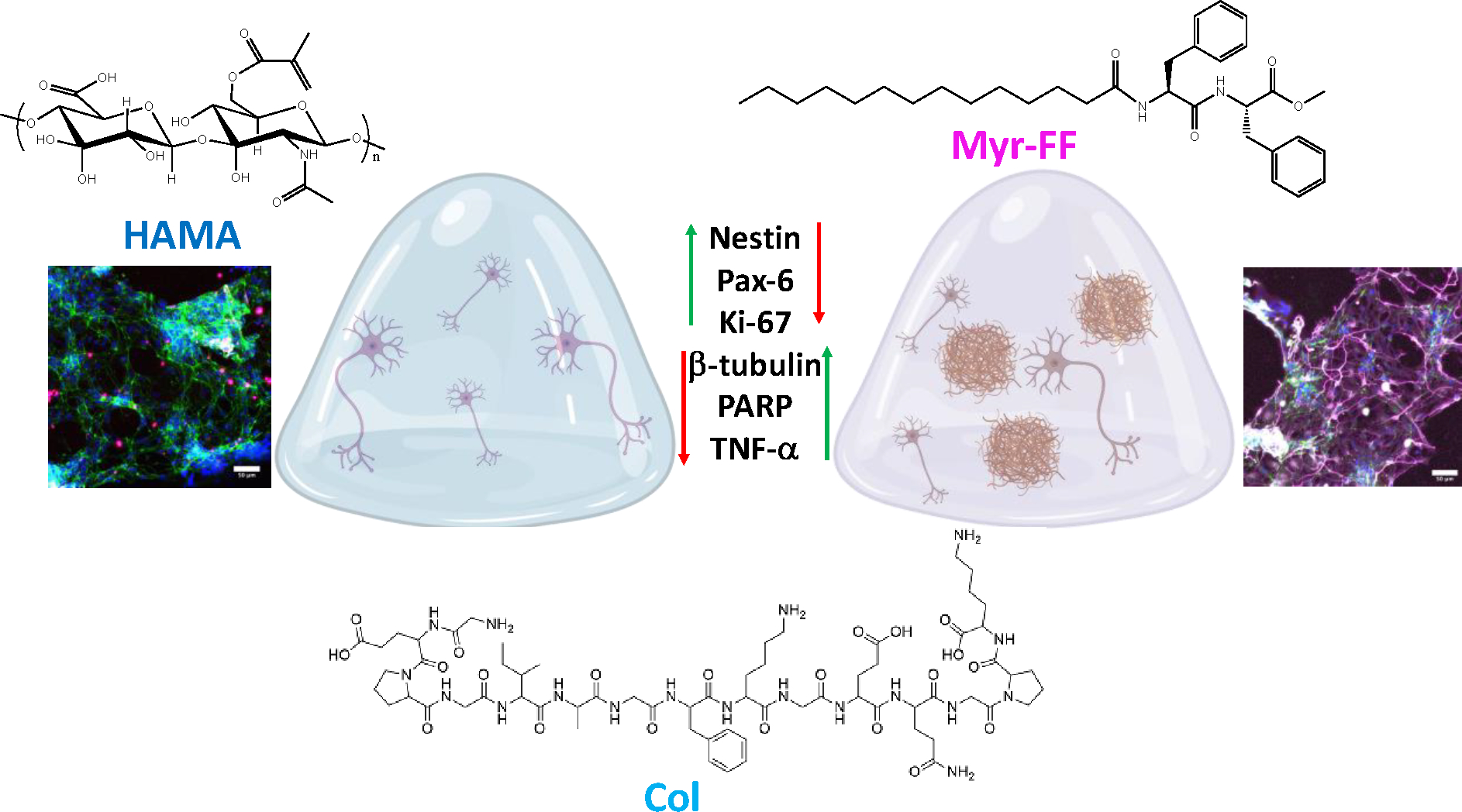
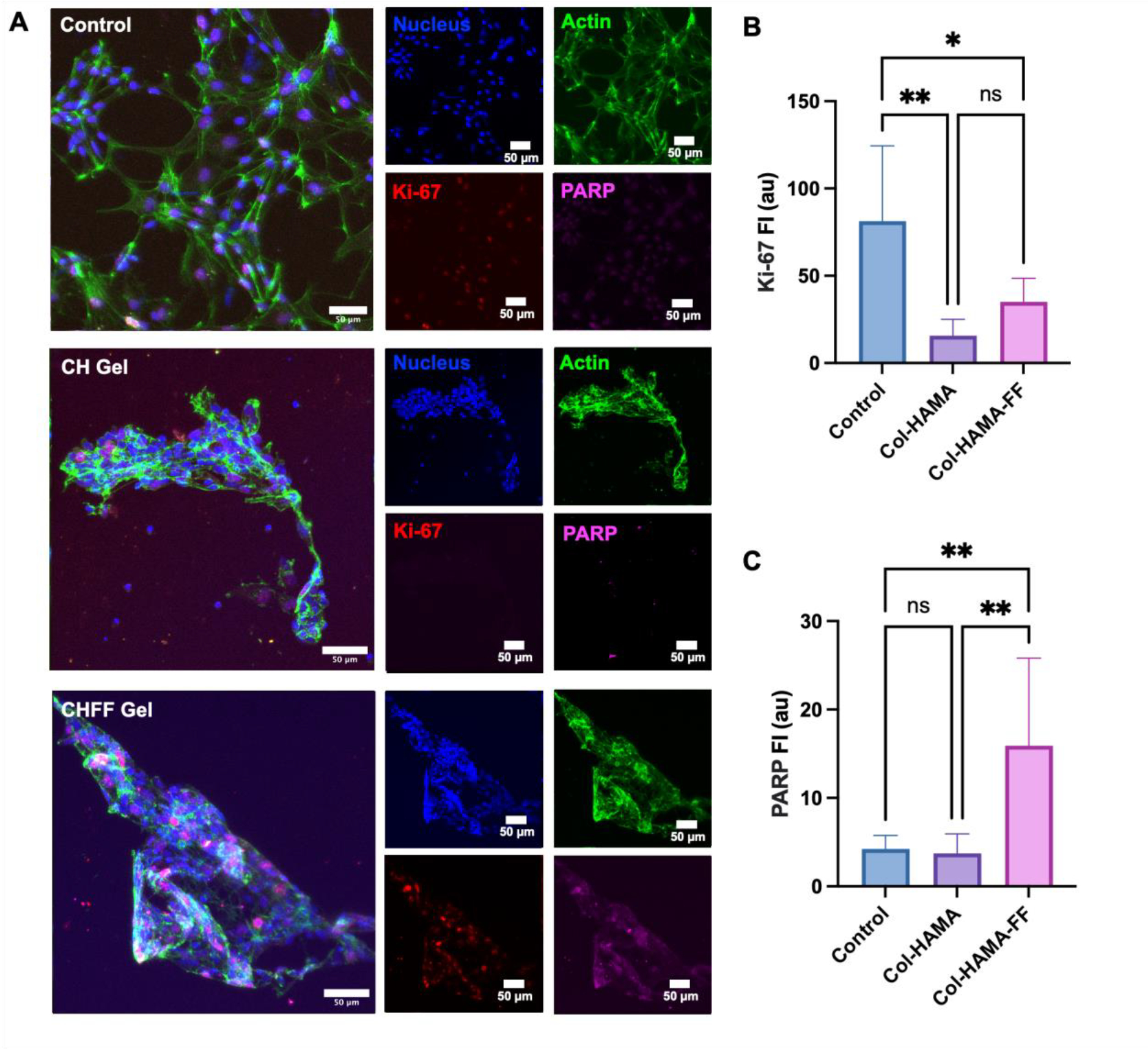
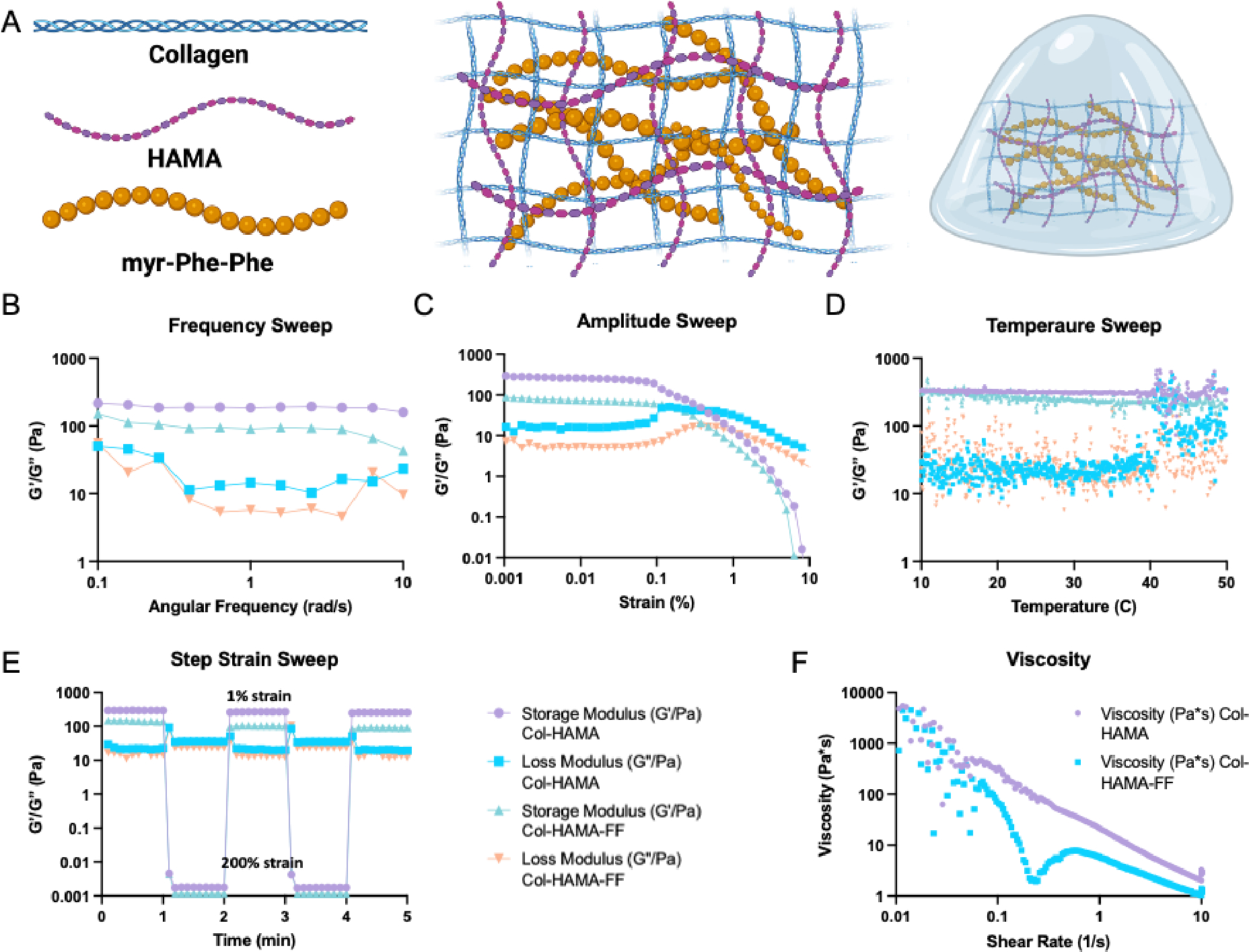
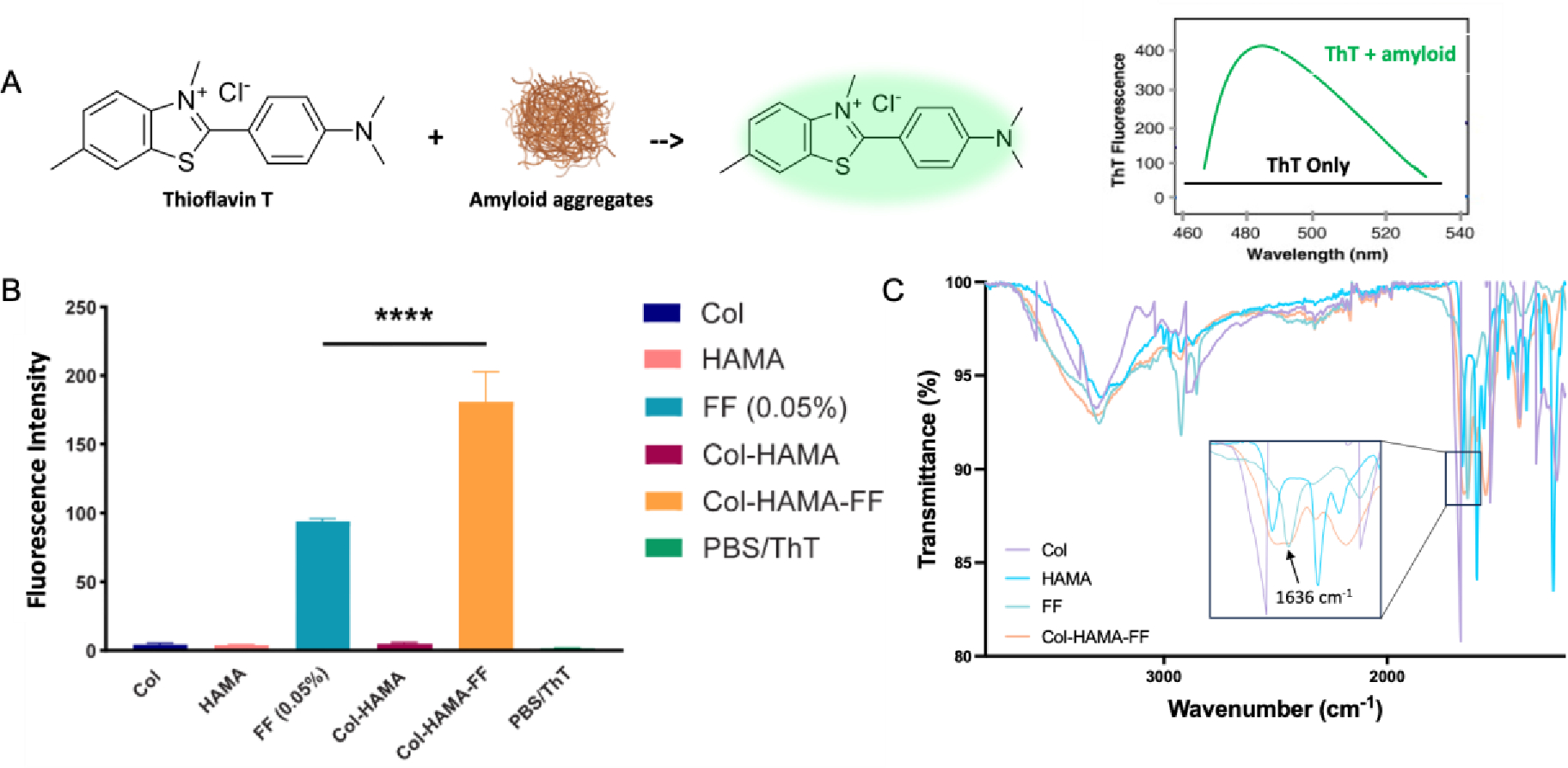
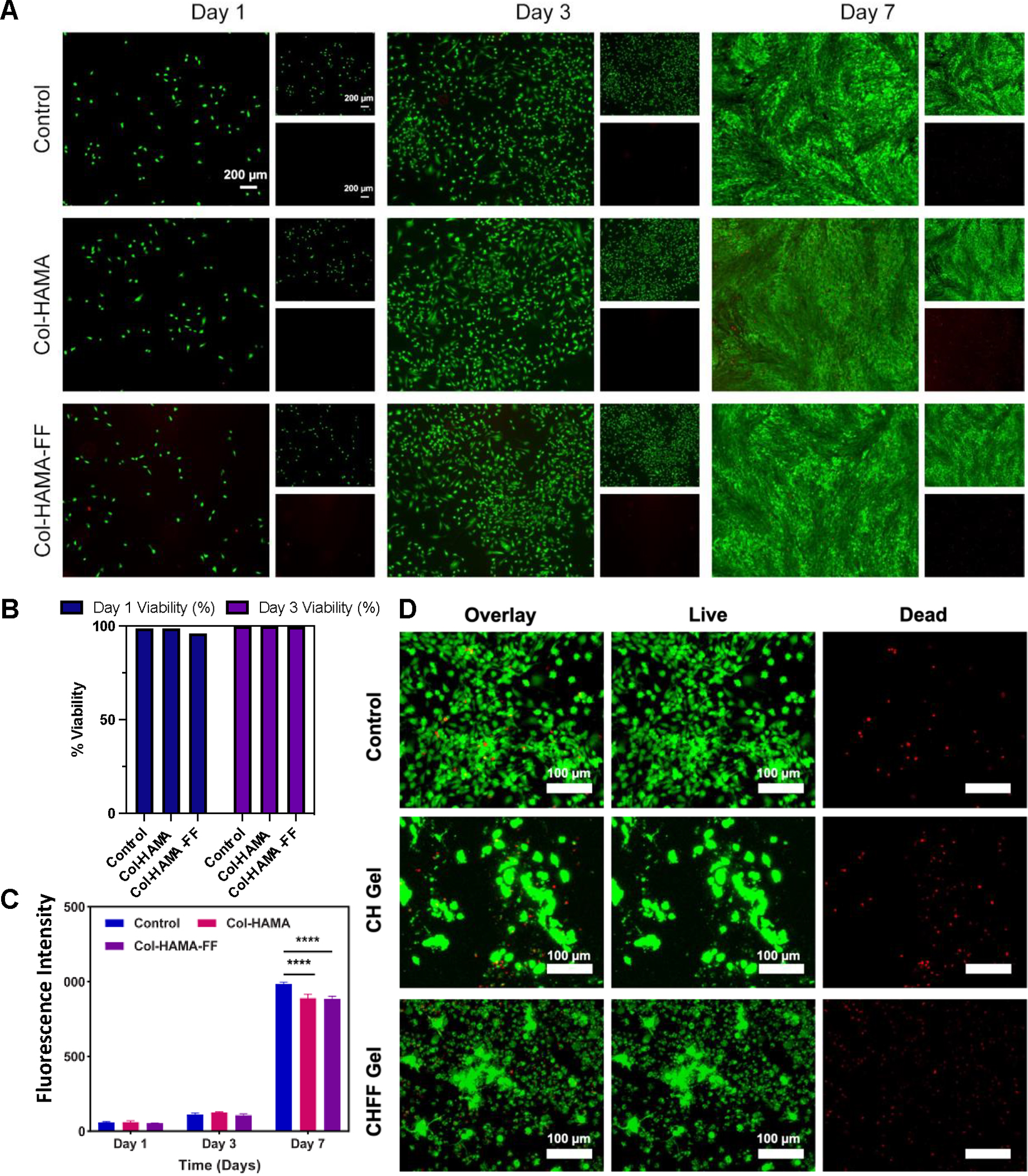
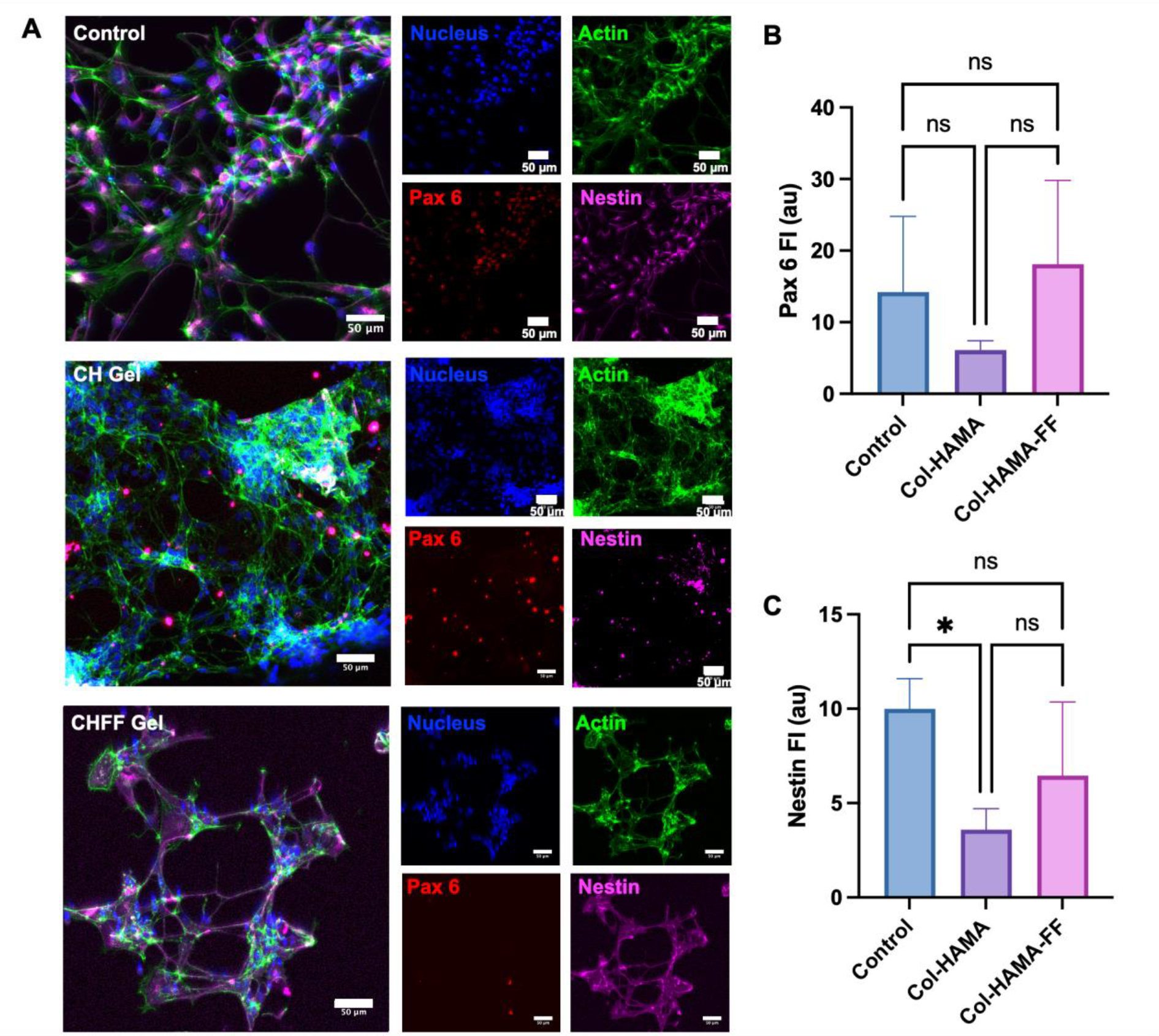
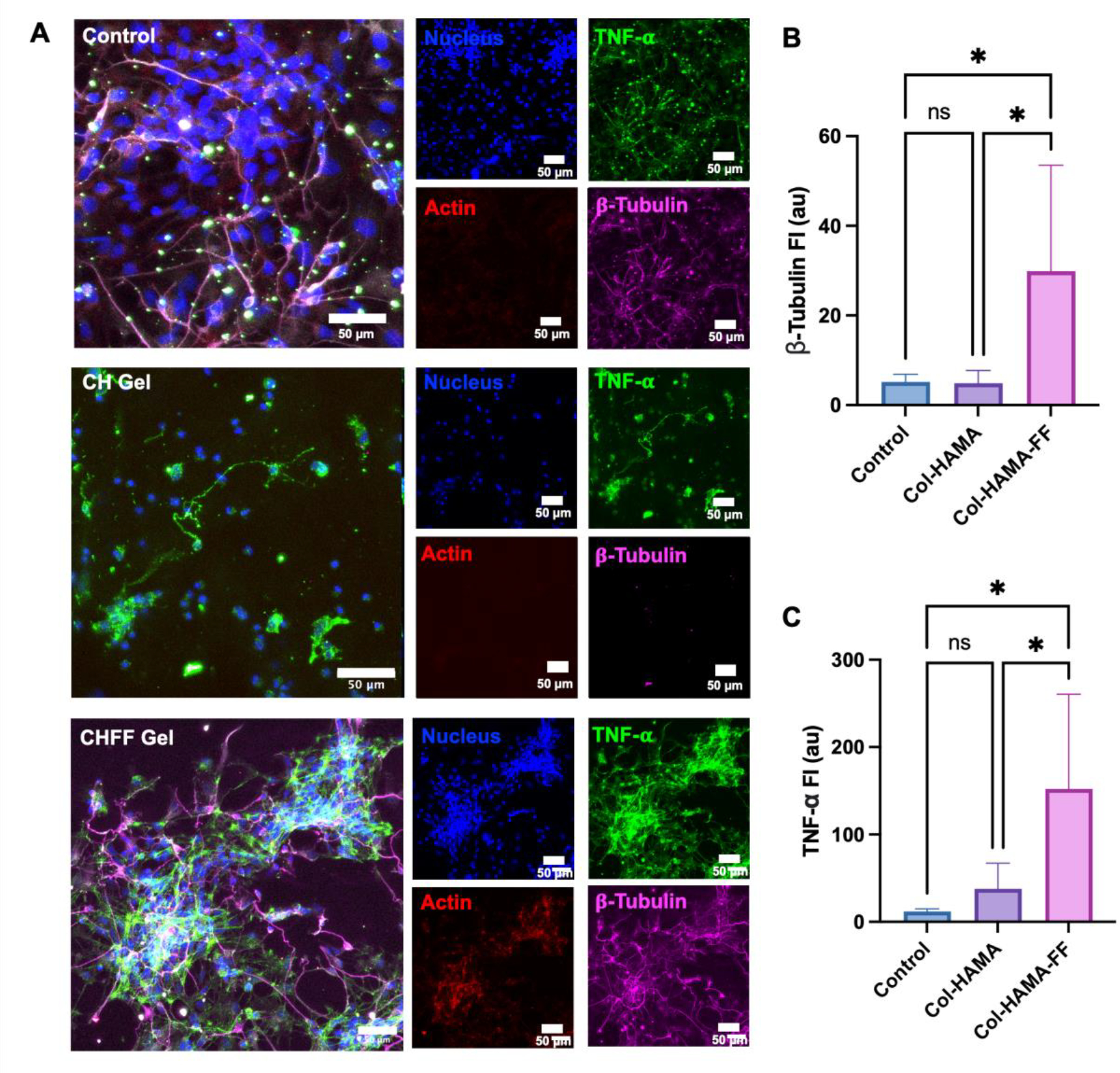
Self-assembling peptide-based hydrogels have become a highly attractive scaffold for three-dimensional (3D) in vitro disease modeling as they provide a way to create tunable matrices that can resemble the extracellular matrix (ECM) of various microenvironments. Alzheimer's disease (AD) is an exceptionally complex neurodegenerative condition; however, our understanding has advanced due to the transition from two-dimensional (2D) to 3D in vitro modeling. Nonetheless, there is a current gap in knowledge regarding the role of amyloid structures, and previously developed models found long-term difficulty in creating an appropriate model involving the ECM and amyloid aggregates. In this report, we propose a multi-component self-assembling peptide-based hydrogel scaffold to mimic the amyloid-beta (β) containing microenvironment. Characterization of the amyloid-β-mimicking hydrogel (Col-HAMA-FF) reveals the formation of β-sheet structures as a result of the self-assembling properties of phenylalanine (Phe, F) through π-π stacking of the residues, thus mimicking the amyloid-β protein nanostructures. We investigated the effect of the amyloid-β-mimicking microenvironment on healthy neuronal progenitor cells (NPCs) compared to a natural-mimicking matrix (Col-HAMA). Our results demonstrated higher levels of neuroinflammation and apoptosis markers when NPCs were cultured in the amyloid-like matrix compared to a natural brain matrix. Here, we provided insights into the impact of amyloid-like structures on NPC phenotypes and behaviors. This foundational work, before progressing to more complex plaque models, provides a promising scaffold for future investigations on AD mechanisms and drug testing. STATEMENT OF SIGNIFICANCE: In this study, we engineered two multi-component hydrogels: one to mimic the natural extracellular matrix (ECM) of the brain and one to resemble an amyloid-like microenvironment using a self-assembling peptide hydrogel. The self-assembling peptide mimics β-amyloid fibrils seen in amyloid-β protein aggregates. We report on the culture of neuronal progenitor cells within the amyloid-mimicking ECM scaffold to study the impact through marker expressions related to inflammation and DNA damage. This foundational work, before progressing to more complex plaque models, offers a promising scaffold for future investigations on AD mechanisms and drug testing.
自组装肽基水凝胶已成为三维(3D)体外疾病建模的极具吸引力的支架,因为它们提供了一种创建可调节基质的方法,该基质可以模拟各种微环境的细胞外基质(ECM)。阿尔茨海默病(AD)是一种极其复杂的神经退行性疾病;然而,由于从二维(2D)到 3D 体外建模的转变,我们对其的理解已经有所提高。尽管如此,对于淀粉样结构的作用,我们目前还存在知识上的差距,并且以前开发的模型在创建涉及 ECM 和淀粉样蛋白聚集的合适模型方面一直存在困难。在本报告中,我们提出了一种多组分自组装肽基水凝胶支架,以模拟含有淀粉样β(β)的微环境。对淀粉样β模拟水凝胶(Col-HAMA-FF)的表征表明,由于苯丙氨酸(Phe,F)通过残基的π-π堆积形成β-折叠结构,从而模拟了淀粉样β蛋白纳米结构,因此该水凝胶具有自组装特性。我们研究了与天然模拟基质(Col-HAMA)相比,淀粉样β模拟微环境对健康神经祖细胞(NPC)的影响。与天然脑基质相比,当 NPC 在类淀粉样基质中培养时,我们的结果表明神经炎症和细胞凋亡标志物的水平更高。在这里,我们深入了解了淀粉样结构对 NPC 表型和行为的影响。在进行更复杂的斑块模型之前,这项基础工作为 AD 机制和药物测试的未来研究提供了有前途的支架。 意义声明:在这项研究中,我们设计了两种多组分水凝胶:一种用于模拟大脑的天然细胞外基质(ECM),另一种用于使用自组装肽水凝胶模拟类淀粉样微环境。自组装肽模拟了淀粉样β蛋白聚集体中存在的β-淀粉样纤维。我们报告了在类淀粉样 ECM 支架中培养神经元祖细胞的情况,以通过与炎症和 DNA 损伤相关的标志物表达来研究其影响。在进行更复杂的斑块模型之前,这项基础工作为 AD 机制和药物测试的未来研究提供了有前途的支架。