Center for Plant Science Innovation, University of Nebraska-Lincoln, Lincoln, NE, USA.
Department of Biochemistry, University of Nebraska-Lincoln, Lincoln, NE, USA.
J Exp Bot. 2024 Sep 27;75(18):5790-5804. doi: 10.1093/jxb/erae247.
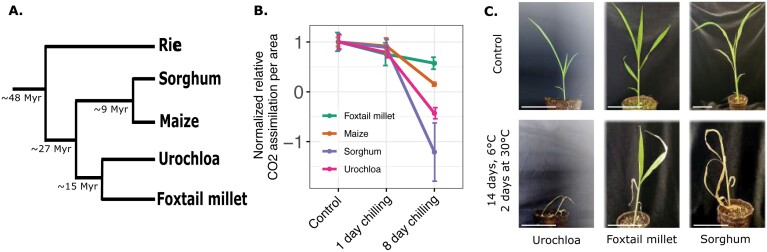
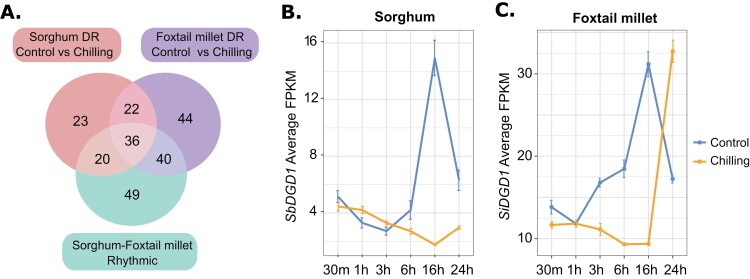
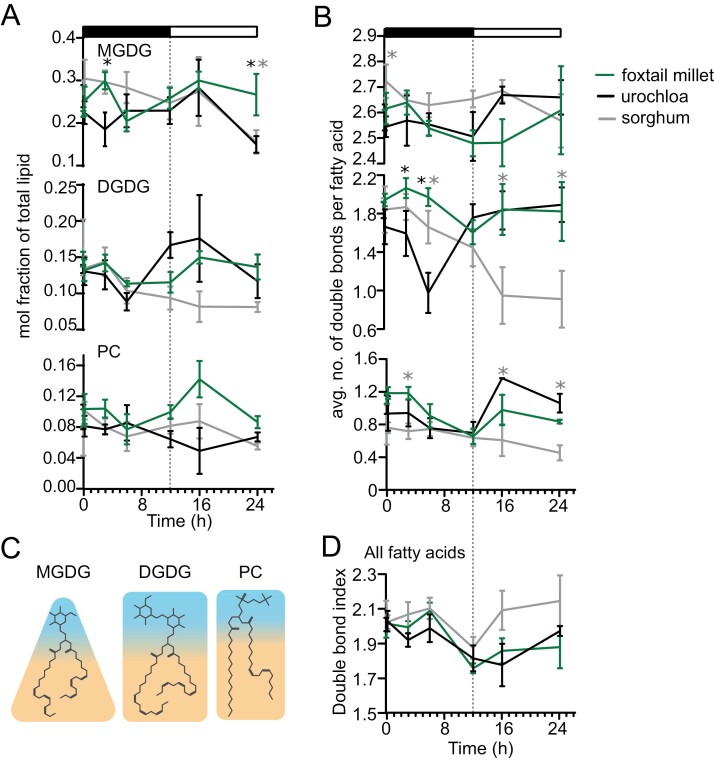
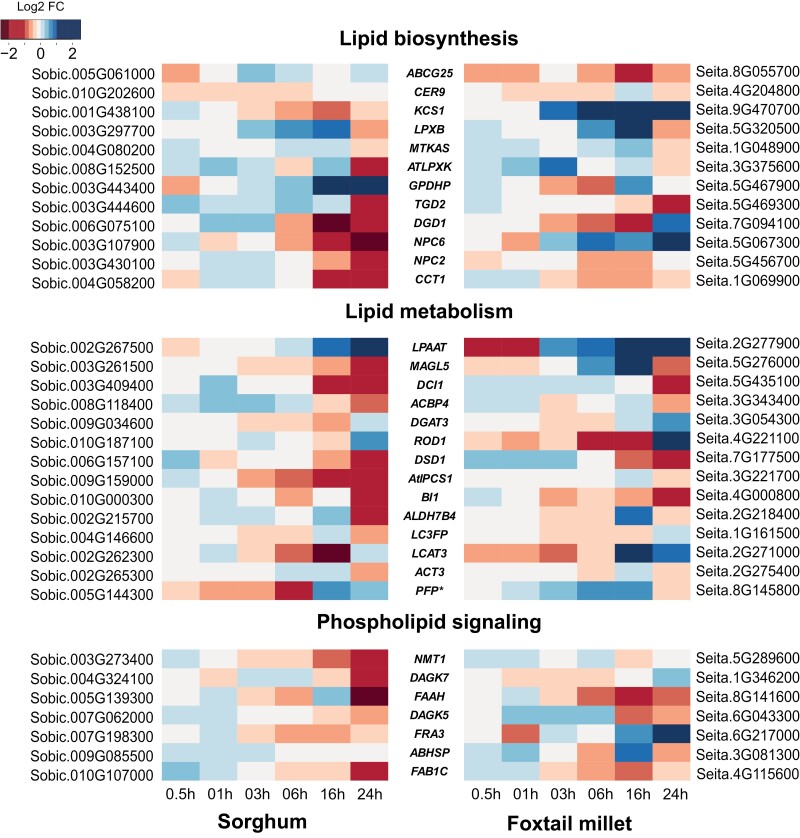
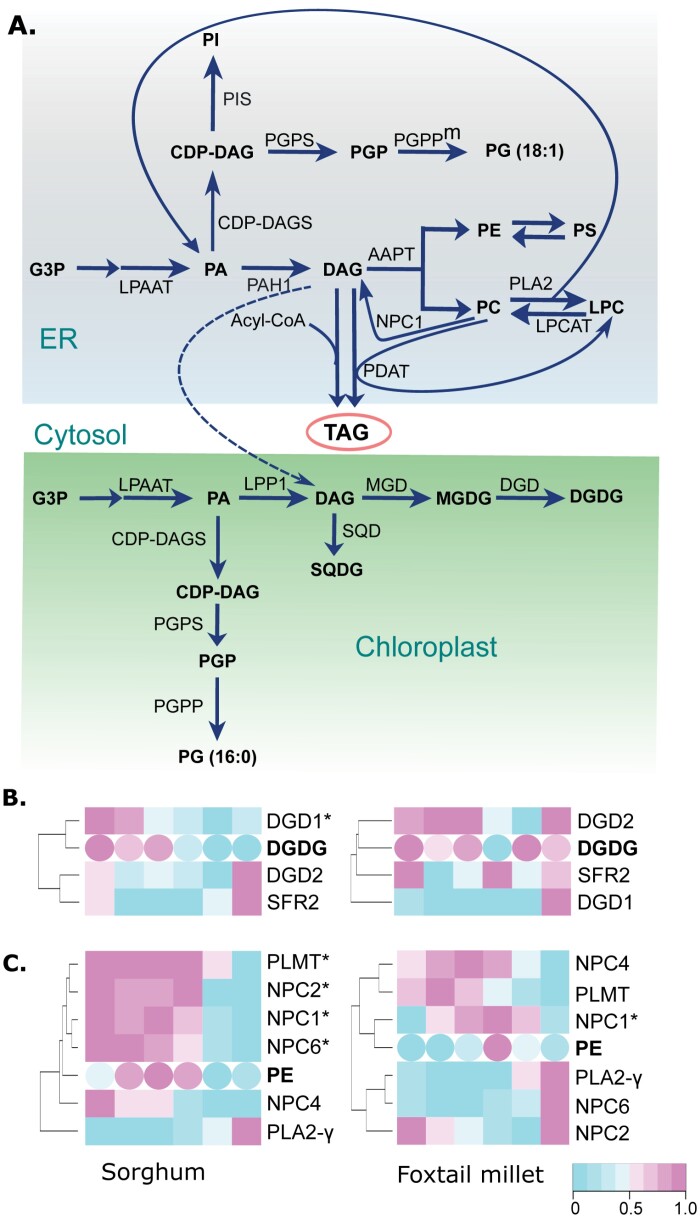
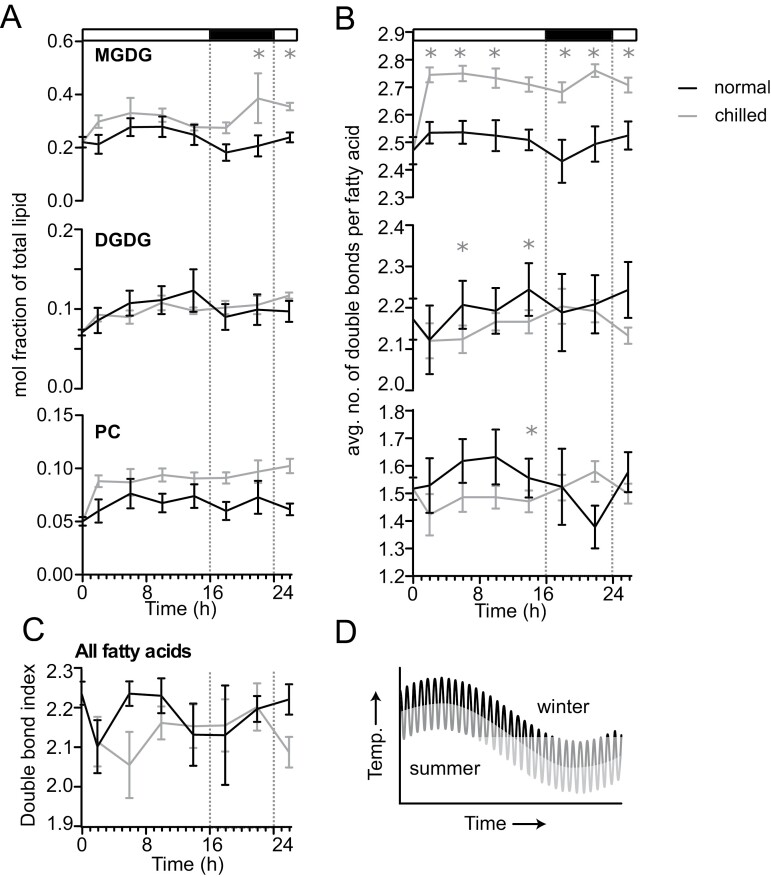
Chilling stress threatens plant growth and development, particularly affecting membrane fluidity and cellular integrity. Understanding plant membrane responses to chilling stress is important for unraveling the molecular mechanisms of stress tolerance. Whereas core transcriptional responses to chilling stress and stress tolerance are conserved across species, the associated changes in membrane lipids appear to be less conserved, as which lipids are affected by chilling stress varies by species. Here, we investigated changes in gene expression and membrane lipids in response to chilling stress during one 24 h cycle in chilling-tolerant foxtail millet (Setaria italica), and chilling-sensitive sorghum (Sorghum bicolor) and Urochloa (browntop signal grass, Urochloa fusca, lipids only), leveraging their evolutionary relatedness and differing levels of chilling stress tolerance. We show that most chilling-induced lipid changes are conserved across the three species, while we observed distinct, time-specific responses in chilling-tolerant foxtail millet, indicating the presence of a finely orchestrated adaptive mechanism. We detected rhythmicity in lipid responses to chilling stress in the three grasses, which were also present in Arabidopsis thaliana, suggesting the conservation of rhythmic patterns across species and highlighting the importance of accounting for time of day. When integrating lipid datasets with gene expression profiles, we identified potential candidate genes that showed corresponding transcriptional changes in response to chilling stress, providing insights into the differences in regulatory mechanisms between chilling-sensitive sorghum and chilling-tolerant foxtail millet.
冷胁迫威胁植物的生长和发育,特别是影响膜的流动性和细胞完整性。了解植物对冷胁迫的膜反应对于揭示胁迫耐受的分子机制非常重要。虽然物种间对冷胁迫和胁迫耐受的核心转录反应是保守的,但相关的膜脂变化似乎不太保守,因为受冷胁迫影响的脂质因物种而异。在这里,我们研究了在耐受冷胁迫的谷子(Setaria italica)、敏感的高粱(Sorghum bicolor)和莠竹属(棕穗野青茅,Urochloa fusca,仅脂质)中,在一个 24 小时的冷胁迫周期内,基因表达和膜脂对冷胁迫的响应变化,利用它们的进化关系和不同的冷胁迫耐受水平。我们表明,大多数冷诱导的脂质变化在三个物种中是保守的,而我们在耐受冷胁迫的谷子中观察到了特定的、时间特异性的反应,表明存在精细协调的适应机制。我们在三种禾本科植物中检测到了脂质对冷胁迫反应的节律性,这在拟南芥(Arabidopsis thaliana)中也存在,表明节律模式在物种间是保守的,并强调了考虑时间的重要性。当将脂质数据集与基因表达谱整合时,我们鉴定出了潜在的候选基因,这些基因在响应冷胁迫时表现出相应的转录变化,为了解敏感的高粱和耐受冷胁迫的谷子之间调节机制的差异提供了线索。