Univ Rouen Normandie, Université de Caen Normandie, INSERM, Normandie Univ, DYNAMICURE UMR 1311, CHU Rouen, Department of virology, Rouen, France.
Service de virologie, IAME, INSERM, UMR 1137, AP-HP, Hôpital Bichat-Claude Bernard, Université Paris Cité, Paris, France.
Microbiol Spectr. 2024 Jul 2;12(7):e0389523. doi: 10.1128/spectrum.03895-23. Epub 2024 May 29.
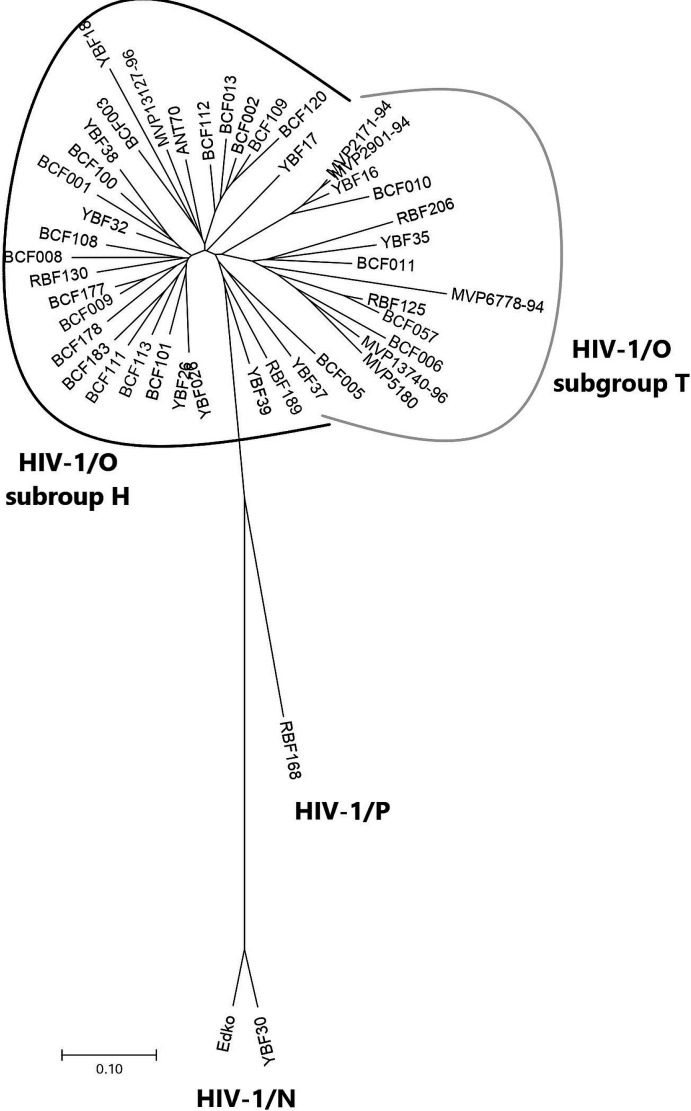
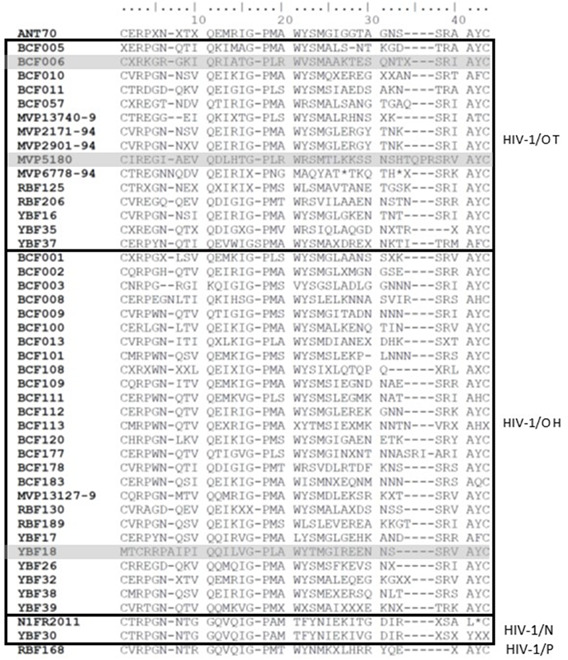
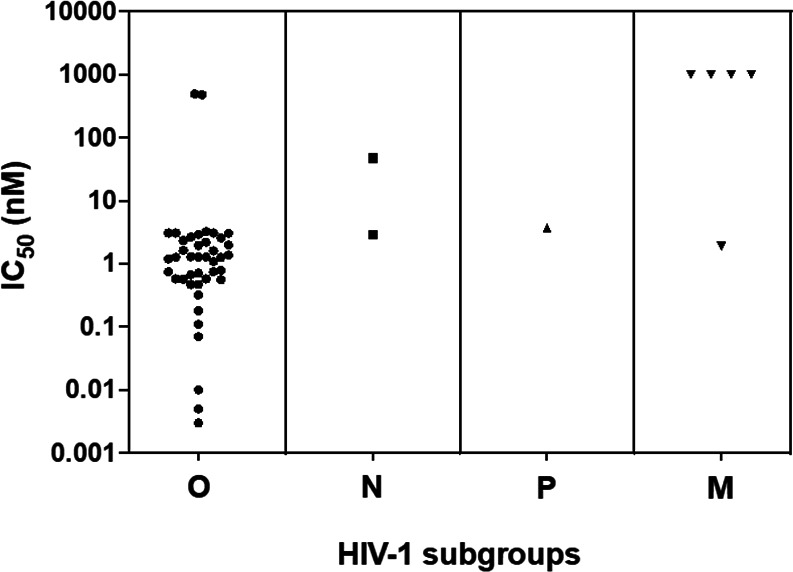
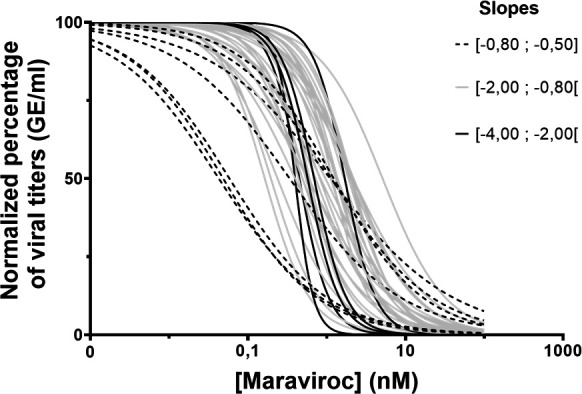
The susceptibility of genetically divergent HIV-1 strains (HIV-1 non-M) from groups O, N, and P to the CCR5 co-receptor antagonist, maraviroc (MVC), was investigated among a large panel of 45 clinical strains, representative of the viral genetic diversity. The results were compared to the reference strains of HIV-1 group M (HIV-1/M) with known tropism. Among the non-M strains, a wide range of phenotypic susceptibilities to MVC were observed. The large majority of HIV-1/O strains (40/42) displayed a high susceptibility to MVC, with median and mean IC values of 1.23 and 1.33 nM, respectively, similar to the HIV-1/M R5 strain (1.89 nM). However, the two remaining HIV-1/O strains exhibited a lower susceptibility (IC at 482 and 496 nM), in accordance with their dual/mixed (DM) tropism. Interestingly, the two HIV-1/N strains demonstrated varying susceptibility patterns, despite always having relatively low IC values (2.87 and 47.5 nM). This emphasized the complexity of determining susceptibility solely based on IC values. Our study examined the susceptibility of all HIV-1 non-M groups to MVC and correlated these findings with virus tropism (X4, R5, or DM). The results confirm the critical significance of tropism determination before initiating MVC treatment in patients infected with HIV-1 non-M. Furthermore, we advocate for the consideration of additional parameters, such as the slope of inhibition curves, to provide a more thorough characterization of phenotypic susceptibility profiles.
Unlike HIV-1 group M, the scarcity of studies on HIV-1 non-M groups (O, N, and P) presents challenges in understanding their susceptibility to antiretroviral treatments, particularly due to their natural resistance to non-nucleoside reverse transcriptase inhibitors. The TROPI-CO study logically complements our prior investigations into integrase inhibitors and anti-gp120 efficacy. The largest panel of 45 non-M strains existing so far yielded valuable results on maraviroc (MVC) susceptibility. The significant variations in MVC IC50 reveal a spectrum of susceptibilities, with most strains displaying R5 tropism. Notably, the absence of MVC-resistant strains suggests a potential therapeutic avenue. The study also employs a robust novel cell-based phenotropism assay and identifies distinct groups of susceptibilities based on inhibition curve slopes. Our findings emphasize the importance of determining tropism before initiating MVC and provide crucial insights for selecting effective therapeutic strategies in the delicate context of HIV-1 non-M infections.
非 M 组(O、N 和 P)HIV-1 毒株对 CCR5 共受体拮抗剂马拉维若(MVC)的易感性在一个包含 45 个临床分离株的大型面板中进行了研究,这些分离株代表了病毒遗传多样性。结果与已知嗜性的 HIV-1 组 M(HIV-1/M)的参考株进行了比较。在非 M 株中,观察到 MVC 的表型易感性范围很广。绝大多数 HIV-1/O 株(40/42)对 MVC 表现出高敏感性,中值和平均 IC 值分别为 1.23 和 1.33 nM,与 HIV-1/M R5 株(1.89 nM)相似。然而,另外两个 HIV-1/O 株显示出较低的敏感性(IC 为 482 和 496 nM),符合其双/混合(DM)嗜性。有趣的是,尽管两个 HIV-1/N 株的 IC 值总是相对较低(2.87 和 47.5 nM),但它们表现出不同的敏感性模式。这强调了仅根据 IC 值确定敏感性的复杂性。我们的研究检查了所有 HIV-1 非 M 组对 MVC 的敏感性,并将这些发现与病毒嗜性(X4、R5 或 DM)相关联。结果证实,在开始 MVC 治疗之前,确定 HIV-1 非 M 感染者的嗜性至关重要。此外,我们主张考虑其他参数,如抑制曲线的斜率,以更全面地描述表型敏感性特征。
与 HIV-1 组 M 不同,对 HIV-1 非 M 组(O、N 和 P)的研究很少,这使得人们难以理解它们对抗逆转录病毒治疗的敏感性,特别是由于它们对非核苷类逆转录酶抑制剂的天然耐药性。TROPI-CO 研究逻辑上补充了我们之前对整合酶抑制剂和抗 gp120 疗效的研究。迄今为止,最大的 45 个非 M 株面板产生了关于马拉维若(MVC)敏感性的有价值的结果。MVC IC50 的显著差异显示出一系列易感性,大多数株显示 R5 嗜性。值得注意的是,没有发现 MVC 耐药株表明存在潜在的治疗途径。该研究还采用了一种强大的新型基于细胞的表型嗜性测定法,并根据抑制曲线斜率确定了不同的敏感性组。我们的研究结果强调了在开始 MVC 治疗之前确定嗜性的重要性,并为在 HIV-1 非 M 感染的微妙背景下选择有效的治疗策略提供了关键见解。