Basso Melissa, Zorzan Irene, Johnstone Nicola, Barberis Matteo, Cohen Kadosh Kathrin
School of Psychology, Faculty of Health and Medical Sciences, University of Surrey, Guildford, United Kingdom.
Molecular Systems Biology, School of Biosciences, Faculty of Health and Medical Sciences, University of Surrey, Guildford, United Kingdom.
Front Nutr. 2024 May 15;11:1346483. doi: 10.3389/fnut.2024.1346483. eCollection 2024.
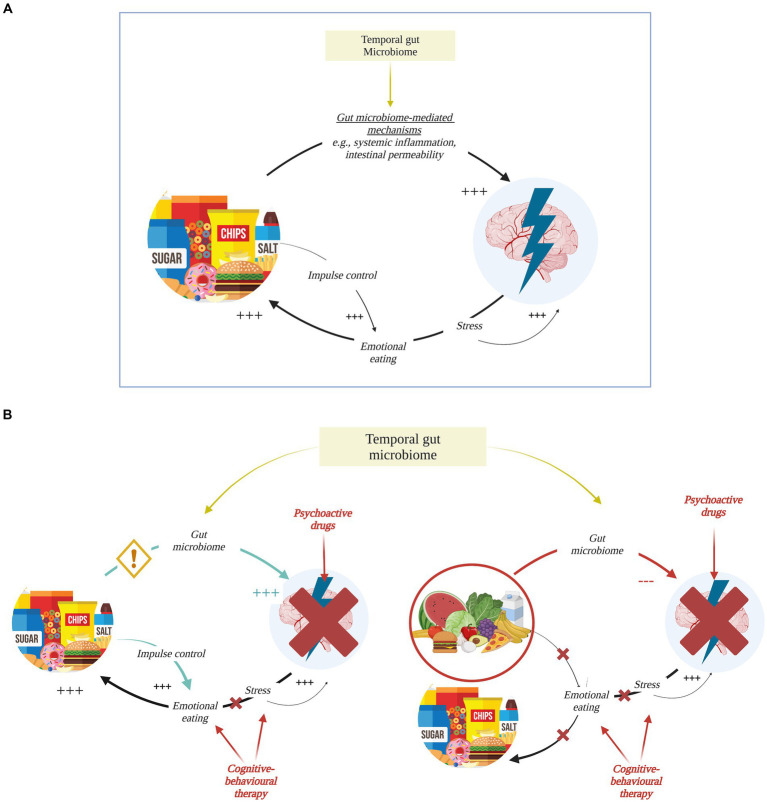
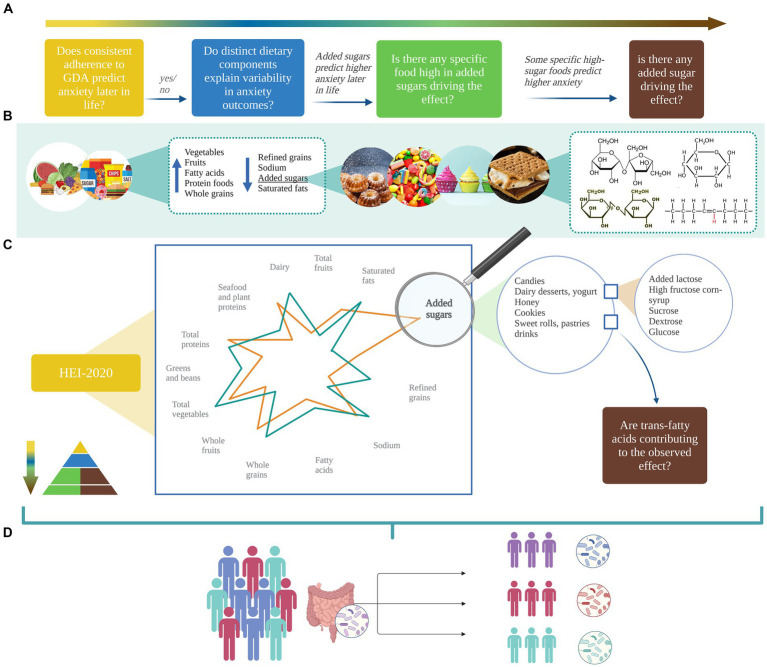
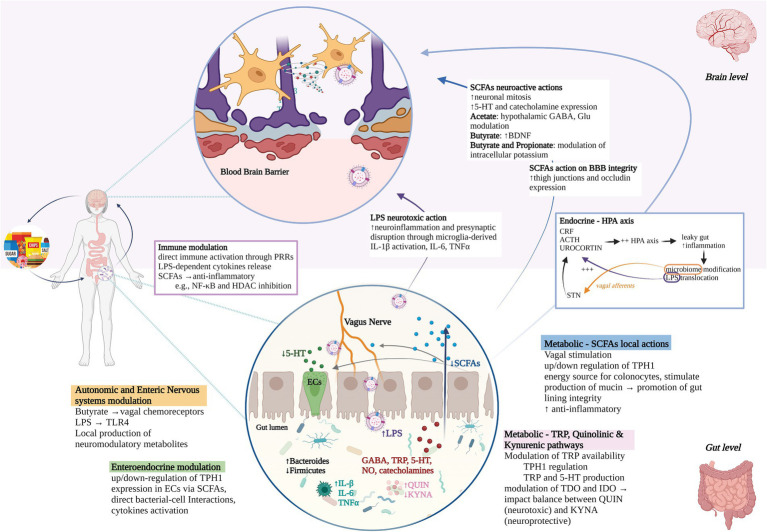
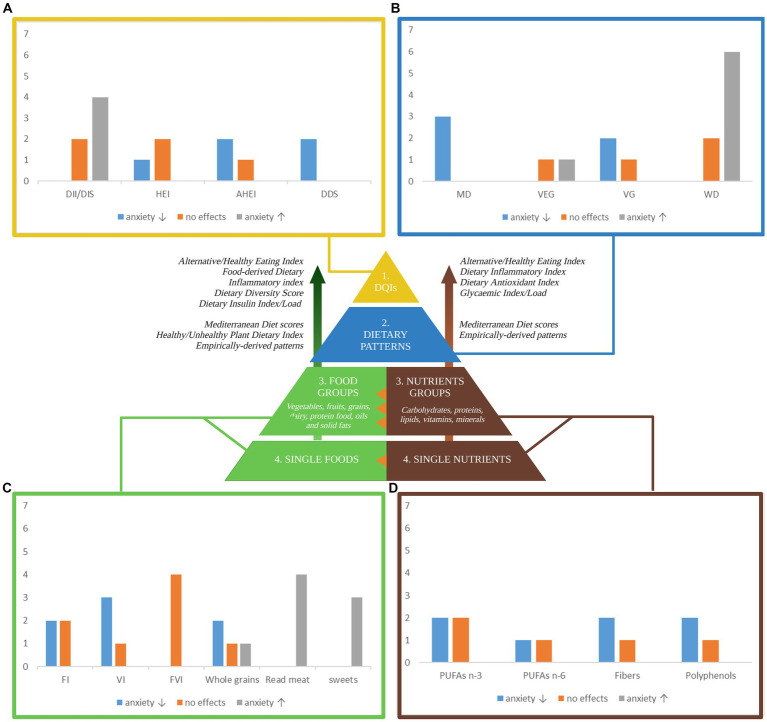
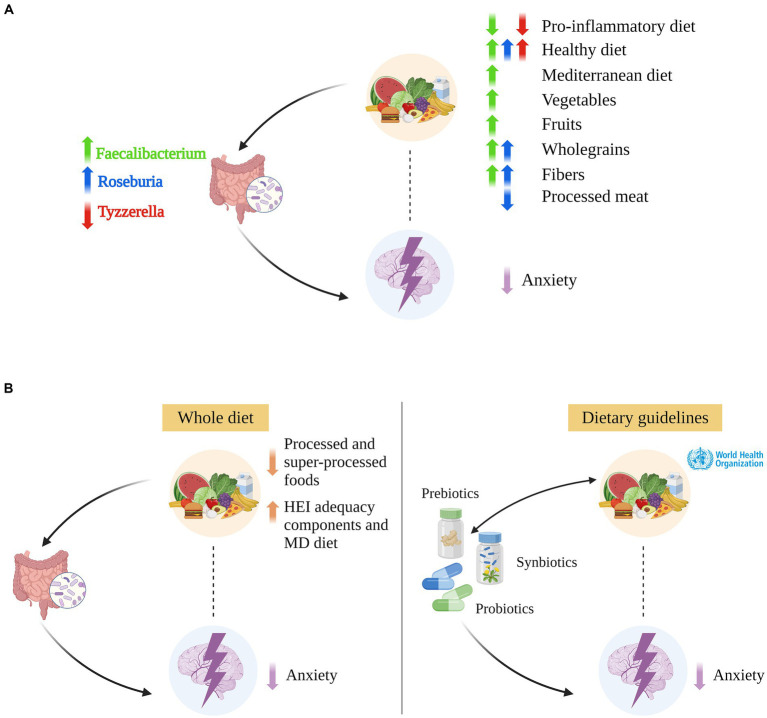
Anxiety disorders disproportionally affect females and are frequently comorbid with eating disorders. With the emerging field of nutritional psychiatry, focus has been put on the impact of diet quality in anxiety pathophysiology and gut microbiome underlying mechanisms. While the relationship between diet and anxiety is bidirectional, improving dietary habits could better facilitate the actions of pharmacological and psychological therapies, or prevent their use. A better understanding of how gut bacteria mediate and moderate such relationship could further contribute to develop personalized programs and inform probiotics and prebiotics manufacturing. To date, studies that look simultaneously at diet, the gut microbiome, and anxiety are missing as only pairwise relationships among them have been investigated. Therefore, this study aims at summarizing and integrating the existing knowledge on the dietary effects on anxiety with focus on gut microbiome. Findings on the effects of diet on anxiety are critically summarized and reinterpreted in relation to findings on (i) the effects of diet on the gut microbiome composition, and (ii) the associations between the abundance of certain gut bacteria and anxiety. This novel interpretation suggests a theoretical model where the relationship between diet and anxiety is mediated and/or modulated by the gut microbiome through multiple mechanisms. In parallel, this study critically evaluates methodologies employed in the nutritional field to investigate the effects of diet on anxiety highlighting a lack of systematic operationalization and assessment strategies. Therefore, it ultimately proposes a novel evidence-based approach that can enhance studies validity, reliability, systematicity, and translation to clinical and community settings.
焦虑症对女性的影响尤为严重,且常常与饮食失调并发。随着营养精神病学这一新兴领域的出现,人们开始关注饮食质量在焦虑症病理生理学以及肠道微生物群潜在机制中的作用。虽然饮食与焦虑之间的关系是双向的,但改善饮食习惯可以更好地促进药物治疗和心理治疗的效果,或者避免使用这些治疗方法。更好地理解肠道细菌如何介导和调节这种关系,可能会进一步有助于制定个性化方案,并为益生菌和益生元的生产提供依据。迄今为止,尚未有同时研究饮食、肠道微生物群和焦虑症的研究,因为此前仅对它们之间的两两关系进行了调查。因此,本研究旨在总结和整合关于饮食对焦虑症影响的现有知识,重点关注肠道微生物群。关于饮食对焦虑症影响的研究结果,将根据以下两方面的研究结果进行批判性总结和重新解读:(i)饮食对肠道微生物群组成的影响,以及(ii)某些肠道细菌的丰度与焦虑症之间的关联。这种新颖的解读提出了一个理论模型,即饮食与焦虑之间的关系是由肠道微生物群通过多种机制介导和/或调节的。同时,本研究批判性地评估了营养领域用于研究饮食对焦虑症影响的方法,强调缺乏系统的操作化和评估策略。因此,它最终提出了一种基于证据的新方法,该方法可以提高研究的有效性、可靠性、系统性以及向临床和社区环境的转化能力。