NIHR Children and Families Policy Research Unit, Population, Policy and Practice, UCL GOS Institute of Child Health, London, UK
Thomas Coram Research Unit, UCL Social Research Institute, London, UK.
BMJ Open. 2024 May 30;14(5):e081620. doi: 10.1136/bmjopen-2023-081620.
To examine children and young people's (CYP), caregivers' and healthcare professionals' (HCPs) views or experiences of facilitators and barriers to CYP access to UK primary care services to better understand healthcare inequity. To explore differences across CYP subpopulations with greater health needs from deprived areas, identifying as ethnic minorities, with experiences of state care, special educational needs or disabilities, chronic conditions or mental health problems.
Scoping review.
Included studies were in English, published 2012-2022 and reported: the views/experiences of CYP (0-25 years), caregivers or HCPs about accessing UK primary care; using quantitative or qualitative empirical methods.
PubMed, CINAHL, Web of Science, PsycINFO and Scopus.
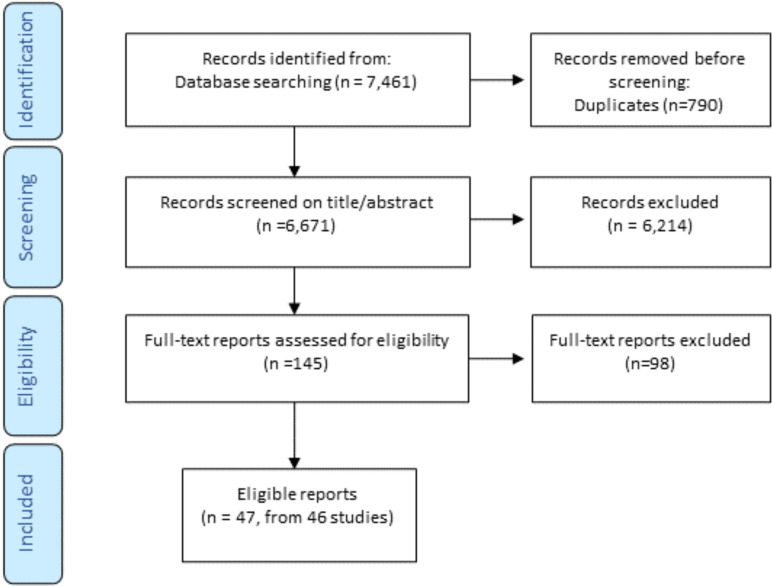
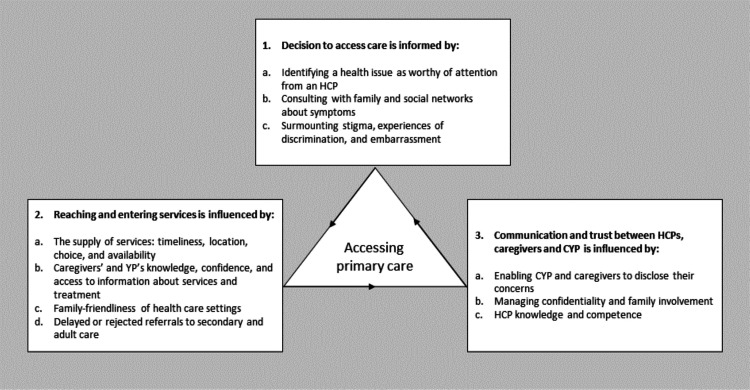
We included 47 reports (46 studies). CYP/caregivers' decision to access care was facilitated by CYP/caregivers' or their family/friends' ability to identify a health issue as warranting healthcare attention. Barriers to accessing care included perceived stigma (eg, being seen as a bad parent), embarrassment and discrimination experiences. CYP and caregivers believed longer opening hours could facilitate more timely access to care. Caregivers and HCPs reported that delayed or rejected referrals to secondary or adult care were a barrier to having needs met, especially for CYP with poor mental health. CYP and caregivers in numerous studies emphasised the importance of communication and trust with HCPs, including taking their concerns seriously, being knowledgeable and providing continuity of care for CYP. Common barriers reported across high-need subpopulations were caregivers needing knowledge and confidence to advocate for their child, gaps in HCP's knowledge and a lack of connectedness between primary and secondary care.
Connecting general practices and community health workers/services, improving CYP/caregivers' understanding of common childhood conditions, addressing HCP's knowledge gaps in paediatric care and integrated approaches between primary and secondary care may reduce inequity in access.
研究儿童和青少年(CYP)、照顾者和医疗保健专业人员(HCP)对 CYP 获得英国初级保健服务的促进因素和障碍的看法或经验,以更好地了解医疗保健中的不平等现象。探讨来自贫困地区、少数民族、有国家照顾经历、特殊教育需求或残疾、慢性疾病或心理健康问题等健康需求较高的 CYP 亚群之间的差异。
范围审查。
研究为英文,发表于 2012 年至 2022 年,报告了:CYP(0-25 岁)、照顾者或 HCP 对获得英国初级保健的看法/经验;使用定量或定性实证方法。
PubMed、CINAHL、Web of Science、PsycINFO 和 Scopus。
我们纳入了 47 份报告(46 项研究)。CYP/照顾者决定寻求医疗保健的原因是他们或其家人/朋友能够识别出需要医疗关注的健康问题。寻求医疗保健的障碍包括感知到的耻辱感(例如,被视为坏父母)、尴尬和歧视经历。CYP 和照顾者认为增加开放时间可以更方便地及时获得医疗服务。照顾者和 HCP 报告称,延迟或拒绝转介到二级或成人护理是满足需求的障碍,尤其是对于心理健康状况较差的 CYP。许多研究中的 CYP 和照顾者强调与 HCP 沟通和建立信任的重要性,包括认真对待他们的担忧、有知识并为 CYP 提供连续性护理。高需求亚群普遍报告的障碍包括照顾者需要知识和信心来为孩子辩护、HCP 知识差距以及初级保健和二级保健之间缺乏联系。
连接一般实践和社区卫生工作者/服务、提高 CYP/照顾者对常见儿童疾病的认识、解决 HCP 在儿科护理方面的知识差距以及初级保健和二级保健之间的综合方法可能会减少获得服务的不平等。