Malik Jakub, Główka Natalia, Jelonek Wojciech, Stemplewski Rafał, Maciaszek Janusz
Department of Physical Activity and Health Promotion Science, Poznan University of Physical Education, Królowej Jadwigi 27/39, 61-871, Poznan, Poland.
Department of Sports Dietetics, Poznan University of Physical Education, Królowej Jadwigi 27/39, 61-871, Poznan, Poland.
Eur Rev Aging Phys Act. 2024 May 31;21(1):15. doi: 10.1186/s11556-024-00351-w.
In the aging society, more attention is paid to the promotion of forms of physical activity that can improve postural stability and cognitive functioning. In this context, the importance of combined exercises, requiring simultaneous physical and cognitive involvement, is emphasized. Juggling seems to be a form of activity that is both cognitively and physically demanding. The purpose of this study was to determine the effect of additional juggling exercise on postural stability and cognitive abilities in healthy, physically active older adults.
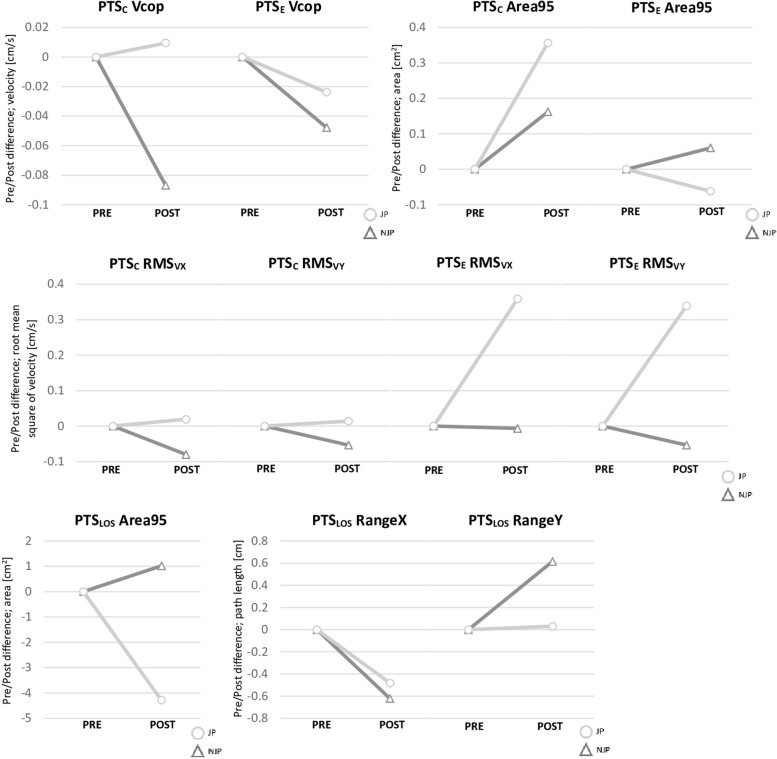
Twenty-six healthy and physically active older adults (70.08±4.40 years old) were included in a randomized crossover study. The addition of juggling three times a week during four weeks was the main intervention (one period), while the control phase included four weeks with no addition of juggling (second period). Measurements of postural stability and cognitive abilities were performed before and after each period. For the purpose of postural stability assessment, a velocity of center of pressure with root mean square, area 95 percentile, medio-lateral and anterior-posterior range of motion were measured. Center of pressure signals were obtained using an AccuGait™ System force plate in three conditions: free standing, dual-task and limits of stability. The Vienna Test System was used for the assessment of selected cognitive abilities. A battery of reaction time tests and Cognitrone test were used for this purpose.
A significant interaction effect of intervention and time was observed in the postural stability dual-task condition in the root mean square of the center of pressure velocity in the advantage of the juggling period (medio-lateral: F=14.83, p<.01, ƞ=.37; anterior-posterior: F=26.30, p<.01, ƞ=.51). Additionally, moderate effect sizes were observed in the velocity of the center of pressure and variability of simple reaction time measurements, but without statistical significance.
The results of this study indicate that the implementation of juggling activity in everyday life may have positive effects on cognitive abilities and postural stability in healthy, physically active older adults, but the true effect may be low to moderate.
The study was registered retrospectively (30.10.2023) at ClinicalTrials.gov (NCT06108713).
在老龄化社会中,人们更加关注推广能够改善姿势稳定性和认知功能的体育活动形式。在此背景下,强调了需要身体和认知同时参与的联合锻炼的重要性。杂耍似乎是一种对认知和身体都有要求的活动形式。本研究的目的是确定额外的杂耍锻炼对健康、身体活跃的老年人姿势稳定性和认知能力的影响。
26名健康且身体活跃的老年人(70.08±4.40岁)被纳入一项随机交叉研究。主要干预措施是在四周内每周进行三次杂耍练习(一个阶段),而对照阶段包括四周不进行杂耍练习(第二个阶段)。在每个阶段前后进行姿势稳定性和认知能力的测量。为了评估姿势稳定性,测量了压力中心速度的均方根、95%百分位数面积、中侧和前后运动范围。使用AccuGait™系统测力板在三种条件下获取压力中心信号:自由站立、双任务和稳定性极限。使用维也纳测试系统评估选定的认知能力。为此使用了一系列反应时间测试和认知测试仪。
在杂耍阶段优势方面,在姿势稳定性双任务条件下观察到干预和时间的显著交互作用,表现为压力中心速度均方根(中侧:F = 14.83,p <.01,ƞ =.37;前后:F = 26.30,p <.01,ƞ =.51)。此外,在压力中心速度和简单反应时间测量的变异性方面观察到中等效应量,但无统计学意义。
本研究结果表明,在日常生活中进行杂耍活动可能对健康、身体活跃的老年人的认知能力和姿势稳定性有积极影响,但实际效果可能较低至中等。
该研究于2023年10月30日在ClinicalTrials.gov(NCT06108713)进行回顾性注册。