Department of Vascular Surgery, Beijing Institute of Heart Lung and Blood Vessel Diseases, Beijing Anzhen Hospital of Capital Medical University, Beijing, 100029, China.
J Thromb Thrombolysis. 2024 Aug;57(6):1067-1075. doi: 10.1007/s11239-024-02981-4. Epub 2024 Jun 2.
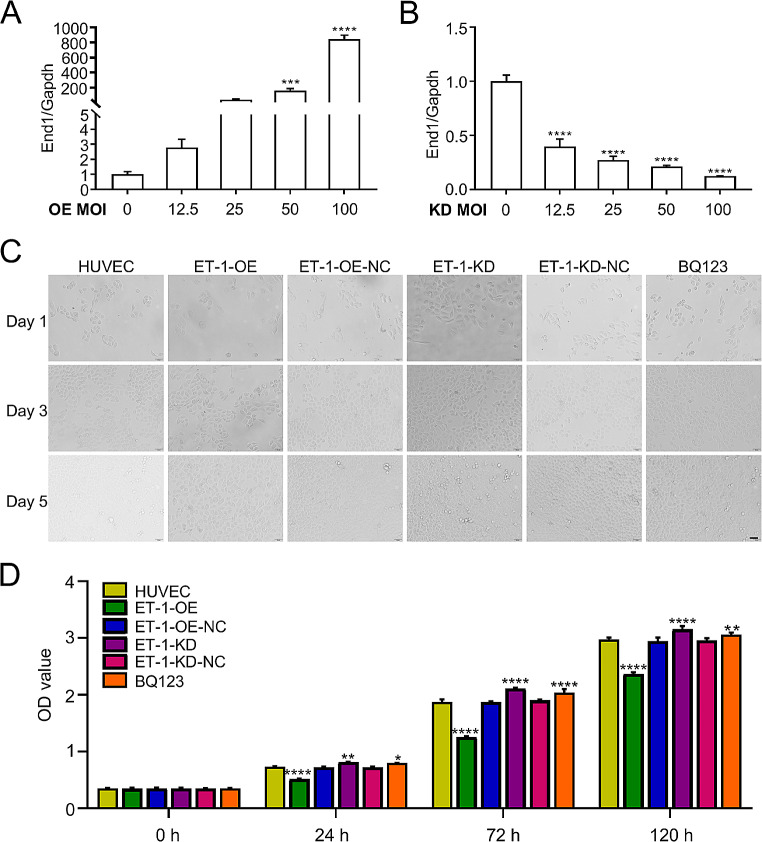
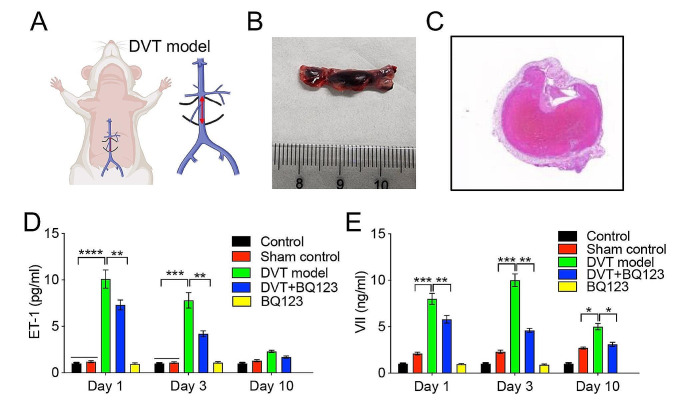
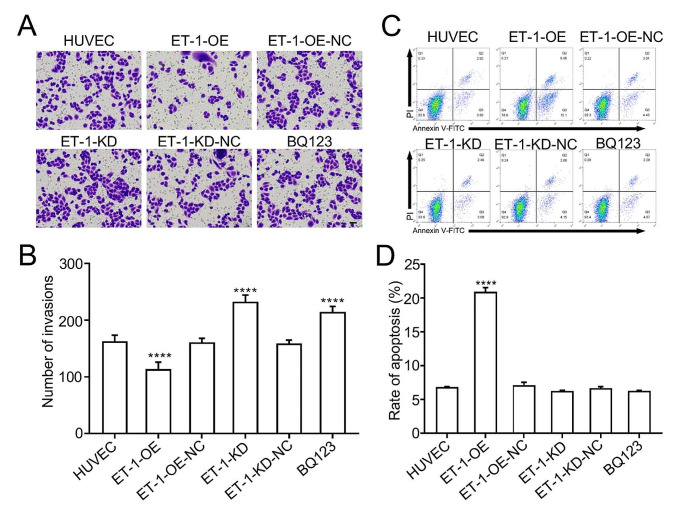
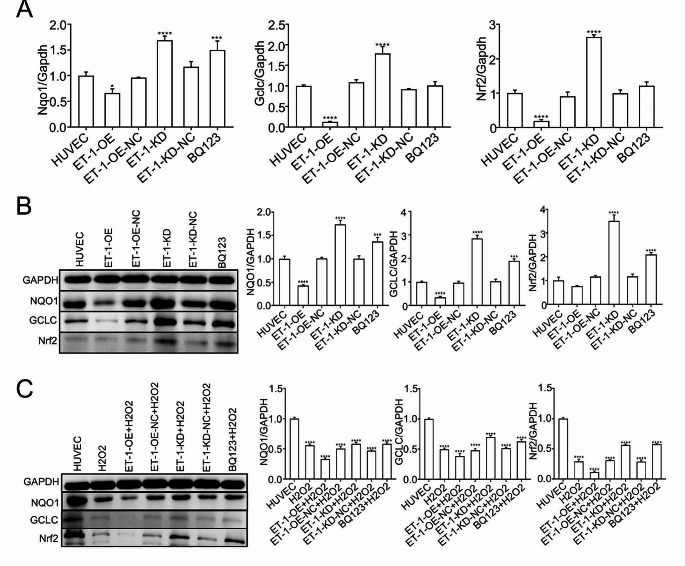
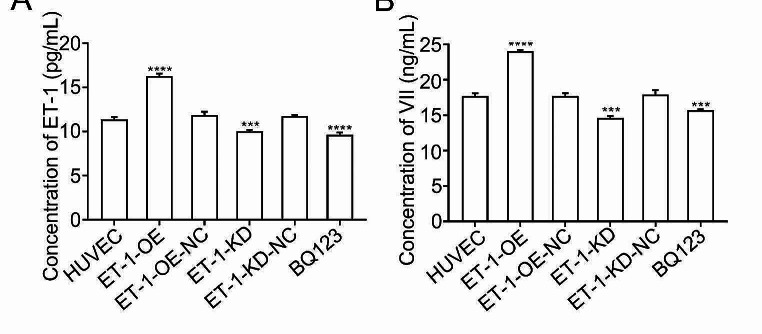
Deep venous thrombosis (DVT) is the third leading cause of death in cardiovascular disease, following heart attacks and strokes. Early diagnosis and intervention are crucial for effective DVT therapy. We aim to investigate whether endothelin-1 (ET-1) could serve as an early diagnostic marker or a potential therapeutic target in a DVT rat model. CCK8 assay, invasion assay, and flow cytometry were used to detect the proliferation, migration and apoptosis of HUVECs, respectively. Elisa assay was used to detect ET-1 and coagulation factor VII in cell supernatant and rat?s plasma. Western blot was used to detect antioxidant signaling protein. Inferior vena cava stenosis was used to construct the DVT rat model. Lentivirus mediated overexpression of ET-1 in HUVECs impaired the cell proliferation and migration, increased cell apoptosis, inhibited the antioxidant signaling pathway proteins expression (e.g., NQO1, GCLC, Nrf-2), and upregulated coagulation factor VII. Furthermore, overexpression of ET-1 further impaired antioxidant signaling pathway protein in response to HO treatment. However, lentivirus mediated ET-1 knockdown and BQ123 (an ET-1 inhibitor), showed the opposite results with ET-1 overexpression. We then established a DVT rat model by inferior vena cava stenosis. The stenosis induced early expression of ET-1 and coagulation factor VII in plasma at day 1 and restore their level at day 10. BQ123 could downregulate the coagulation factor VII to ameliorate the stenosis effects. Our findings suggest that ET-1 might serve as an early diagnostic marker for DVT rat model and a potential therapeutic target for treating DVT.
深静脉血栓形成(DVT)是心血管疾病导致死亡的第三大原因,仅次于心脏病发作和中风。早期诊断和干预对于有效的 DVT 治疗至关重要。我们旨在探讨内皮素-1(ET-1)是否可以作为 DVT 大鼠模型中的早期诊断标志物或潜在治疗靶点。CCK8 测定法、侵袭测定法和流式细胞术分别用于检测 HUVECs 的增殖、迁移和凋亡。Elisa 测定法用于检测细胞上清液和大鼠血浆中的 ET-1 和凝血因子 VII。Western blot 用于检测抗氧化信号蛋白。下腔静脉狭窄用于构建 DVT 大鼠模型。慢病毒介导的 HUVECs 中 ET-1 的过表达会损害细胞增殖和迁移,增加细胞凋亡,抑制抗氧化信号通路蛋白的表达(例如,NQO1、GCLC、Nrf-2),并上调凝血因子 VII。此外,过表达 ET-1 会进一步损害 HO 处理后抗氧化信号通路蛋白。然而,慢病毒介导的 ET-1 敲低和 BQ123(一种 ET-1 抑制剂)的结果与 ET-1 过表达相反。然后,我们通过下腔静脉狭窄建立了 DVT 大鼠模型。狭窄在第 1 天诱导血浆中 ET-1 和凝血因子 VII 的早期表达,并在第 10 天恢复其水平。BQ123 可以下调凝血因子 VII 来改善狭窄的影响。我们的研究结果表明,ET-1 可能是 DVT 大鼠模型的早期诊断标志物和治疗 DVT 的潜在治疗靶点。