Department of Microbiology and Immunology, University of Miami Miller School of Medicine, Miami, Florida, USA.
Medical Scientist Training Program, University of Miami Miller School of Medicine, Miami, Florida, USA.
Clin Transl Gastroenterol. 2024 Sep 1;15(9):e1. doi: 10.14309/ctg.0000000000000721.
Recent studies have identified a critical role of stromal-immune cell interactions in immunity and immune tolerance. Transcriptomic profiling has implicated stromal cells in immune-mediated disorders including the 2 common forms of inflammatory bowel disease (IBD), Crohn's disease (CD), and ulcerative colitis (UC). Stromal-immune interactions may edify inflammatory state and the development of IBD-related complications such as fibrosis, yet the lack of protein markers has hampered studying stromal-immune perturbation.
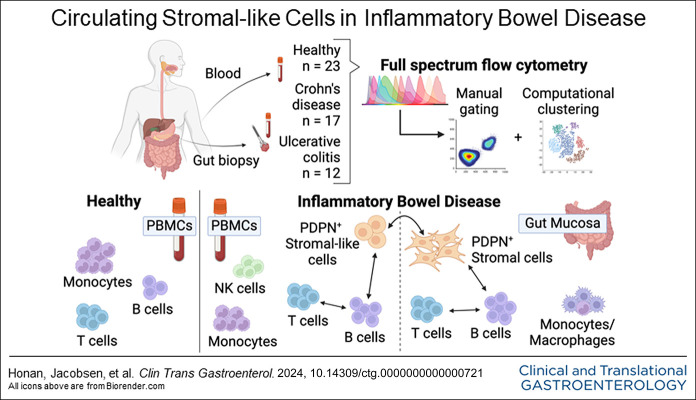
In this study, we designed a 40-color spectral flow cytometry assay to characterize hematopoietic and nonhematopoietic cells in intestinal biopsies and matched blood samples from patients with CD or UC.
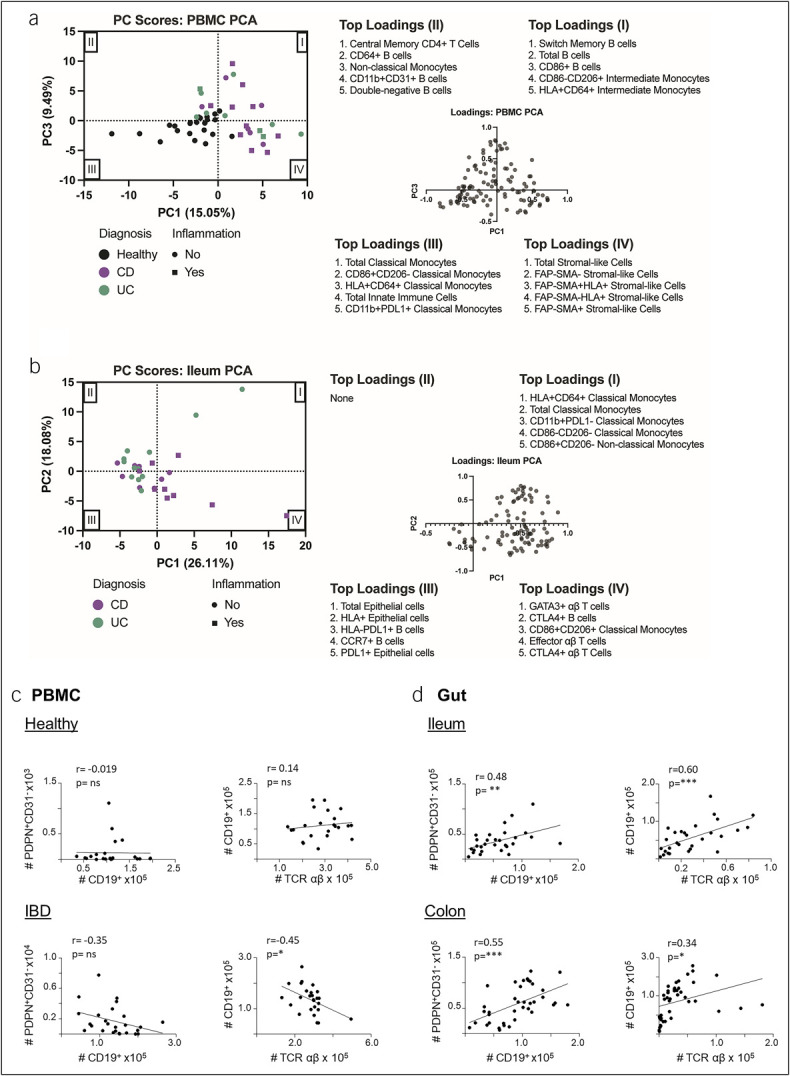
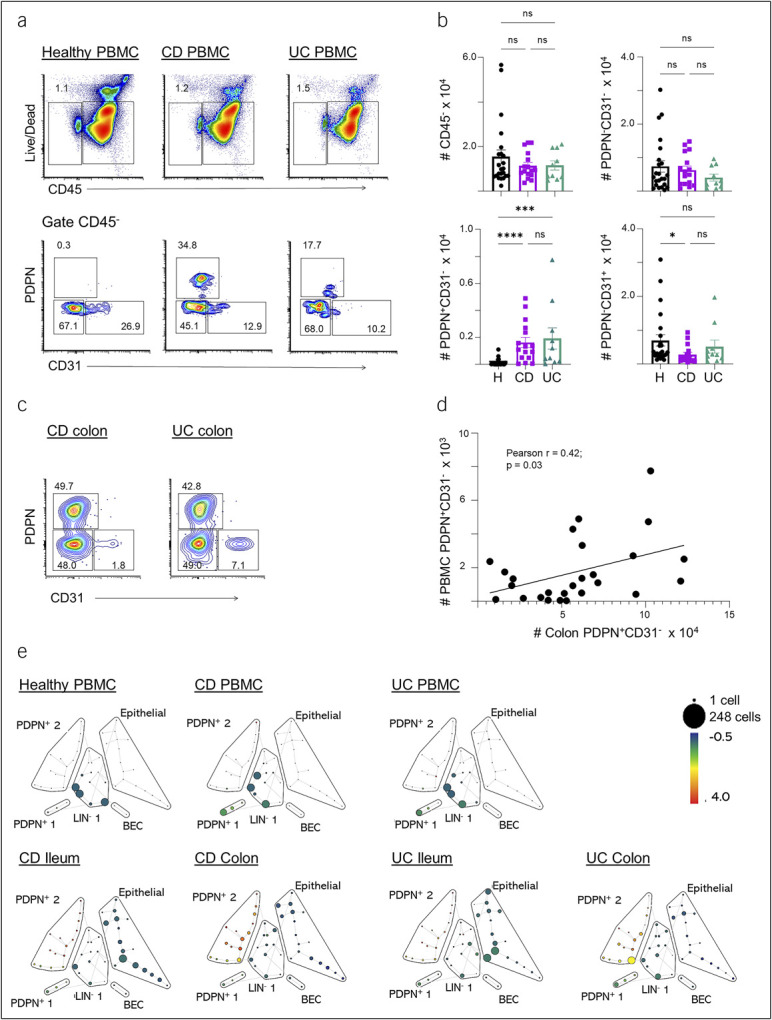
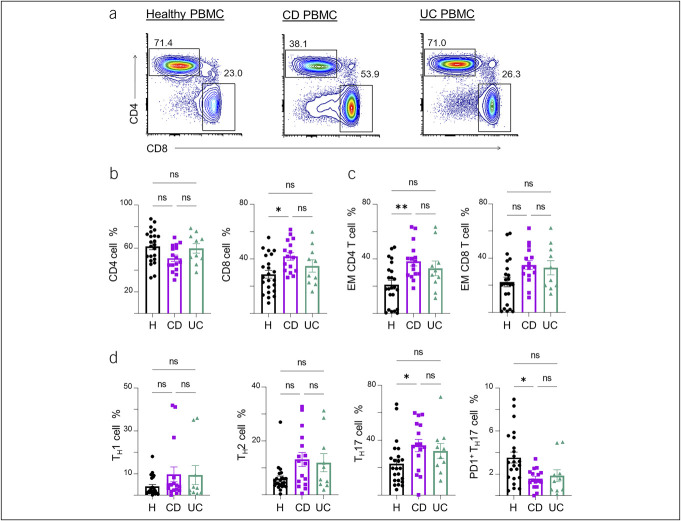
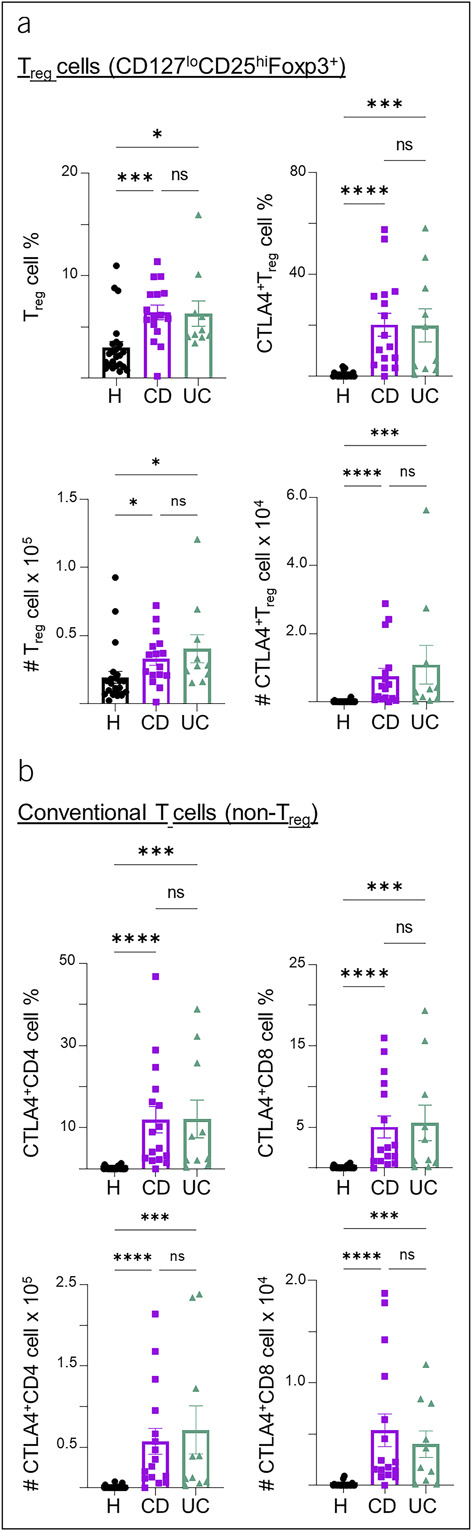
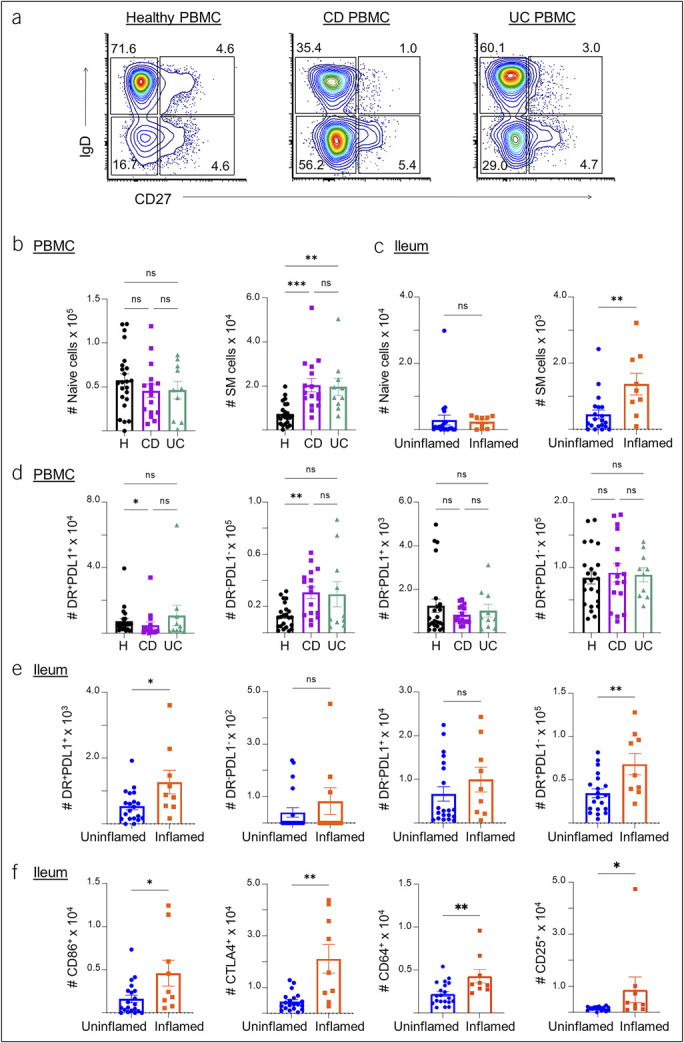
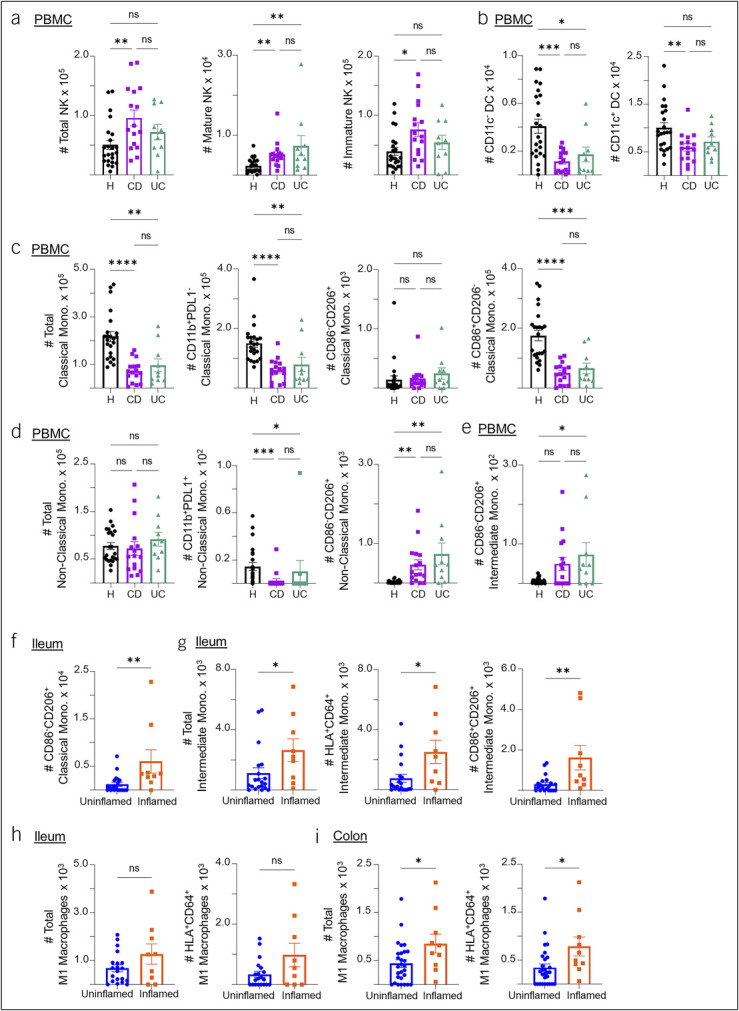
We identified circulating stromal-like cells that are significantly more abundant in IBD blood samples than in healthy controls. Those cells expressed podoplanin (PDPN), a commonly used marker for fibroblasts, and they were associated with activated and memory T and B cells and altered natural killer cell, monocyte, and macrophage populations. PDPN + cells in the blood correlated with PDPN + cells in the colon. Principal component analysis distinctly separated healthy blood samples from IBD blood samples, with stromal-like cells and B-cell subtypes dominating the IBD signature; Pearson correlation detected an association between PDPN + stromal-like cells and B-cell populations in IBD blood and gut biopsies.
These observations suggest that PDPN + cells in the blood may serve as a biomarker of IBD. Understanding the relationship between stromal cells and immune cells in the intestine and the blood may provide a window into disease pathogenesis and insight into therapeutic targets for IBD.
最近的研究表明,基质-免疫细胞相互作用在免疫和免疫耐受中起着关键作用。转录组谱分析表明基质细胞参与了包括两种常见形式的炎症性肠病(IBD)、克罗恩病(CD)和溃疡性结肠炎(UC)在内的免疫介导性疾病。基质-免疫相互作用可能会加剧炎症状态,并导致与 IBD 相关的并发症的发展,如纤维化,但缺乏蛋白质标志物阻碍了对基质-免疫失调的研究。
在这项研究中,我们设计了一个 40 色的光谱流式细胞术检测方法,以分析 CD 或 UC 患者的肠道活检和匹配的血液样本中的造血细胞和非造血细胞。
我们鉴定出循环基质样细胞,这些细胞在 IBD 血液样本中的丰度明显高于健康对照组。这些细胞表达 podoplanin(PDPN),这是一种常用于成纤维细胞的标志物,并且它们与活化和记忆 T 细胞和 B 细胞以及改变的自然杀伤细胞、单核细胞和巨噬细胞群体相关。血液中的 PDPN+细胞与结肠中的 PDPN+细胞相关。主成分分析明显将健康血液样本与 IBD 血液样本区分开来,基质样细胞和 B 细胞亚型主导着 IBD 特征;Pearson 相关性检测到 IBD 血液和肠道活检中 PDPN+基质样细胞和 B 细胞群体之间的关联。
这些观察结果表明,血液中的 PDPN+细胞可能作为 IBD 的生物标志物。了解肠道和血液中基质细胞与免疫细胞之间的关系可能为疾病发病机制提供一个窗口,并深入了解 IBD 的治疗靶点。