Shi Weiwei, Song Jiahui, Weiner January Mikolaj, Chopra Avneesh, Dommisch Henrik, Beule Dieter, Schaefer Arne S
Dept. of Periodontology, Oral Medicine and Oral Surgery, Institute for Dental and Craniofacial Sciences, Charité - University Medicine Berlin, Berlin, Germany.
Core Unit Bioinformatics, Berlin Institute of Health at Charité, Berlin, Germany.
Hum Genet. 2024 Jul;143(7):907-919. doi: 10.1007/s00439-024-02674-1. Epub 2024 Jun 4.
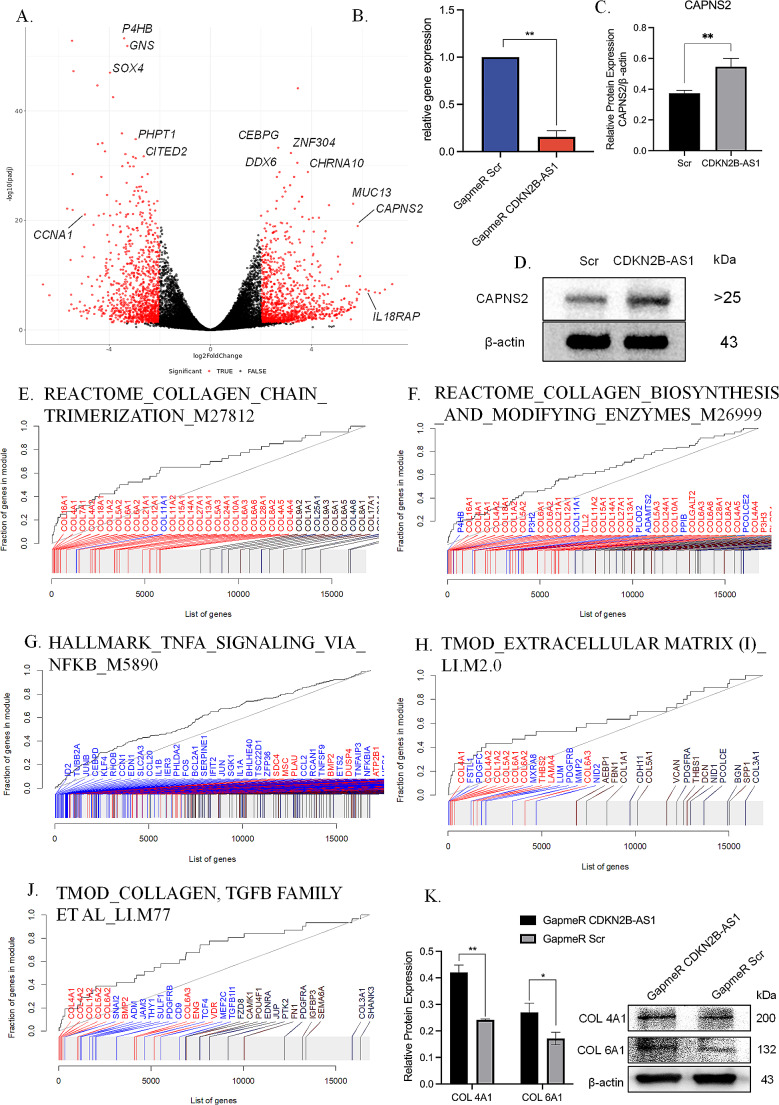
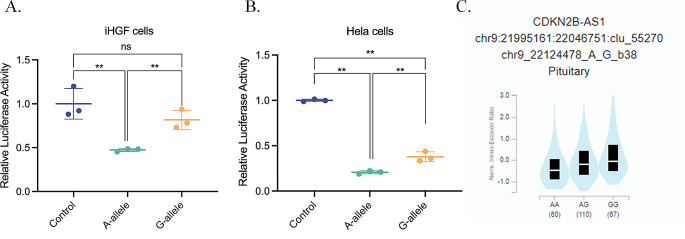
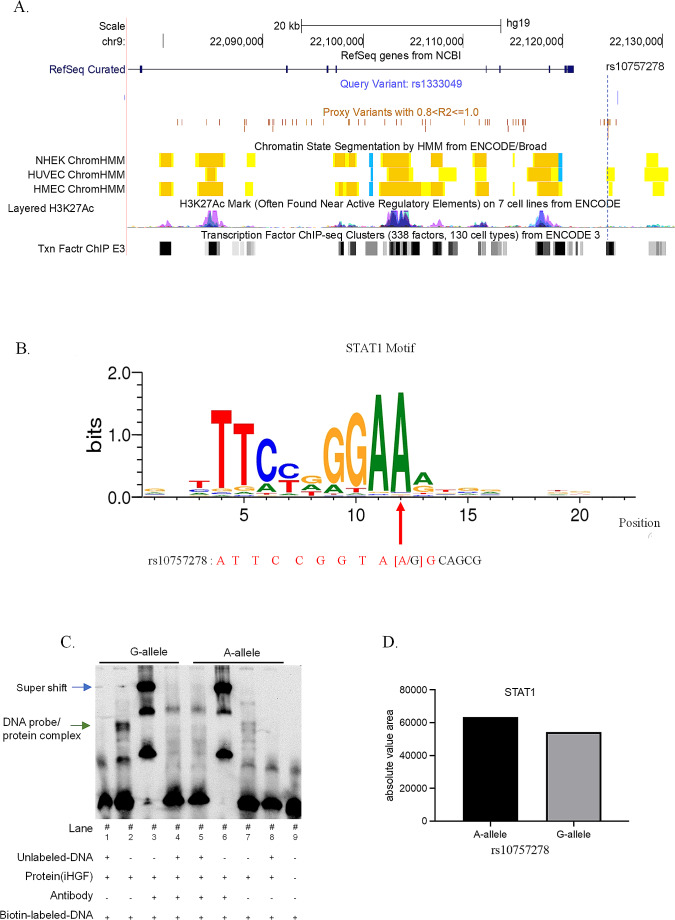
The long noncoding RNA CDKN2B-AS1 harbors a major coronary artery disease risk haplotype, which is also associated with progressive forms of the oral inflammatory disease periodontitis as well as myocardial infarction (MI). Despite extensive research, there is currently no broad consensus on the function of CDKN2B-AS1 that would explain a common molecular role of this lncRNA in these diseases. Our aim was to investigate the role of CDKN2B-AS1 in gingival cells to better understand the molecular mechanisms underlying the increased risk of progressive periodontitis. We downregulated CDKN2B-AS1 transcript levels in primary gingival fibroblasts with LNA GapmeRs. Following RNA-sequencing, we performed differential expression, gene set enrichment analyses and Western Blotting. Putative causal alleles were searched by analyzing associated DNA sequence variants for changes of predicted transcription factor binding sites. We functionally characterized putative functional alleles using luciferase-reporter and antibody electrophoretic mobility shift assays in gingival fibroblasts and HeLa cells. Of all gene sets analysed, collagen biosynthesis was most significantly upregulated (Pj=9.7 × 10 (AUC > 0.65) with the CAD and MI risk gene COL4A1 showing strongest upregulation of the enriched gene sets (Fold change = 12.13, P = 4.9 × 10). The inflammatory "TNFA signaling via NFKB" gene set was downregulated the most (P=1 × 10 (AUC = 0.60). On the single gene level, CAPNS2, involved in extracellular matrix organization, was the top upregulated protein coding gene (Fold change = 48.5, P < 9 × 10). The risk variant rs10757278 altered a binding site of the pathogen responsive transcription factor STAT1 (P = 5.8 × 10). rs10757278-G allele reduced STAT1 binding 14.4% and rs10757278-A decreased luciferase activity in gingival fibroblasts 41.2% (P = 0.0056), corresponding with GTEx data. CDKN2B-AS1 represses collagen gene expression in gingival fibroblasts. Dysregulated collagen biosynthesis through allele-specific CDKN2B-AS1 expression in response to inflammatory factors may affect collagen synthesis, and in consequence tissue barrier and atherosclerotic plaque stability.
长链非编码RNA CDKN2B-AS1携带一种主要的冠状动脉疾病风险单倍型,该单倍型也与口腔炎性疾病牙周炎的进展形式以及心肌梗死(MI)相关。尽管进行了广泛研究,但目前对于CDKN2B-AS1的功能尚无广泛共识,而这一功能可以解释该长链非编码RNA在这些疾病中的共同分子作用。我们的目的是研究CDKN2B-AS1在牙龈细胞中的作用,以更好地理解进展性牙周炎风险增加背后的分子机制。我们使用锁核酸GapmeRs下调原代牙龈成纤维细胞中CDKN2B-AS1的转录水平。在RNA测序后,我们进行了差异表达分析、基因集富集分析和蛋白质印迹分析。通过分析相关DNA序列变异预测转录因子结合位点的变化来搜索潜在的因果等位基因。我们在牙龈成纤维细胞和HeLa细胞中使用荧光素酶报告基因和抗体电泳迁移率变动分析对潜在的功能等位基因进行功能表征。在所有分析的基因集中,胶原蛋白生物合成上调最为显著(Pj = 9.7×10(AUC>0.65),冠状动脉疾病和心肌梗死风险基因COL4A1在富集基因集中上调最强(倍数变化 = 12.13,P = 4.9×10)。炎性“通过NFKB的TNFA信号传导”基因集下调最为明显(P = 1×10(AUC = 0.60)。在单基因水平上,参与细胞外基质组织的CAPNS2是上调最明显的蛋白质编码基因(倍数变化 = 48.5,P<9×10)。风险变异rs10757278改变了病原体反应性转录因子STAT1的一个结合位点(P = 5.8×10)。rs10757278-G等位基因使STAT1结合减少14.4%,rs10757278-A使牙龈成纤维细胞中的荧光素酶活性降低41.2%(P = 0.0056),与GTEx数据一致。CDKN2B-AS1抑制牙龈成纤维细胞中的胶原蛋白基因表达。响应炎性因子通过等位基因特异性CDKN2B-AS1表达导致的胶原蛋白生物合成失调可能影响胶原蛋白合成,进而影响组织屏障和动脉粥样硬化斑块稳定性。