Psychiatric and Neurodevelopmental Genetics Unit, Center for Genomic Medicine, Massachusetts General Hospital, Boston, Massachusetts, United States of America.
Department of Psychiatry, Center for Precision Psychiatry, Massachusetts General Hospital, Boston, Massachusetts, United States of America.
PLoS One. 2024 Jun 4;19(6):e0303079. doi: 10.1371/journal.pone.0303079. eCollection 2024.
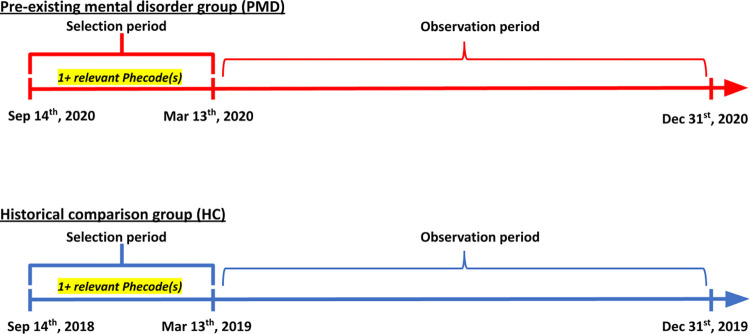
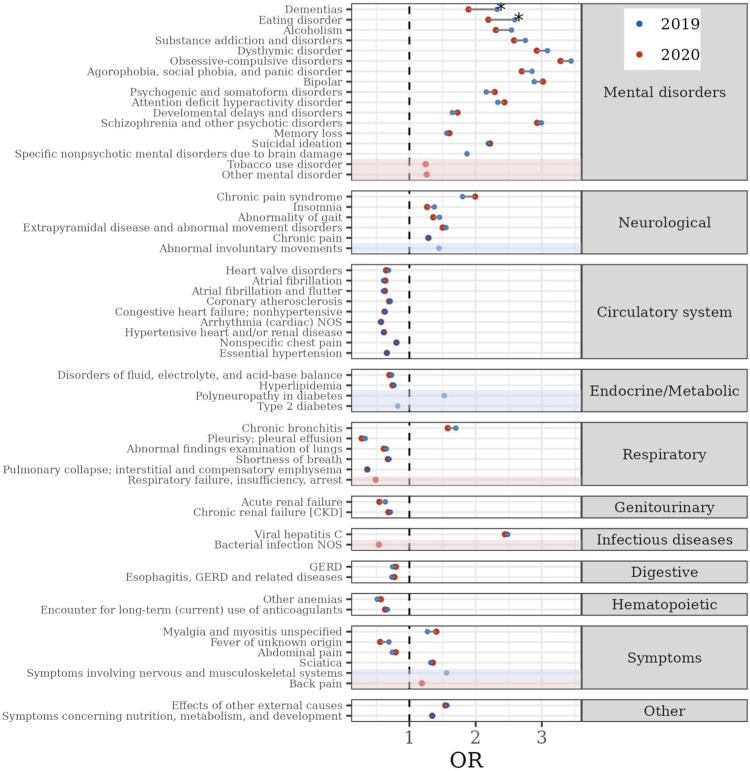
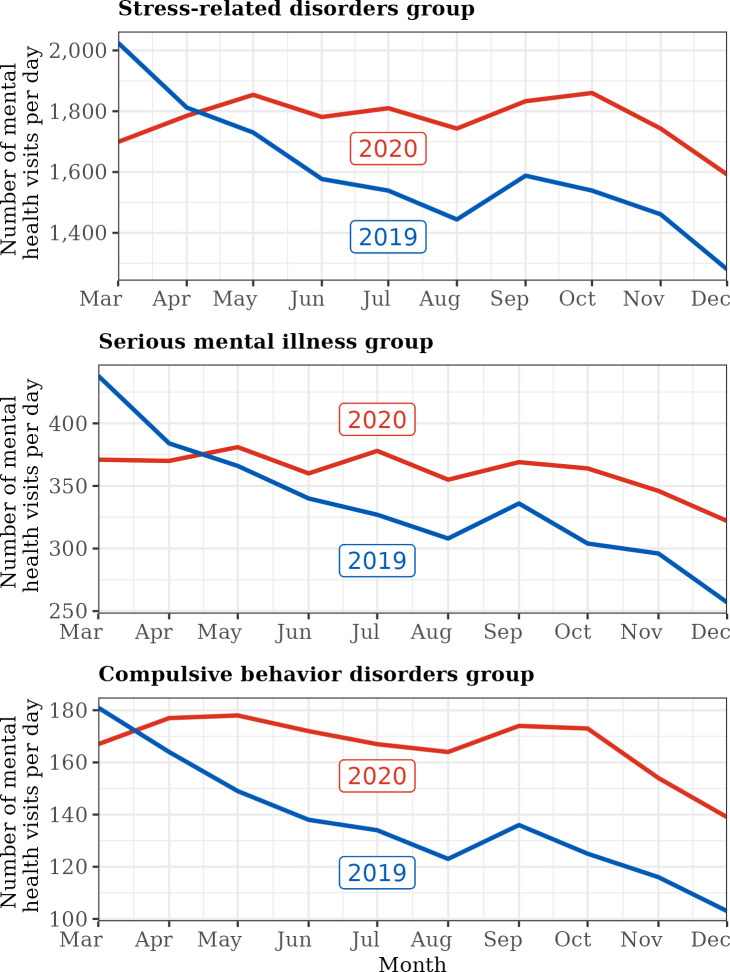
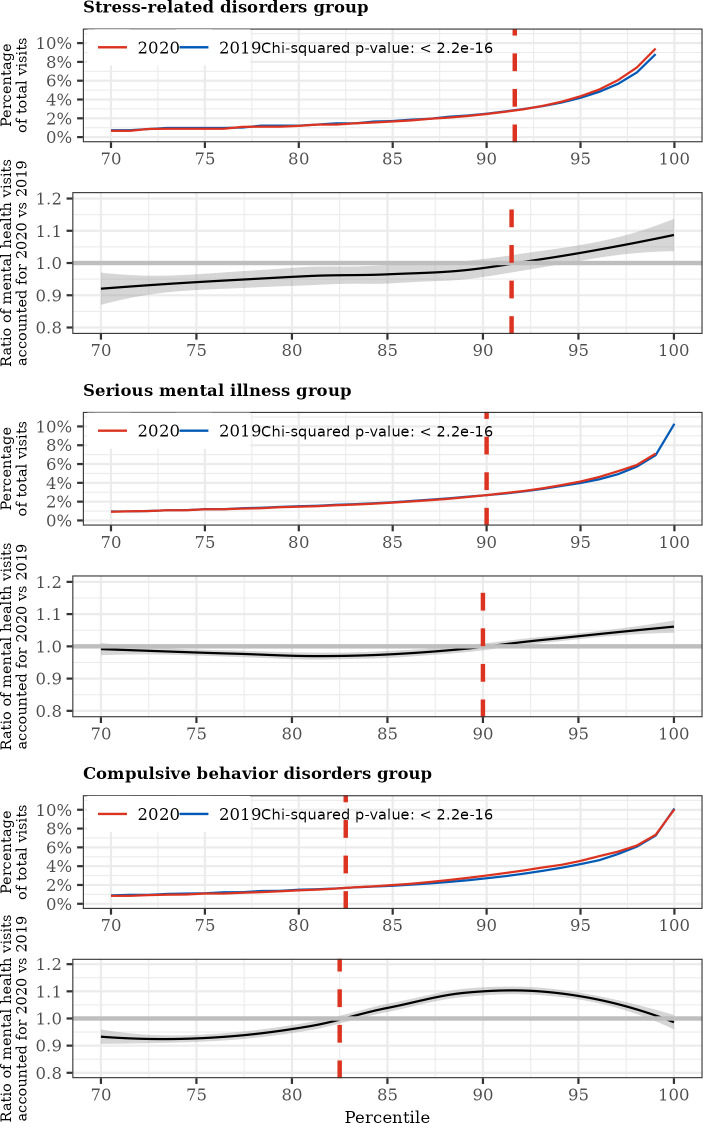
How did mental healthcare utilization change during the COVID-19 pandemic period among individuals with pre-existing mental disorder? Understanding utilization patterns of these at-risk individuals and identifying those most likely to exhibit increased utilization could improve patient stratification and efficient delivery of mental health services. This study leveraged large-scale electronic health record (EHR) data to describe mental healthcare utilization patterns among individuals with pre-existing mental disorder before and during the COVID-19 pandemic and identify correlates of high mental healthcare utilization. Using EHR data from a large healthcare system in Massachusetts, we identified three "pre-existing mental disorder" groups (PMD) based on having a documented mental disorder diagnosis within the 6 months prior to the March 2020 lockdown, related to: (1) stress-related disorders (e.g., depression, anxiety) (N = 115,849), (2) serious mental illness (e.g., schizophrenia, bipolar disorders) (N = 11,530), or (3) compulsive behavior disorders (e.g., eating disorder, OCD) (N = 5,893). We also identified a "historical comparison" group (HC) for each PMD (N = 113,604, 11,758, and 5,387, respectively) from the previous year (2019). We assessed the monthly number of mental healthcare visits from March 13 to December 31 for PMDs in 2020 and HCs in 2019. Phenome-wide association analyses (PheWAS) were used to identify clinical correlates of high mental healthcare utilization. We found the overall number of mental healthcare visits per patient during the pandemic period in 2020 was 10-12% higher than in 2019. The majority of increased visits was driven by a subset of high mental healthcare utilizers (top decile). PheWAS results indicated that correlates of high utilization (prior mental disorders, chronic pain, insomnia, viral hepatitis C, etc.) were largely similar before and during the pandemic, though several conditions (e.g., back pain) were associated with high utilization only during the pandemic. Limitations included that we were not able to examine other risk factors previously shown to influence mental health during the pandemic (e.g., social support, discrimination) due to lack of social determinants of health information in EHR data. Mental healthcare utilization among patients with pre-existing mental disorder increased overall during the pandemic, likely due to expanded access to telemedicine. Given that clinical correlates of high mental healthcare utilization in a major hospital system were largely similar before and during the COVID-19 pandemic, resource stratification based on known risk factor profiles may aid hospitals in responding to heightened mental healthcare needs during a pandemic.
在 COVID-19 大流行期间,患有先前存在的精神障碍的个体的心理健康保健利用情况如何?了解这些高风险个体的利用模式,并确定最有可能增加利用的个体,可以改善患者分层和精神卫生服务的有效提供。本研究利用大规模电子健康记录 (EHR) 数据描述了 COVID-19 大流行之前和期间患有先前存在的精神障碍的个体的心理健康保健利用模式,并确定了高心理健康保健利用的相关因素。使用马萨诸塞州一家大型医疗保健系统的 EHR 数据,我们根据在 3 月 2020 年封锁之前的 6 个月内有记录的精神障碍诊断,确定了三个“先前存在的精神障碍”组 (PMD):(1) 应激相关障碍(例如,抑郁、焦虑)(N=115849),(2) 严重精神疾病(例如,精神分裂症、双相情感障碍)(N=11530),或 (3) 强迫行为障碍(例如,饮食障碍、强迫症)(N=5893)。我们还为每个 PMD(N=113604、11758 和 5387)从前一年(2019 年)确定了一个“历史比较”组 (HC)。我们评估了 2020 年 PMD 组和 2019 年 HC 组从 3 月 13 日至 12 月 31 日每月的心理健康保健就诊次数。全表关联分析(PheWAS)用于确定高心理健康保健利用的临床相关因素。我们发现,2020 年大流行期间每位患者的心理健康保健就诊次数比 2019 年增加了 10-12%。增加的就诊次数主要是由一小部分高心理健康保健利用者(前 10%)驱动的。PheWAS 结果表明,高利用率的相关因素(先前的精神障碍、慢性疼痛、失眠、丙型肝炎病毒等)在大流行前后基本相似,尽管一些疾病(例如,背痛)仅在大流行期间与高利用率相关。局限性包括,由于 EHR 数据中缺乏健康决定因素信息,我们无法检查先前显示在大流行期间影响心理健康的其他风险因素(例如,社会支持、歧视)。患有先前存在的精神障碍的患者的心理健康保健利用率总体上在大流行期间有所增加,这可能是由于远程医疗的普及。鉴于主要医院系统中高心理健康保健利用率的临床相关因素在 COVID-19 大流行前后基本相似,基于已知风险因素特征的资源分层可能有助于医院应对大流行期间增加的心理健康保健需求。