University of Illinois Urbana-Champaign, United States.
Medical College of Wisconsin, United States.
Health Place. 2024 Jul;88:103262. doi: 10.1016/j.healthplace.2024.103262. Epub 2024 Jun 3.
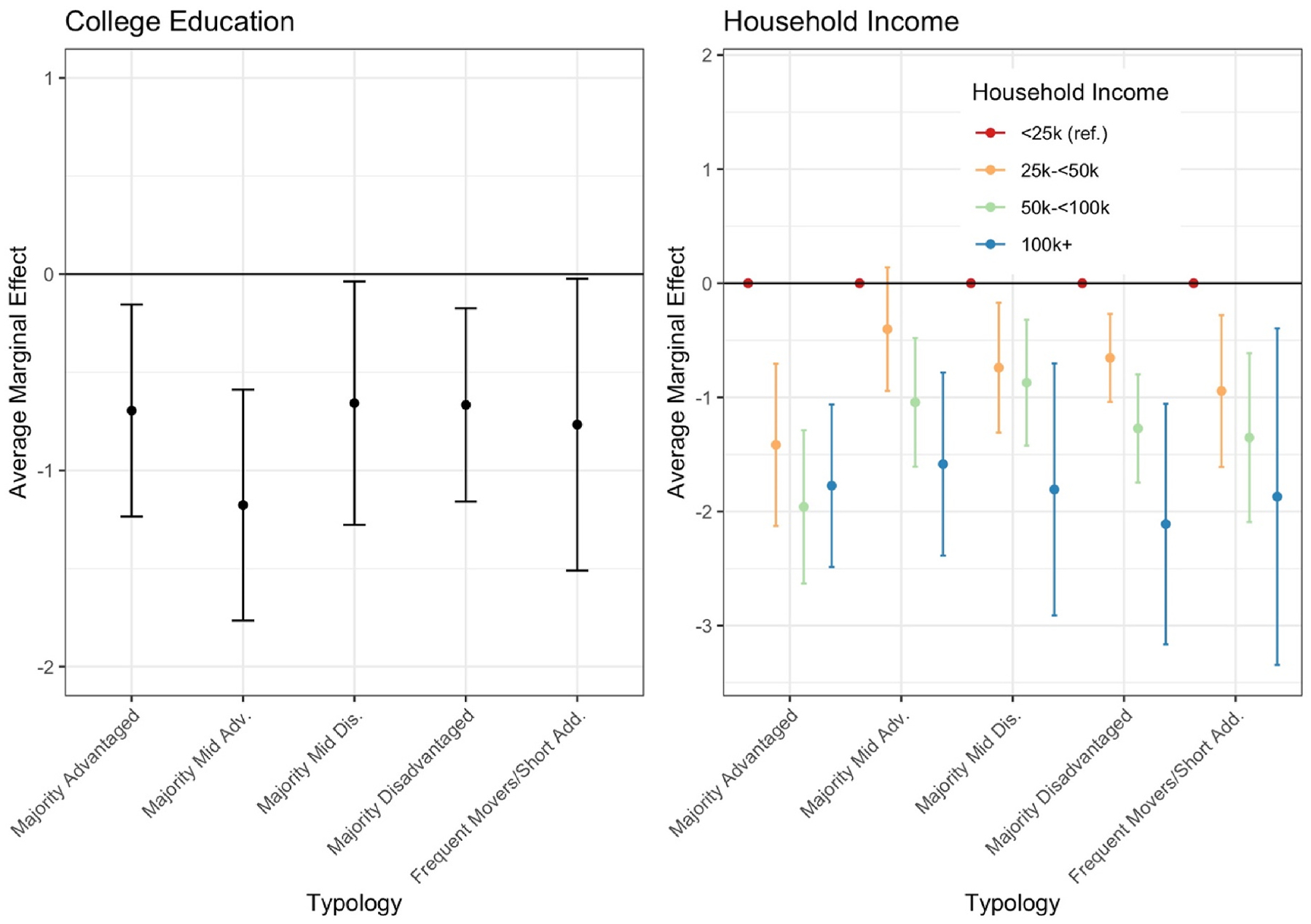
Life course theories suggest that the relationship between residential (dis)advantage and health is best understood by examining the ordering and duration of cumulative exposures across the life course. This study employs sequence and cluster analysis on two decades of residential histories linked to the Survey of the Health of Wisconsin to define typologies of exposure to residential (dis)advantage and use these typologies to predict self-rated fair/poor health. Exposure to residential (dis)advantage is mostly stable across the adult life course and greater disadvantage predicts fair/poor health. Longitudinal exposures to residential (dis)advantage shape health independently of and in tandem with individual-level resources.
生命历程理论表明,通过考察生命历程中累积暴露的顺序和持续时间,最能理解居住(劣势)优势与健康之间的关系。本研究利用与威斯康星州健康调查相关的 20 年居住史进行序列和聚类分析,定义暴露于居住(劣势)优势的类型,并使用这些类型来预测自评健康状况为“一般/差”。在成年期,居住劣势的暴露大多是稳定的,而更大的劣势则预示着健康状况不佳。与个体层面的资源一样,居住劣势的纵向暴露会独立地影响健康。