Department of Clinic Laboratory, The Sixth Hospital of Wuhan Affiliated Hospital of Jianghan University, Wuhan, 430015, China.
Key Laboratory of Drug-Targeting and Drug Delivery System of the Education Ministry, Sichuan Engineering Laboratory for Plant-Sourced Drug, and Sichuan Research Center for Drug Precision Industrial Technology, West China School of Pharmacy, Sichuan University, Chengdu, 610041, China.
BMC Immunol. 2024 Jun 4;25(1):33. doi: 10.1186/s12865-024-00624-0.
Severe community-acquired pneumonia (SCAP) is a common respiratory system disease with rapid development and high mortality. Exploring effective biomarkers for early detection and development prediction of SCAP is of urgent need. The function of miR-486-5p in SCAP diagnosis and prognosis was evaluated to identify a promising biomarker for SCAP.
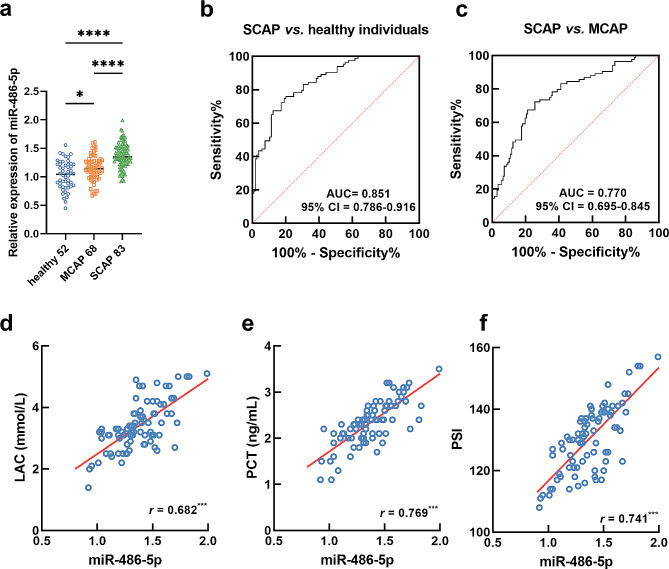
The serum miR-486-5p in 83 patients with SCAP, 52 healthy individuals, and 68 patients with mild CAP (MCAP) patients were analyzed by PCR. ROC analysis estimated miR-486-5p in screening SCAP, and the Kaplan-Meier and Cox regression analyses evaluated the predictive value of miR-486-5p. The risk factors for MCAP patients developing SCAP were assessed by logistic analysis. The alveolar epithelial cell was treated with Klebsiella pneumonia to mimic the occurrence of SCAP. The targeting mechanism underlying miR-486-5p was evaluated by luciferase reporter assay.
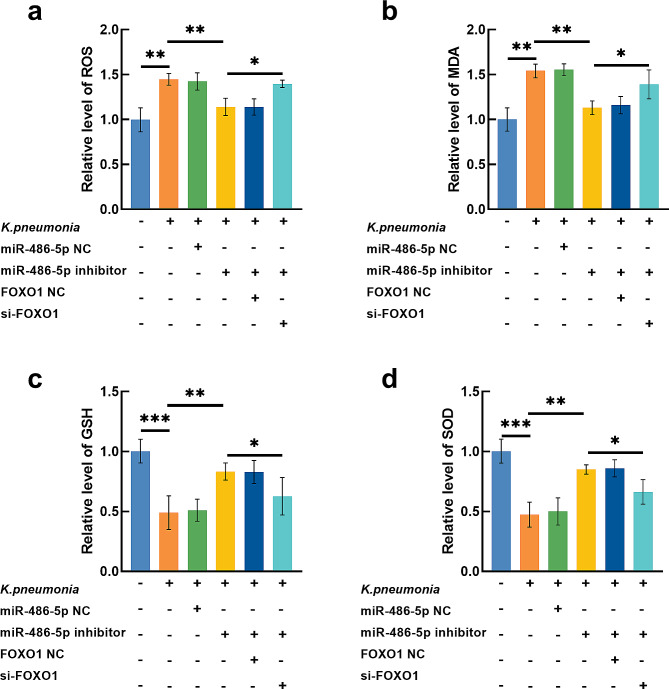
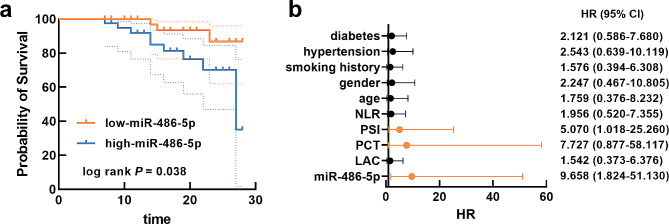
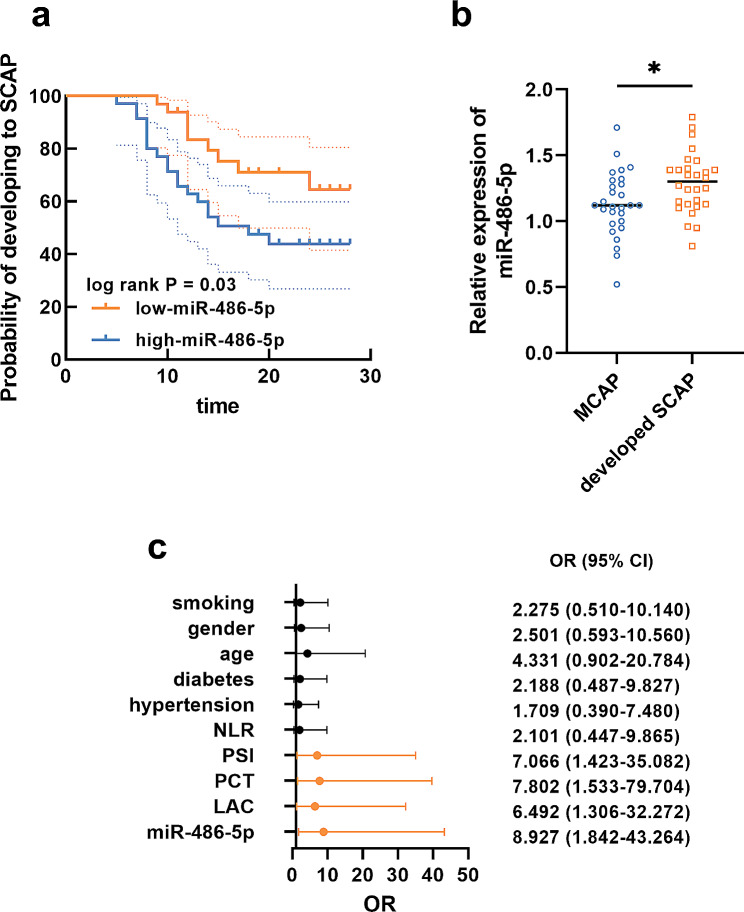
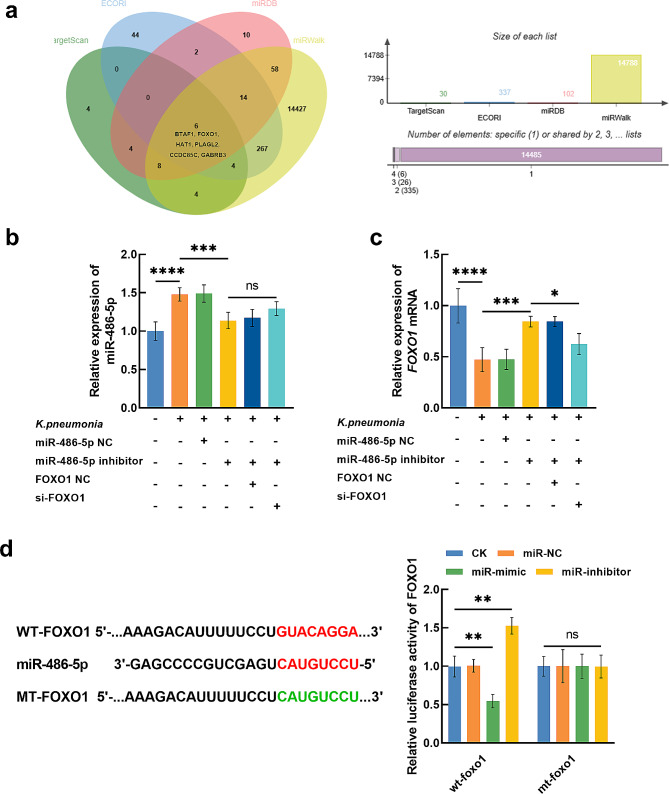
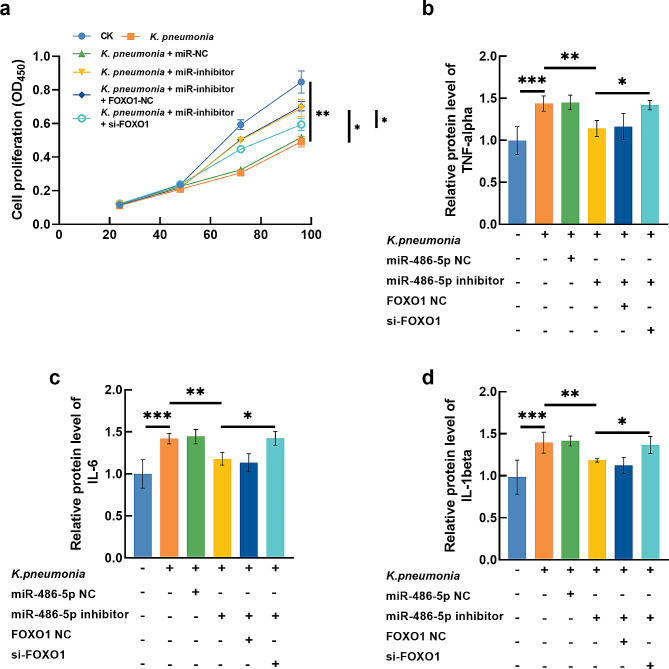
Upregulated serum miR-486-5p screened SCAP from healthy individuals and MCAP patients with high sensitivity and specificity. Increasing serum miR-486-5p predicted the poor outcomes of SCAP and served as a risk factor for MCAP developing into SCAP. K. pneumonia induced suppressed proliferation, significant inflammation and oxidative stress in alveolar epithelial cells, and silencing miR-486-5p attenuated it. miR-486-5p negatively regulated FOXO1, and the knockdown of FOXO1 reversed the effect of miR-486-5p in K. pneumonia-treated alveolar epithelial cells.
miR-486-5p acted as a biomarker for the screening and monitoring of SCAP and predicting the malignancy of MCAP. Silencing miR-486-5p alleviated inflammation and oxidative stress induced by K. pneumonia via negatively modulating FOXO1.
严重社区获得性肺炎(SCAP)是一种常见的呼吸系统疾病,其发展迅速,死亡率高。探索有效的生物标志物,用于早期发现和预测 SCAP 的发展,是当务之急。本研究旨在评估 miR-486-5p 在 SCAP 诊断和预后中的作用,以确定 SCAP 有前景的生物标志物。
采用 PCR 法检测 83 例 SCAP 患者、52 例健康对照者和 68 例轻症社区获得性肺炎(MCAP)患者血清 miR-486-5p。通过 ROC 分析评估 miR-486-5p 筛查 SCAP 的能力,通过 Kaplan-Meier 分析和 Cox 回归分析评估 miR-486-5p 的预测价值。采用 logistic 分析评估 MCAP 患者发展为 SCAP 的危险因素。用肺炎克雷伯菌处理肺泡上皮细胞模拟 SCAP 的发生,通过荧光素酶报告基因实验评估 miR-486-5p 的作用机制。
血清 miR-486-5p 上调可从健康个体和 MCAP 患者中筛选出 SCAP,具有较高的灵敏度和特异性。血清 miR-486-5p 升高预测 SCAP 预后不良,且是 MCAP 发展为 SCAP 的危险因素。肺炎克雷伯菌诱导的肺泡上皮细胞增殖抑制、明显的炎症和氧化应激,沉默 miR-486-5p 可减轻这些作用。miR-486-5p 负调控 FOXO1,下调 FOXO1 可逆转 miR-486-5p 在肺炎克雷伯菌处理的肺泡上皮细胞中的作用。
miR-486-5p 可作为 SCAP 的筛查和监测以及预测 MCAP 恶性程度的生物标志物。沉默 miR-486-5p 可通过负调控 FOXO1 减轻肺炎克雷伯菌诱导的炎症和氧化应激。