Skowronek Dariush, Pilz Robin A, Schwefel Konrad, Much Christiane D, Felbor Ute, Rath Matthias
Department of Human Genetics, University Medicine Greifswald, Greifswald, Germany.
Interfaculty Institute of Genetics and Functional Genomics, University of Greifswald, Greifswald, Germany.
Med Genet. 2021 Dec 3;33(3):251-259. doi: 10.1515/medgen-2021-2091. eCollection 2021 Sep.
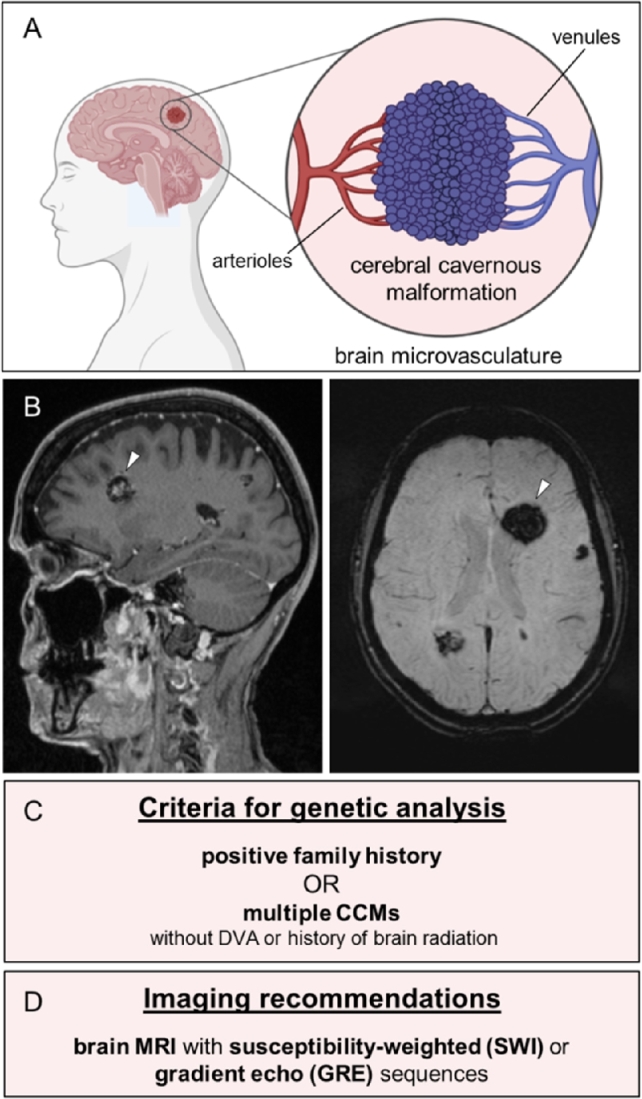
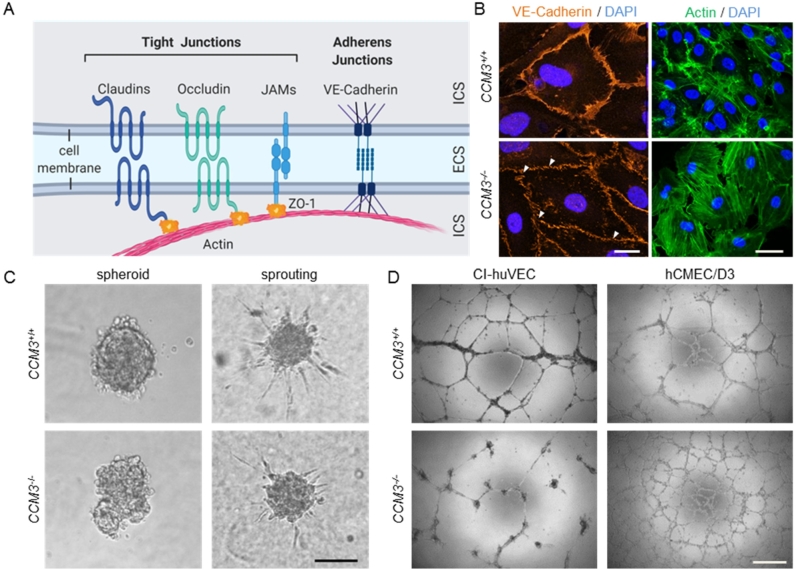
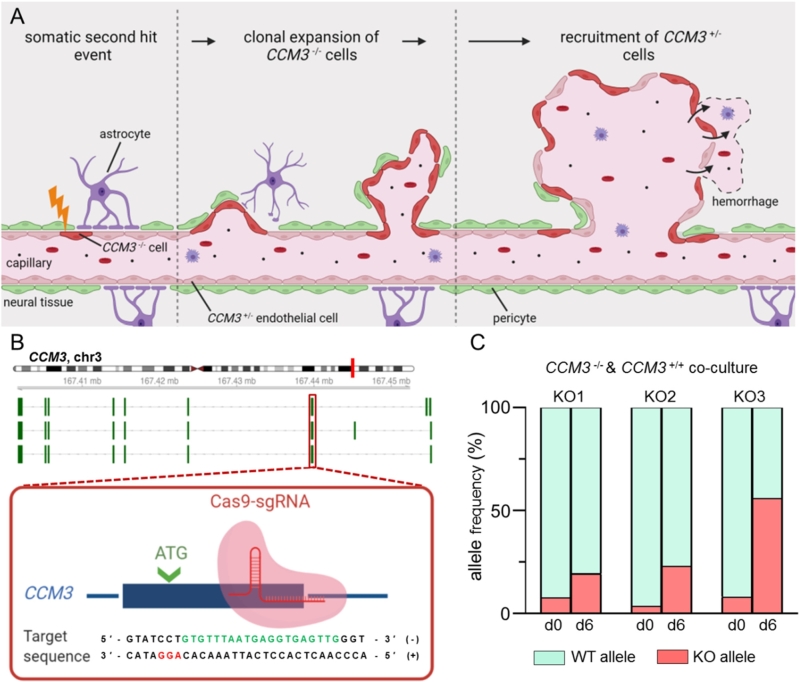
Cerebral cavernous malformations (CCMs) are vascular lesions that can cause severe neurological complications due to intracranial hemorrhage. Although the CCM disease genes, , , and , have been known for more than 15 years now, our understanding of CCM pathogenesis is still incomplete. CCM research currently focuses on three main disease mechanisms: (1) clonal expansion of endothelial cells with biallelic inactivation of , , or , (2) recruitment of cells with preserved CCM protein expression into the growing lesion, and (3) disruption of endothelial cell-cell junctions in CCMs. We here describe novel CRISPR/Cas9-based models of CCM and discuss their strengths and limitations in the context of high-throughput drug screening and repurposing approaches.
脑海绵状血管畸形(CCMs)是一种血管病变,可因颅内出血导致严重的神经并发症。尽管CCM疾病基因CCM1、CCM2和CCM3已为人所知超过15年,但我们对CCM发病机制的理解仍不完整。目前CCM研究主要集中在三种主要疾病机制上:(1)CCM1、CCM2或CCM3双等位基因失活导致内皮细胞克隆性扩增,(2)具有保留的CCM蛋白表达的细胞被募集到不断生长的病变中,以及(3)CCMs中内皮细胞间连接的破坏。我们在此描述基于CRISPR/Cas9的新型CCM模型,并在高通量药物筛选和药物重新利用方法的背景下讨论它们的优缺点。