He Juanjuan, Dai Yunfeng, Liu Jianwen, Lin He, Gao Fei, Chen Zhihan, Wu Yanfang
Fujian Medical University Shengli Clinical Medical College, Fuzhou, China.
Department of Rheumatology, Fujian Provincial Hospital, Fuzhou, China.
Front Med (Lausanne). 2024 May 20;11:1383186. doi: 10.3389/fmed.2024.1383186. eCollection 2024.
Systemic lupus erythematosus (SLE) is a disease characterised by immune inflammation and damage to multiple organs. Recent investigations have linked competing endogenous RNAs (ceRNAs) to lupus. However, the exact mechanism through which the ceRNAs network affects SLE is still unclear. This study aims to investigate the regulatory functions of the ceRNAs network, which are important pathways that control the pathophysiological processes of SLE.
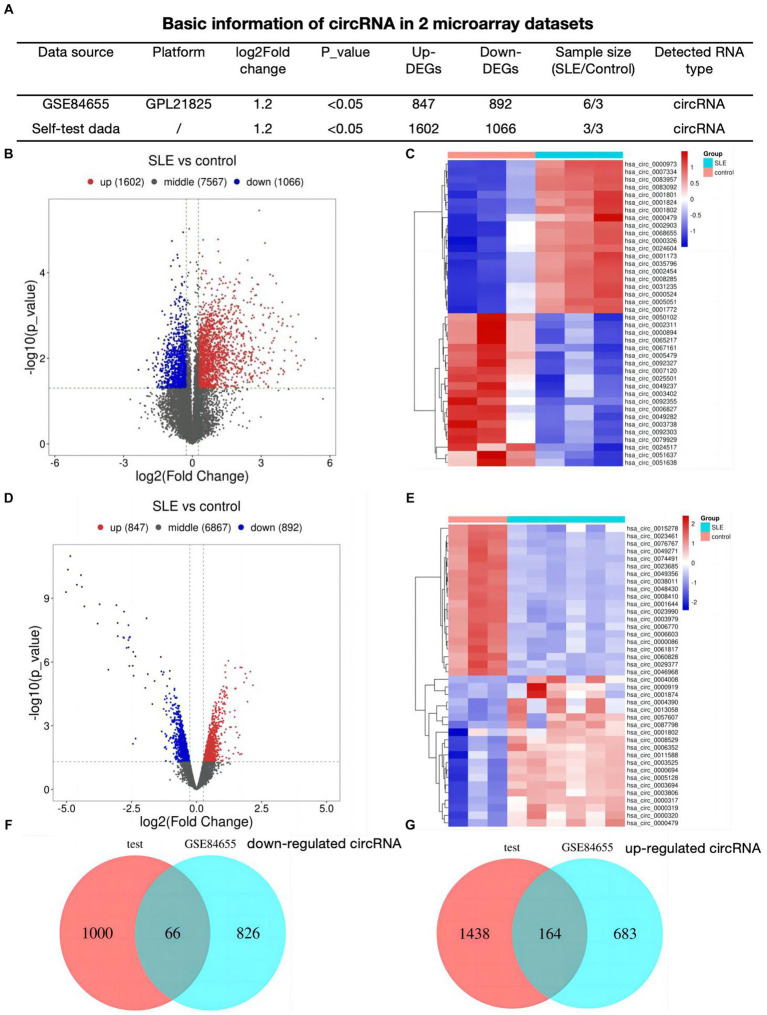
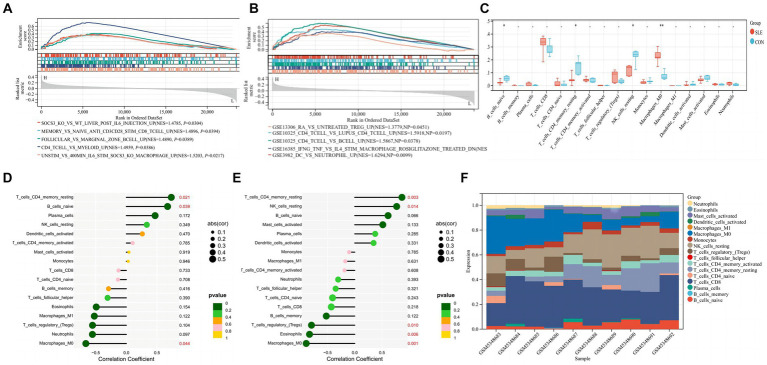
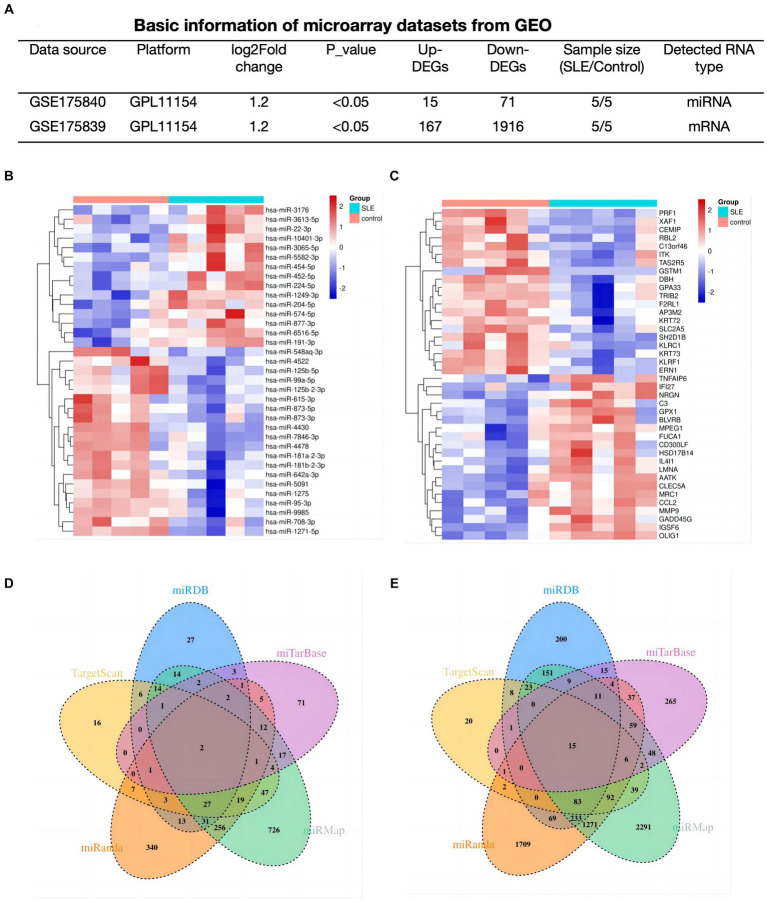
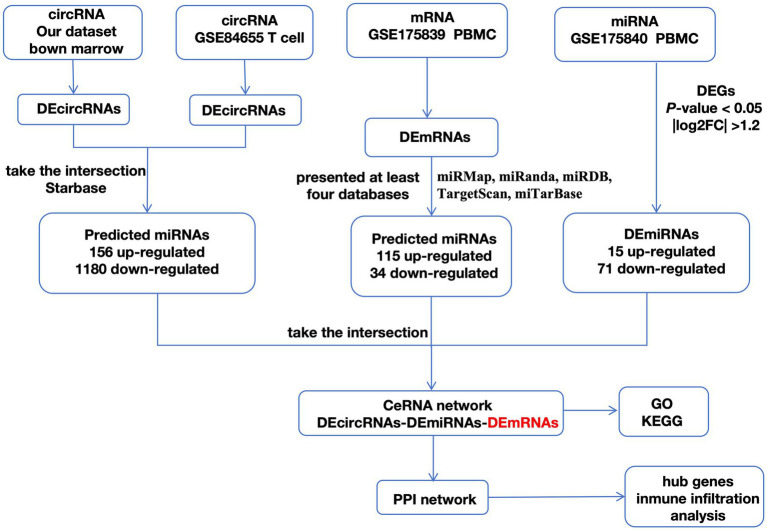
CircRNA microarray for our tested assays were derived from bone marrow samples from three healthy individuals and three SLE patients in our hospital. The other sequencing data of circRNA, miRNA and mRNA were obtained from Gene Expression Omnibus (GEO) datasets. Using the limma package of R program, the differential expression of mRNA and miRNA in the GEO database was discovered. Then predicted miRNA-mRNA and circRNA-miRNA were established using miRMap, miRanda, miRDB, TargetScan, and miTarBase. CircRNA-miRNA-mRNA ceRNA network was constructed using Cytoscape, and hub genes were screened using a protein-protein interaction network. Immune infiltration analysis of the hub gene was also performed by CIBERSORT and GSEA.
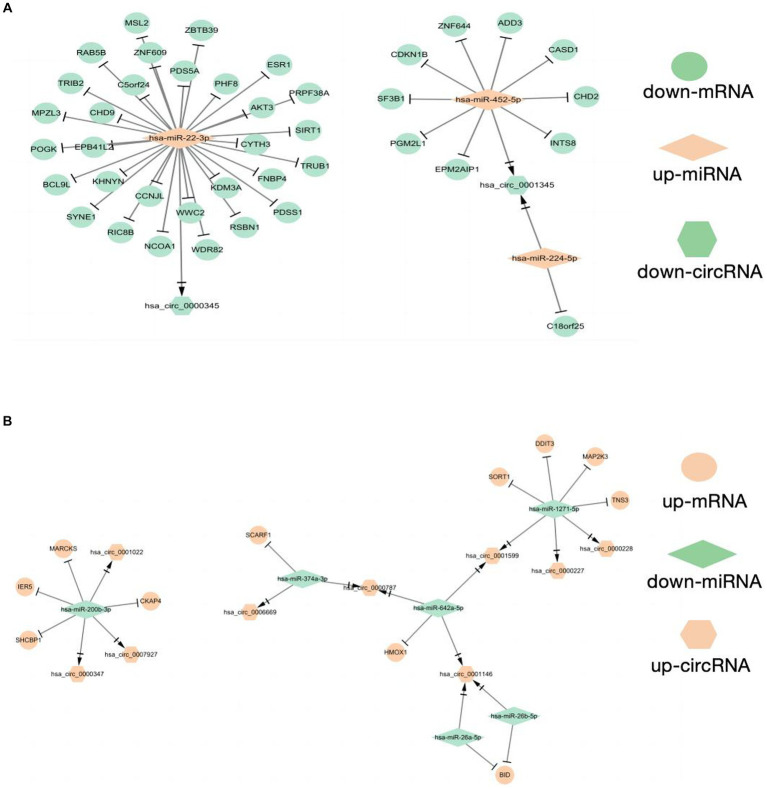
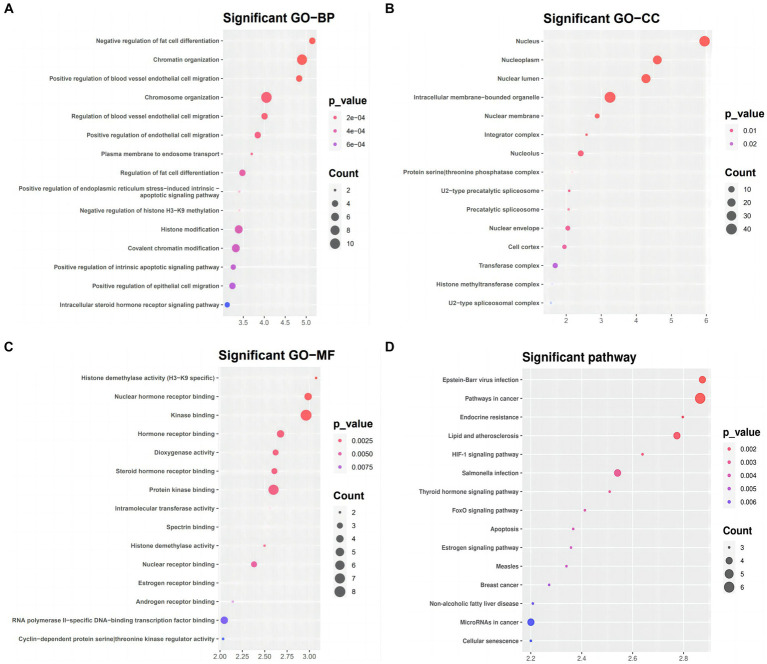
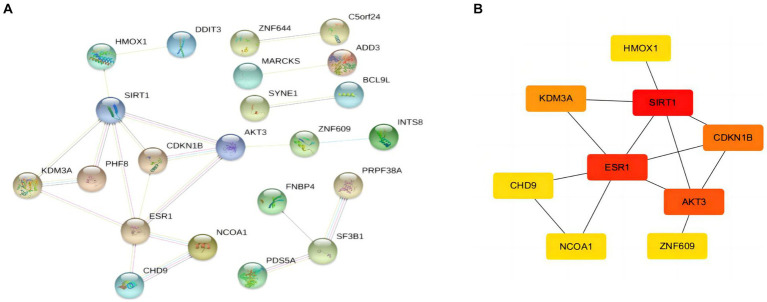
230 overlapped circRNAs, 86 DEmiRNAs and 2083 DEmRNAs were identified in SLE patients as compared to healthy controls. We constructed a circRNA-miRNA-mRNA ceRNAs network contained 11 overlapped circRNAs, 9 miRNAs and 51 mRNAs. ESR1 and SIRT1 were the most frequently associated protein-protein interactions in the PPI network. KEGG analysis showed that DEGs was enriched in FoxO signaling pathway as well as lipids and atherosclerosis. We constructed a novel circRNA-miRNA-mRNA ceRNA network (HSA circ 0000345- HSA miR-22-3-P-ESR1/SIRT1) that may have a major impact on SLE.
Through this bioinformatics and integrated analysis, we suggest a regulatory role for ceRNA network in the pathogenesis and treatment of SLE.
系统性红斑狼疮(SLE)是一种以免疫炎症和多器官损伤为特征的疾病。最近的研究将竞争性内源性RNA(ceRNA)与狼疮联系起来。然而,ceRNA网络影响SLE的确切机制仍不清楚。本研究旨在探讨ceRNA网络的调控功能,其是控制SLE病理生理过程的重要途径。
我们测试分析所用的环状RNA微阵列来自本院3名健康个体和3名SLE患者的骨髓样本。环状RNA、微小RNA和信使RNA的其他测序数据从基因表达综合数据库(GEO)数据集中获取。使用R程序的limma软件包,发现GEO数据库中mRNA和微小RNA的差异表达。然后使用miRMap、miRanda、miRDB、TargetScan和miTarBase建立预测的微小RNA-信使RNA和环状RNA-微小RNA关系。使用Cytoscape构建环状RNA-微小RNA-信使RNA ceRNA网络,并使用蛋白质-蛋白质相互作用网络筛选枢纽基因。还通过CIBERSORT和基因集富集分析(GSEA)对枢纽基因进行免疫浸润分析。
与健康对照相比,在SLE患者中鉴定出230个重叠的环状RNA、86个差异表达微小RNA(DEmiRNA)和2083个差异表达信使RNA(DEmRNA)。我们构建了一个包含11个重叠环状RNA、9个微小RNA和51个信使RNA的环状RNA-微小RNA-信使RNA ceRNA网络。雌激素受体1(ESR1)和沉默调节蛋白1(SIRT1)是蛋白质-蛋白质相互作用网络中最常相关的。京都基因与基因组百科全书(KEGG)分析表明,差异表达基因(DEG)在叉头框O(FoxO)信号通路以及脂质与动脉粥样硬化中富集。我们构建了一个可能对SLE有重大影响的新型环状RNA-微小RNA-信使RNA ceRNA网络(人环状RNA 0000345-人微小RNA-2-3-P-ESR1/SIRT1)。
通过这种生物信息学和综合分析,我们提出ceRNA网络在SLE的发病机制和治疗中具有调控作用。