Department of Entomology, Faculty of Agriculture, Assam Agricultural University, Jorhat, Assam, India.
Department of Applied Entomology & Zoology, Faculty of Agriculture, Alexandria University, Alexandria, Egypt.
PLoS Negl Trop Dis. 2024 Jun 5;18(6):e0012185. doi: 10.1371/journal.pntd.0012185. eCollection 2024 Jun.
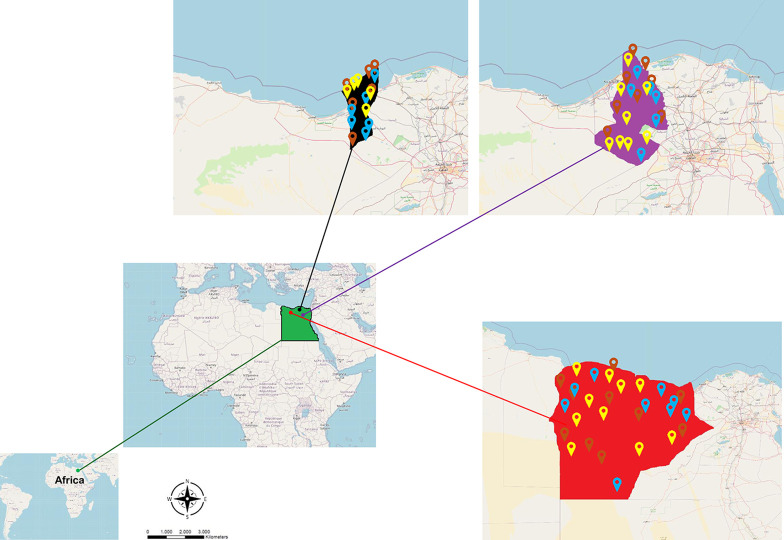
The Middle East and North Africa (MENA) offer optimal climatic conditions for tick reproduction and dispersal. Research on tick-borne pathogens in this region is scarce. Despite recent advances in the characterization and taxonomic explanation of various tick-borne illnesses affecting animals in Egypt, no comprehensive examination of TBP (tick-borne pathogen) statuses has been performed. Therefore, the present study aims to detect the prevalence of pathogens harbored by ticks in Egypt.
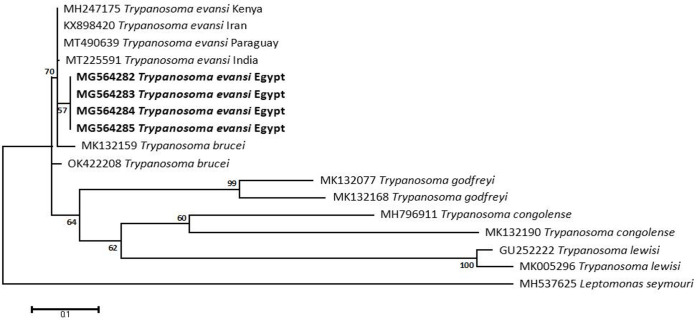
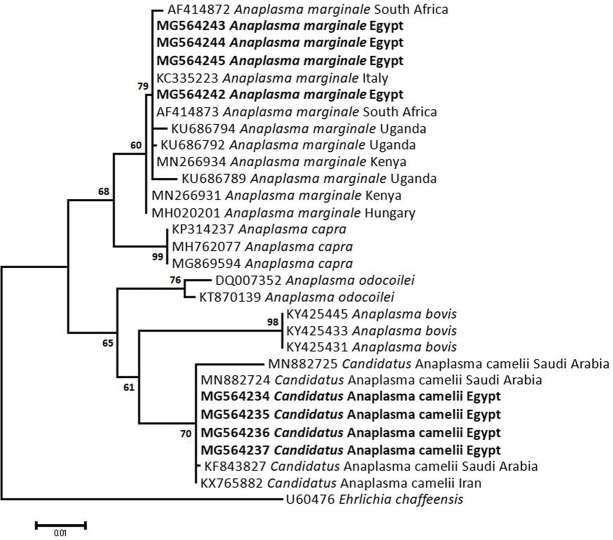
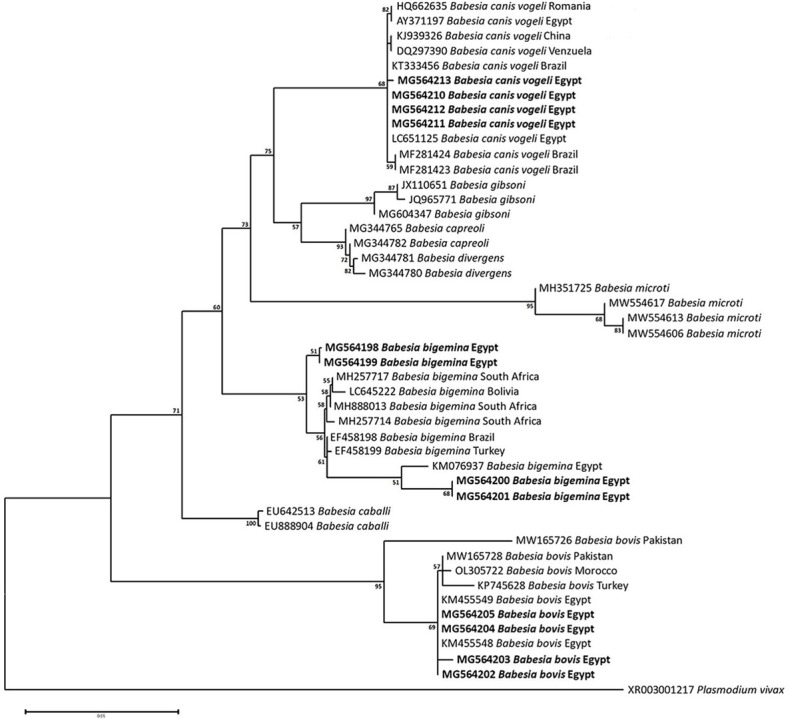
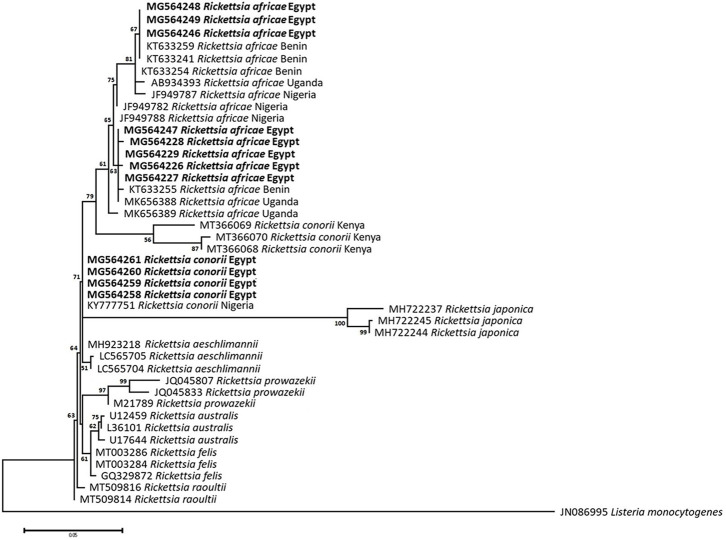
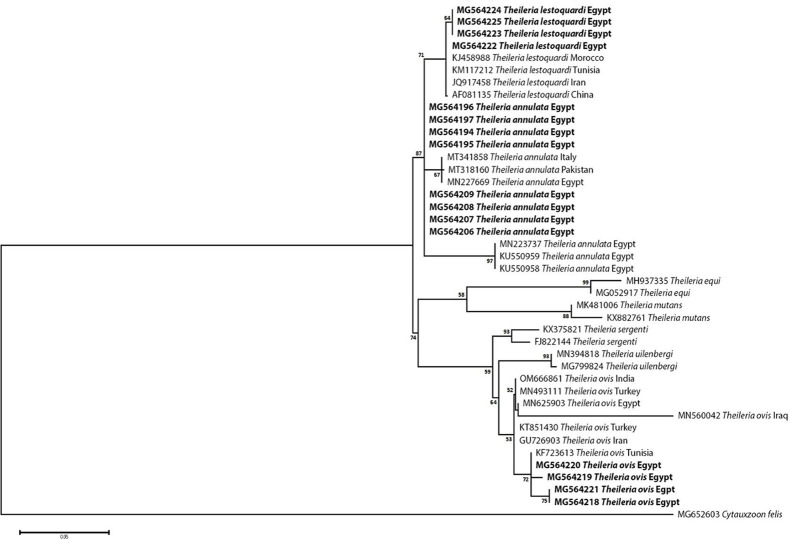
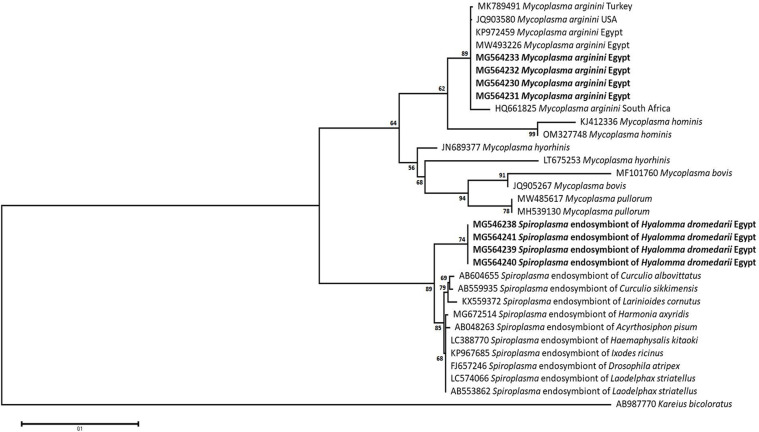
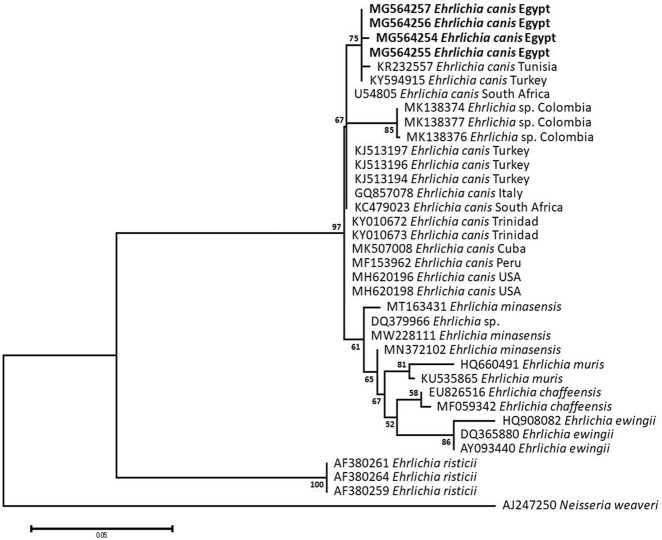
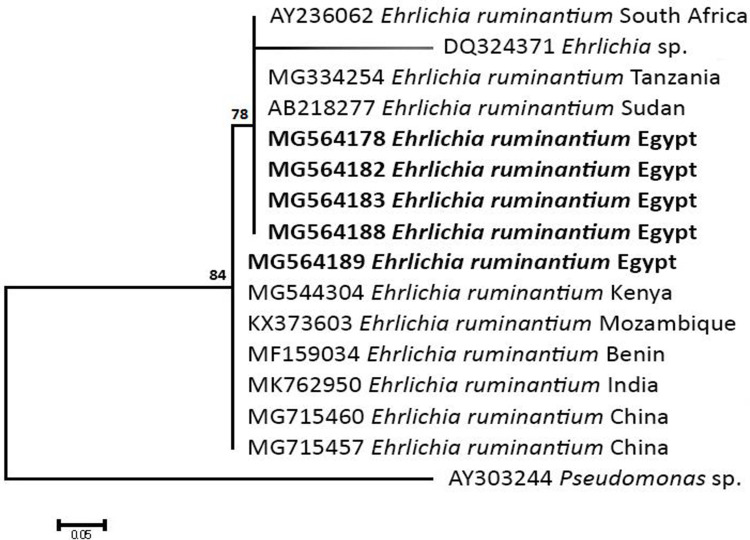
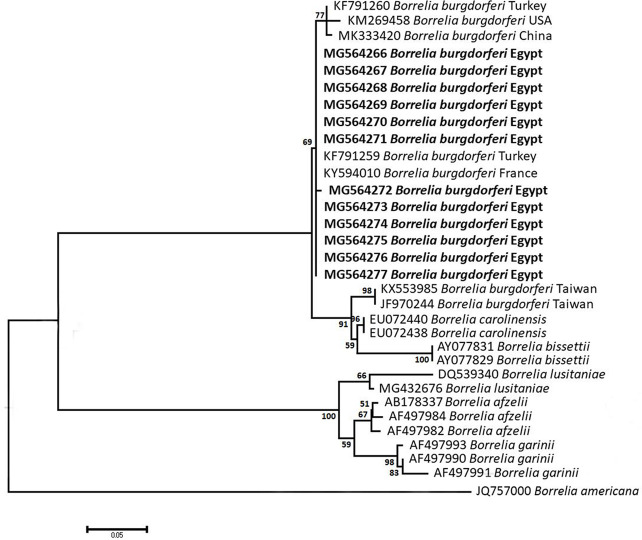
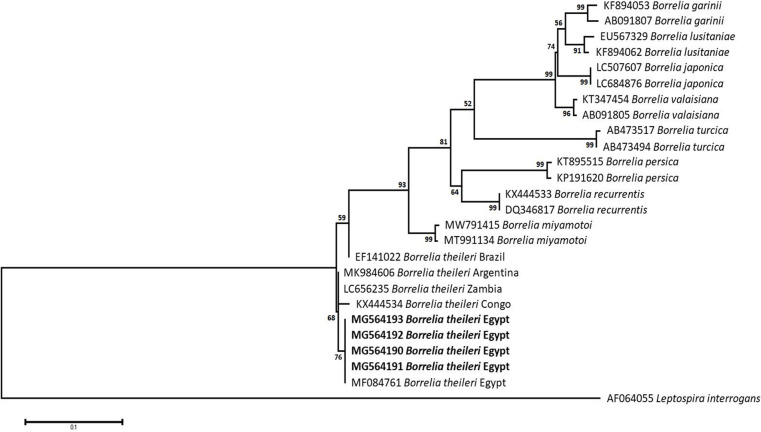
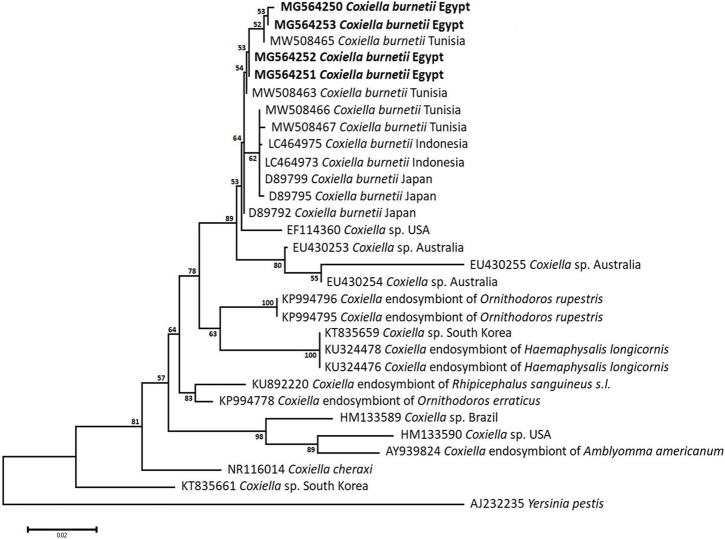
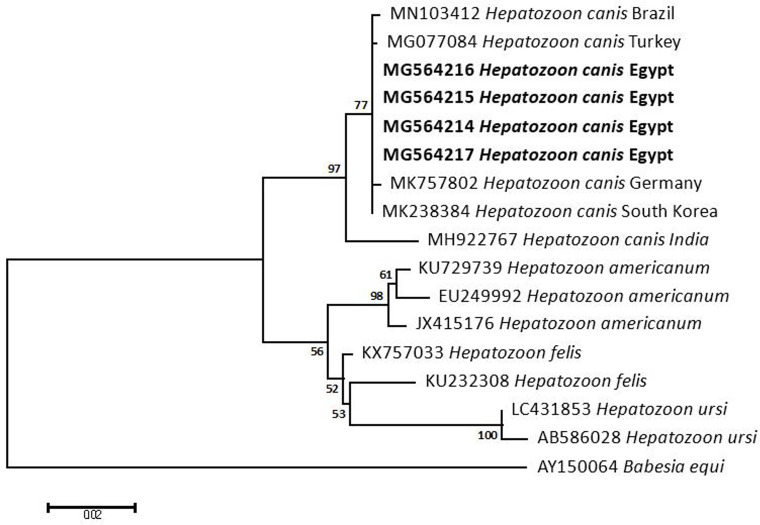
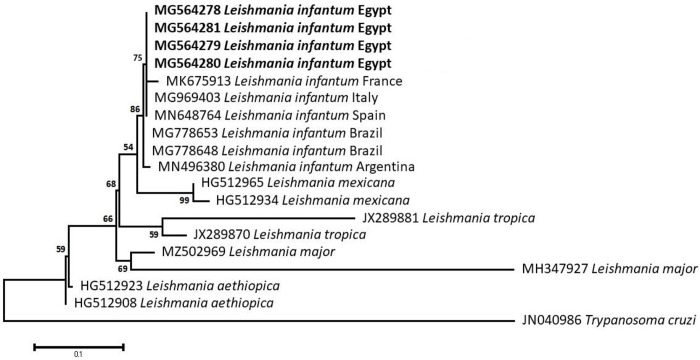
METHODOLOGY/PRINCIPAL FINDINGS: A four-year PCR-based study was conducted to detect a wide range of tick-borne pathogens (TBPs) harbored by three economically important tick species in Egypt. Approximately 86.7% (902/1,040) of the investigated Hyalomma dromedarii ticks from camels were found positive with Candidatus Anaplasma camelii (18.8%), Ehrlichia ruminantium (16.5%), Rickettsia africae (12.6%), Theileria annulata (11.9%), Mycoplasma arginini (9.9%), Borrelia burgdorferi (7.7%), Spiroplasma-like endosymbiont (4.0%), Hepatozoon canis (2.4%), Coxiella burnetii (1.6%) and Leishmania infantum (1.3%). Double co-infections were recorded in 3.0% (27/902) of Hy. dromedarii ticks, triple co-infections (simultaneous infection of the tick by three pathogen species) were found in 9.6% (87/902) of Hy. dromedarii ticks, whereas multiple co-infections (simultaneous infection of the tick by ≥ four pathogen species) comprised 12% (108/902). Out of 1,435 investigated Rhipicephalus rutilus ticks collected from dogs and sheep, 816 (56.9%) ticks harbored Babesia canis vogeli (17.1%), Rickettsia conorii (16.2%), Ehrlichia canis (15.4%), H. canis (13.6%), Bo. burgdorferi (9.7%), L. infantum (8.4%), C. burnetii (7.3%) and Trypanosoma evansi (6.6%) in dogs, and 242 (16.9%) ticks harbored Theileria lestoquardi (21.6%), Theileria ovis (20.0%) and Eh. ruminantium (0.3%) in sheep. Double, triple, and multiple co-infections represented 11% (90/816), 7.6% (62/816), and 10.3% (84/816), respectively in Rh. rutilus from dogs, whereas double and triple co-infections represented 30.2% (73/242) and 2.1% (5/242), respectively in Rh. rutilus from sheep. Approximately 92.5% (1,355/1,465) of Rhipicephalus annulatus ticks of cattle carried a burden of Anaplasma marginale (21.3%), Babesia bigemina (18.2%), Babesia bovis (14.0%), Borrelia theleri (12.8%), R. africae (12.4%), Th. annulata (8.7%), Bo. burgdorferi (2.7%), and Eh. ruminantium (2.5%). Double, triple, and multiple co-infections represented 1.8% (25/1,355), 11.5% (156/1,355), and 12.9% (175/1,355), respectively. The detected pathogens' sequences had 98.76-100% similarity to the available database with genetic divergence ranged between 0.0001 to 0.0009% to closest sequences from other African, Asian, and European countries. Phylogenetic analysis revealed close similarities between the detected pathogens and other isolates mostly from African and Asian countries.
CONCLUSIONS/SIGNIFICANCE: Continuous PCR-detection of pathogens transmitted by ticks is necessary to overcome the consequences of these infection to the hosts. More restrictions should be applied from the Egyptian authorities on animal importations to limit the emergence and re-emergence of tick-borne pathogens in the country. This is the first in-depth investigation of TBPs in Egypt.
中东和北非(MENA)为 ticks 的繁殖和传播提供了最佳的气候条件。尽管最近在埃及对影响动物的各种 tick-borne 病原体的特性和分类解释方面取得了进展,但尚未对 TBP(tick-borne 病原体)状况进行全面检查。因此,本研究旨在检测埃及 tick 携带的病原体的流行情况。
方法/主要发现:本研究采用基于 PCR 的四年研究,检测了埃及三种经济重要 tick 物种携带的广泛 tick-borne 病原体(TBPs)。从骆驼中采集的约 86.7%(902/1,040)的 H. dromedarii 蜱虫被检测出携带 Candidatus Anaplasma camelii(18.8%)、Ehrlichia ruminantium(16.5%)、Rickettsia africae(12.6%)、Theileria annulata(11.9%)、Mycoplasma arginini(9.9%)、Borrelia burgdorferi(7.7%)、Spiroplasma-like endosymbiont(4.0%)、Hepatozoon canis(2.4%)、Coxiella burnetii(1.6%)和 Leishmania infantum(1.3%)。在 3.0%(27/902)的 Hy. dromedarii 蜱虫中发现了双重 co-infections,在 9.6%(87/902)的 Hy. dromedarii 蜱虫中发现了三重 co-infections(tick 同时感染三种病原体),而在 12%(108/902)的 Hy. dromedarii 蜱虫中发现了多重 co-infections(tick 同时感染≥四种病原体)。在从狗和羊中采集的 1,435 只 Rhipicephalus rutilus 蜱虫中,816 只(56.9%)蜱虫携带 Babesia canis vogeli(17.1%)、Rickettsia conorii(16.2%)、Ehrlichia canis(15.4%)、H.canis(13.6%)、Bo. burgdorferi(9.7%)、L.infantum(8.4%)、C.burnetii(7.3%)和 Trypanosoma evansi(6.6%),在羊中 242 只(16.9%)蜱虫携带 Theileria lestoquardi(21.6%)、Theileria ovis(20.0%)和 Eh.ruminantium(0.3%)。在 Rh. rutilus 从狗中,双重、三重和多重 co-infections分别占 11%(90/816)、7.6%(62/816)和 10.3%(84/816),而在 Rh. rutilus 从羊中,双重和三重 co-infections分别占 30.2%(73/242)和 2.1%(5/242)。在 1,355 只牛的 Rhipicephalus annulatus 蜱虫中,约 92.5%(1,355/1,465)携带 Anaplasma marginale(21.3%)、Babesia bigemina(18.2%)、Babesia bovis(14.0%)、Borrelia theleri(12.8%)、R. africae(12.4%)、Th. annulata(8.7%)、Bo. burgdorferi(2.7%)和 Eh.ruminantium(2.5%)。双重、三重和多重 co-infections分别占 1.8%(25/1,355)、11.5%(156/1,355)和 12.9%(175/1,355)。检测到的病原体序列与可用数据库具有 98.76-100%的相似性,遗传分化在 0.0001 到 0.0009%之间,与来自其他非洲、亚洲和欧洲国家的最接近序列最为接近。系统发育分析显示,检测到的病原体与其他分离株之间存在密切相似性,这些分离株主要来自非洲和亚洲国家。
结论/意义:持续进行 tick 传播病原体的 PCR 检测对于克服这些感染对宿主的后果至关重要。埃及当局应加强对动物进口的限制,以限制 tick-borne 病原体在该国的出现和再次出现。这是对埃及 TBPs 的首次深入调查。