Department for Molecular and Medical Medicine, Ruhr University Bochum, Bochum, Germany.
Institute for Infection Research and Vaccine Development (IIRVD), Centre for Internal Medicine, University Medical Centre Hamburg-Eppendorf (UKE), Hamburg, Germany.
Nat Commun. 2024 Jun 6;15(1):4855. doi: 10.1038/s41467-024-49219-8.
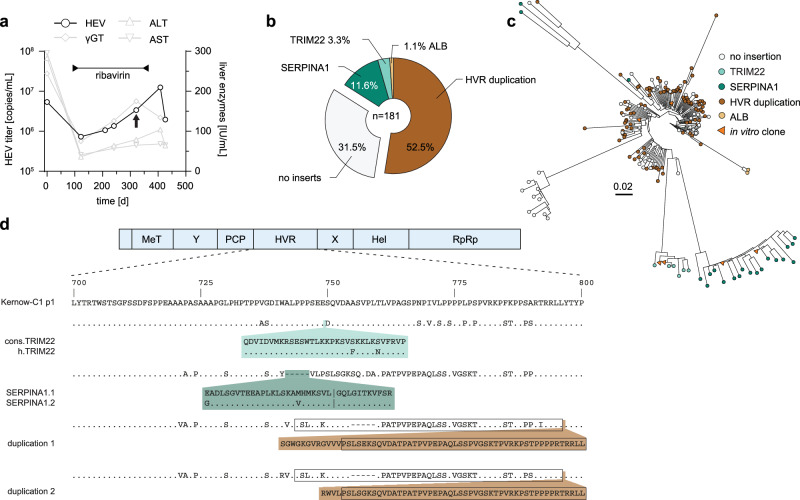
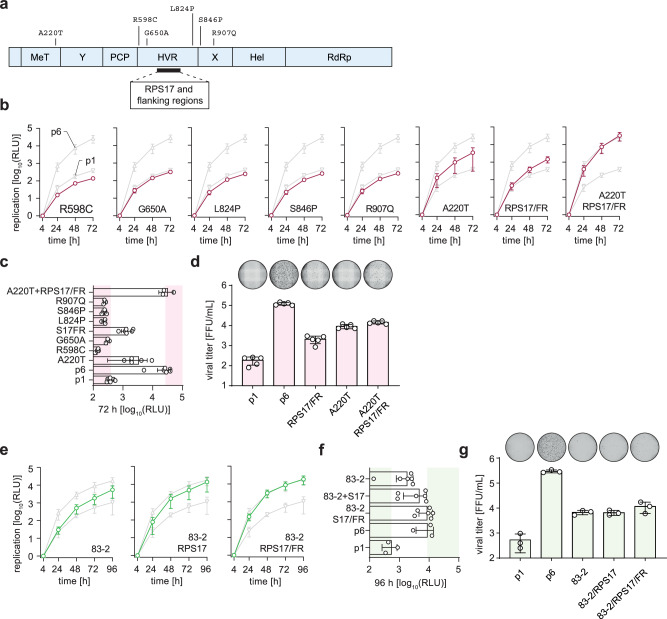
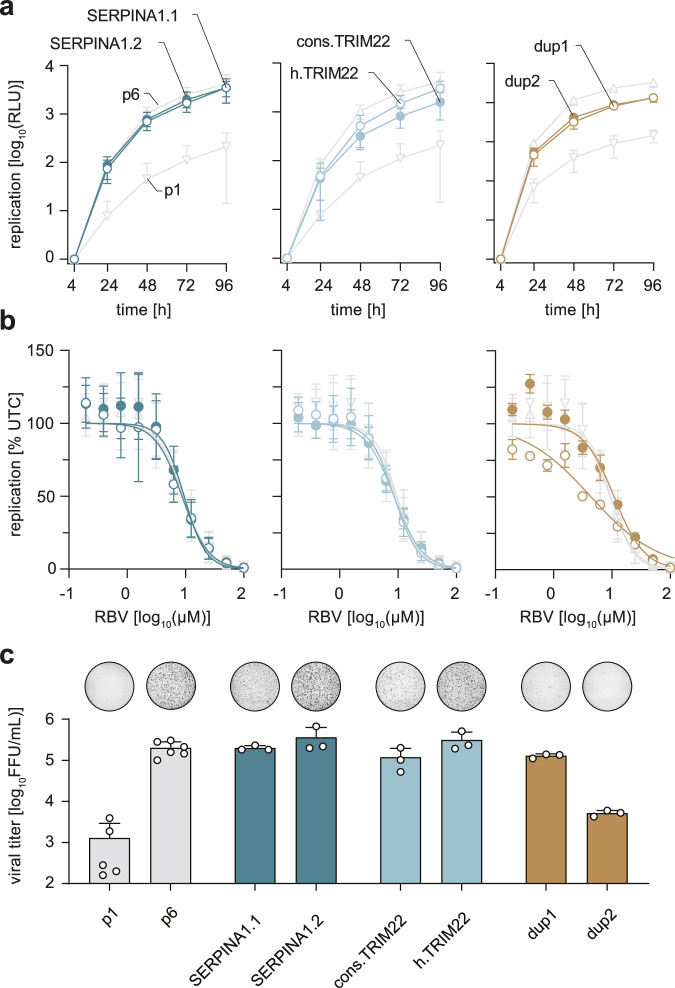
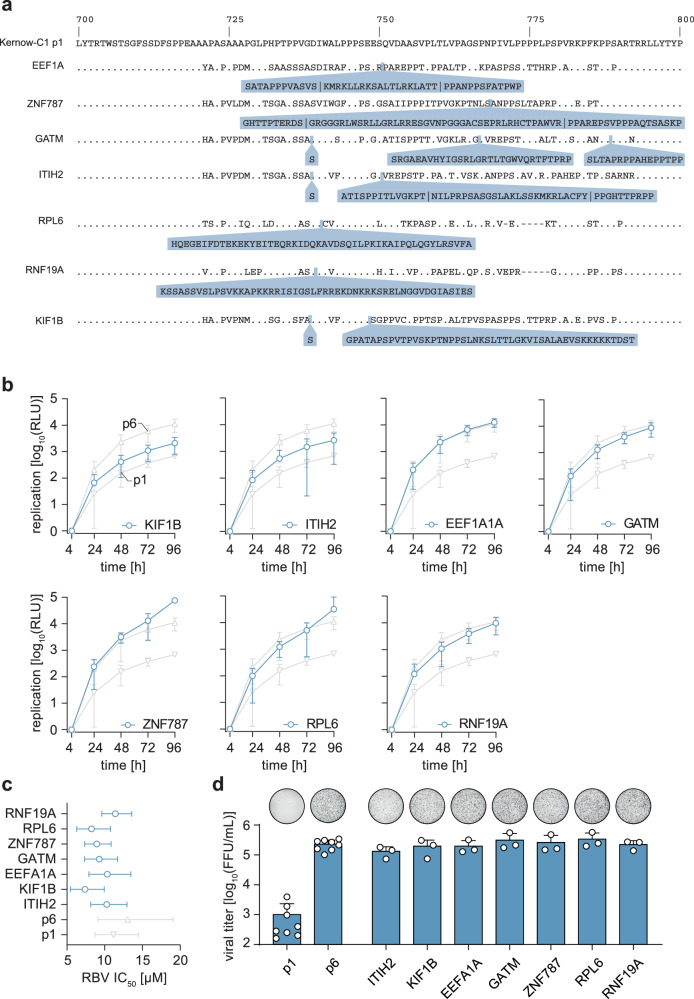
Hepatitis E virus (HEV) is a long-neglected RNA virus and the major causative agent of acute viral hepatitis in humans. Recent data suggest that HEV has a very heterogeneous hypervariable region (HVR), which can tolerate major genomic rearrangements. In this study, we identify insertions of previously undescribed sequence snippets in serum samples of a ribavirin treatment failure patient. These insertions increase viral replication while not affecting sensitivity towards ribavirin in a subgenomic replicon assay. All insertions contain a predicted nuclear localization sequence and alanine scanning mutagenesis of lysine residues in the HVR influences viral replication. Sequential replacement of lysine residues additionally alters intracellular localization in a fluorescence dye-coupled construct. Furthermore, distinct sequence patterns outside the HVR are identified as viral determinants that recapitulate the enhancing effect. In conclusion, patient-derived insertions can increase HEV replication and synergistically acting viral determinants in and outside the HVR are described. These results will help to understand the underlying principles of viral adaptation by viral- and host-sequence snatching during the clinical course of infection.
戊型肝炎病毒(HEV)是一种长期被忽视的 RNA 病毒,也是人类急性病毒性肝炎的主要病原体。最近的数据表明,HEV 具有非常异质的高变区(HVR),可以容忍主要的基因组重排。在这项研究中,我们在一名利巴韦林治疗失败患者的血清样本中鉴定出了以前未描述的序列片段的插入。这些插入增加了病毒的复制,而在亚基因组复制子测定中并不影响对利巴韦林的敏感性。所有插入均包含一个预测的核定位序列,并且 HVR 中的赖氨酸残基的丙氨酸扫描突变会影响病毒的复制。赖氨酸残基的连续替换还会在荧光染料偶联构建体中改变细胞内定位。此外,在 HVR 之外还鉴定出不同的序列模式,它们是重现增强作用的病毒决定因素。总之,来源于患者的插入可以增加 HEV 的复制,并且 HVR 内外协同作用的病毒决定因素也被描述。这些结果将有助于理解感染临床过程中病毒和宿主序列抢夺时病毒适应的基本原理。